What to plant in December
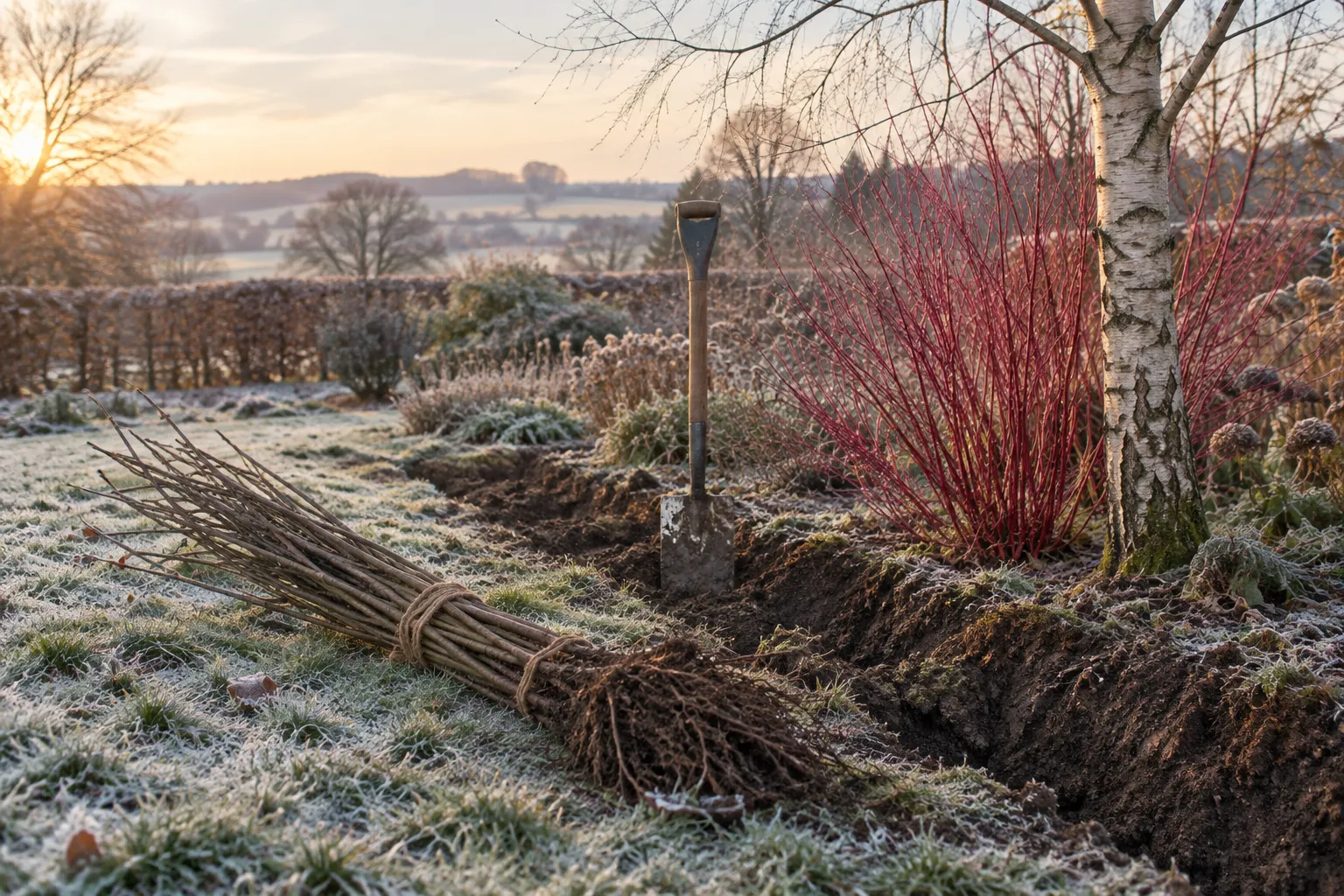
December is a bare-root month. Hedging, trees, roses and fruit can still go in, as can garlic and shallots in mild places, provided the ground is neither frozen nor soggy.
December planting at a glance
| Job | What the RHS says |
|---|---|
| Hedging and trees | Carry on planting bare-root deciduous hedging and trees, unless the ground is frozen or soggy. |
| Roses | Plant them, preferably bare root. |
| Garlic and shallots | The one vegetable planting job: in mild areas with well-drained soil. |
| Seed | Sow alpines. They need the cold to break dormancy. |
| Cuttings | Take root cuttings from perennial poppies, mullein and phlox. |
| Pruning | Hold off on hydrangeas until March. Leave Prunus, such as ornamental cherries and plums, until spring. |
| Protection | Firm back any roots that frost has lifted, mulch with straw or composted bark, and raise pots onto feet. |
In the ground now
The RHS's December advice for trees and shrubs is short. Carry on planting bare-root deciduous hedging and trees. Plant roses, preferably bare root.
Established deciduous trees and shrubs can be moved if the ground isn't frozen or soggy.
The same rule runs through the month's fruit advice: plant new trees and bushes, but not if the ground is waterlogged or frozen.
Garlic and shallots
There's one vegetable planting job in December: shallots and garlic, in mild areas with well-drained soil. That's all. The RHS lists no vegetable sowing for the month, and its seed-sowing guide treats December and January as the time to plan. Our vegetable planting calendar shows what comes next, month by month.
Seed and cuttings
You can sow alpines from seed this month, because they need a period of cold to break dormancy. Lay a sheet of glass over the sown area to keep off excess wet, or stratify the seeds in the fridge for sowing next spring. Root cuttings can be taken from now, from perennial poppies, mullein and phlox.
Plants for winter stems
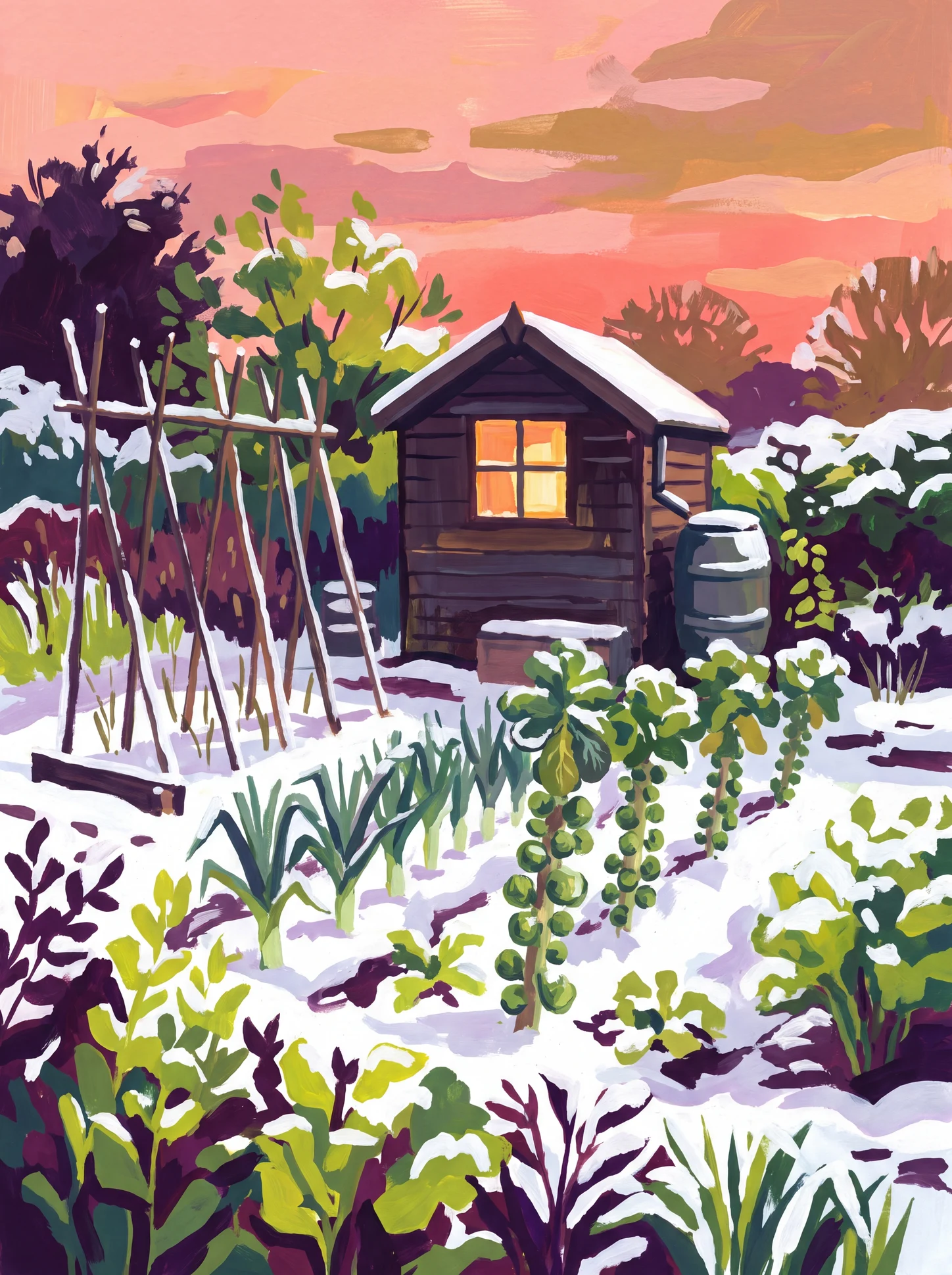
One job is for next year. When you visit gardens and garden centres, note the most colourful dogwood, willow and white-stemmed Rubus, and consider planting some for a winter display.
For flowers in December itself, the RHS winter interest list gives Hamamelis × intermedia and Helleborus niger from December to March. It gives Clematis cirrhosa from November to March. Daffodils sometimes come up before Christmas, too.
Beds, bulbs and hellebores
Faded herbaceous perennials give you a choice: cut them back and compost them, or leave them until spring as winter homes for insects. In mild areas, and during dry spells, you can still lift and divide perennials, which increases your stock and revives tired clumps. If you've forced bulbs in the dark, check them. When there's top growth and a healthy root system, bring them into a cool, light room to flower.
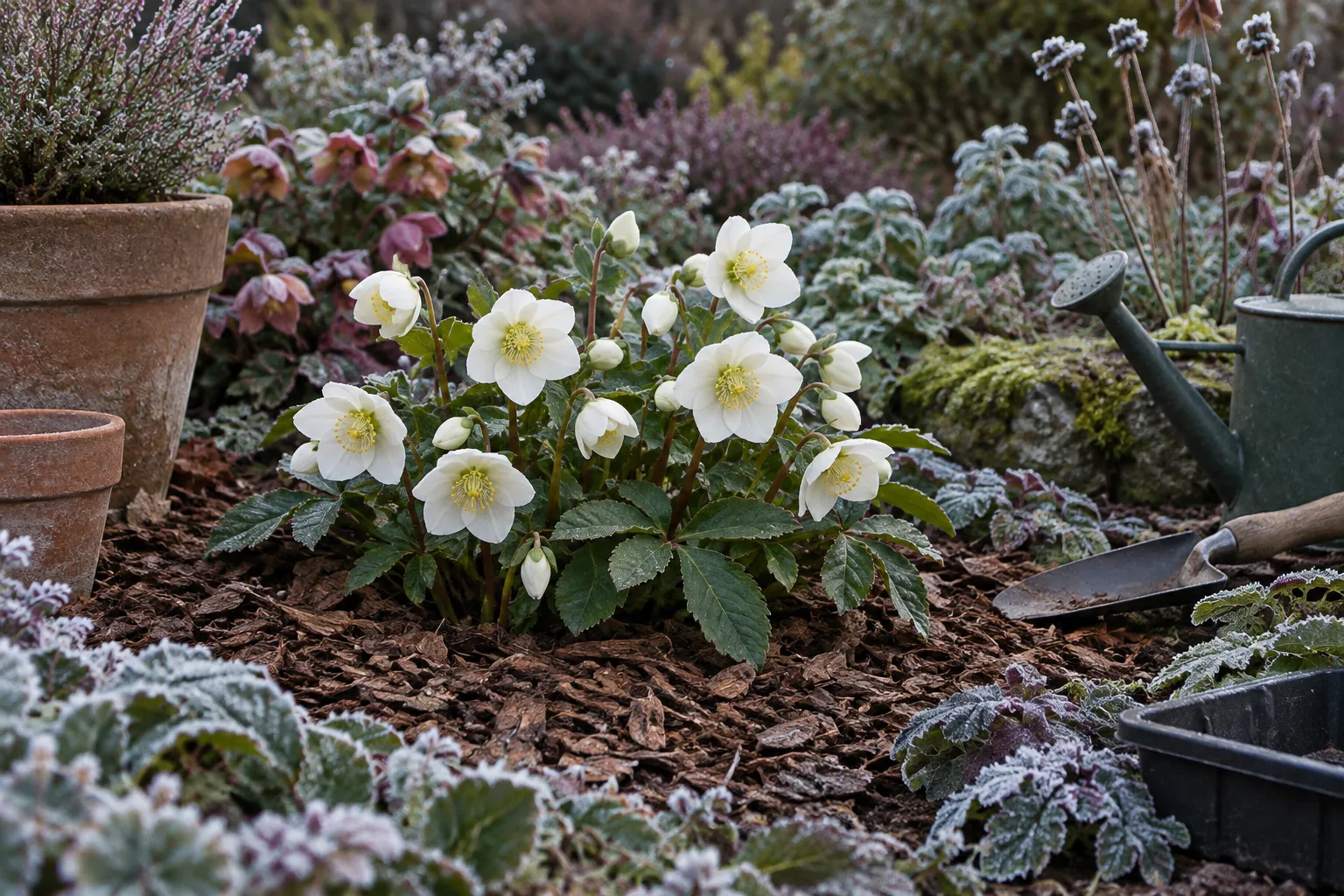
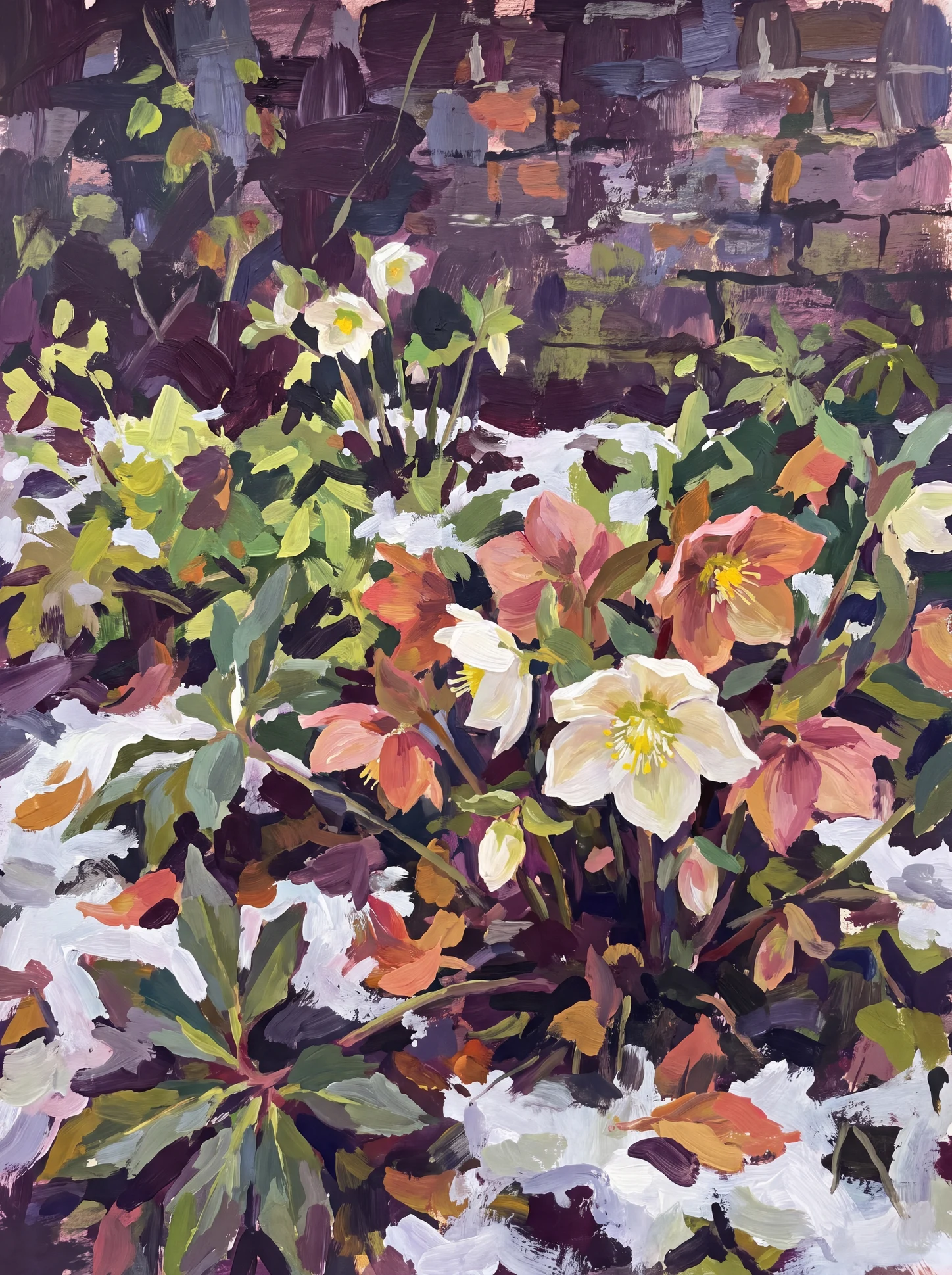
Christmas roses need a little help. The blooms of Helleborus niger can look unsightly when splashed with muddy rain. A mulch of bark chips reduces the splash, with cloches where practical. For winter pieces on the wall, see our Christmas gifts for gardeners.
Look after what's gone in
Frost does odd things to new planting. Cold winds and frost can loosen and lift the roots of trees, hedges and shrubs planted this year. If you notice it, firm them back in gently. A thick, dry mulch of straw or composted bark insulates the roots, and a quick check of ties and stakes is worth doing.
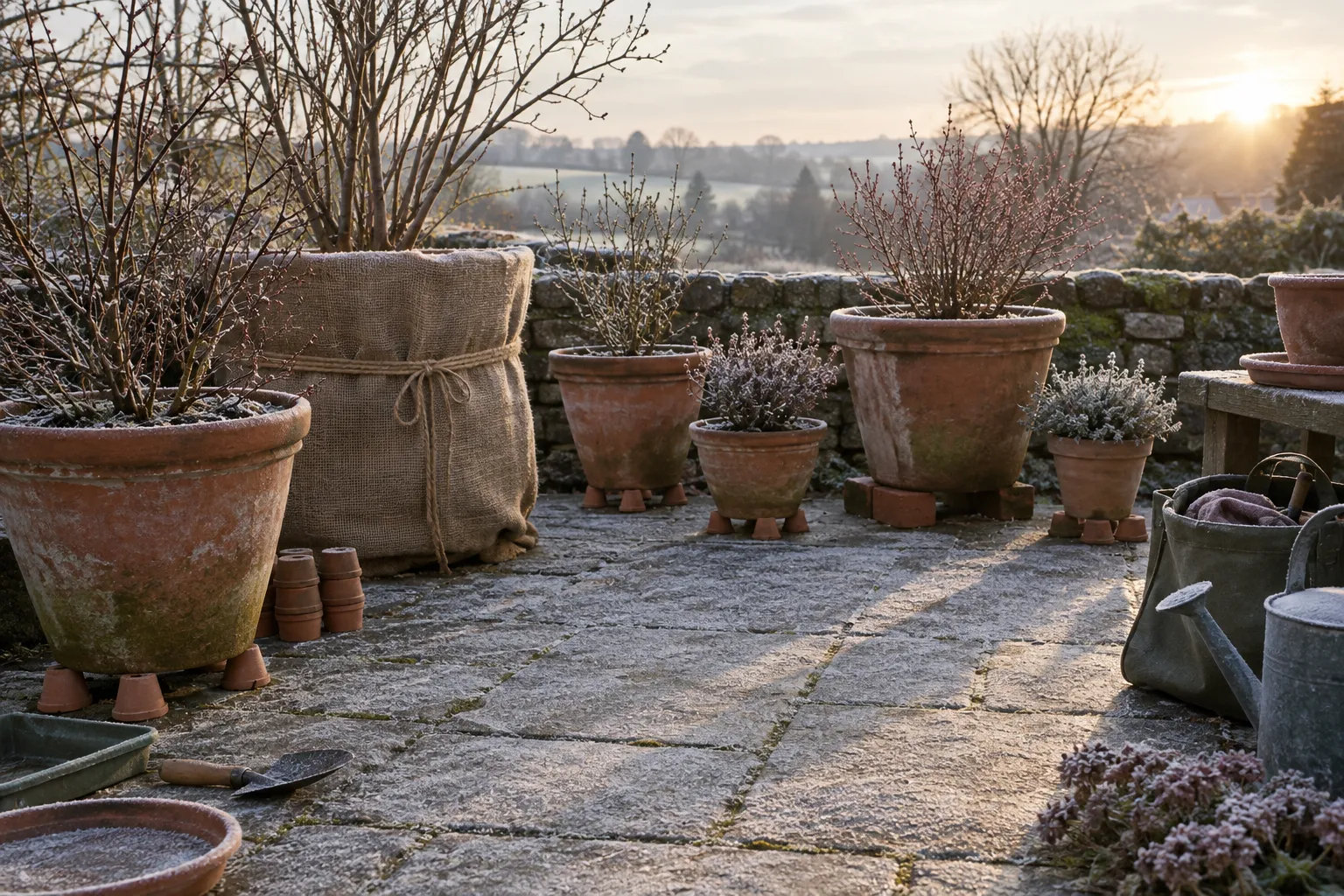
Check that tender plants outdoors still have their winter protection, especially after storms. Raise pots onto feet or bricks so they don't sit in the winter wet. Wrap large tubs that might crack in the frost with bubblewrap, hessian or fleece.
What to leave alone
Not everything should be cut now. Hold off on pruning hydrangeas until March, because the old flowerheads help protect the shoots from frost. Evergreens, tender plants and Prunus such as ornamental cherries and plums are better left until spring. They're vulnerable to silver leaf if pruned in autumn or winter. Many deciduous shrubs and hedges, such as beech, hazel and hornbeam, can be pruned from now through the dormant season. Open-grown apples and pears can be pruned too, but not those trained against walls. When to prune apple trees has the detail.
Planning for spring
Two jobs suit the dead of winter. Order seed catalogues now, because you're more likely to find everything in stock if you order well before spring. And work plenty of bulky organic matter, such as composted bark, into heavy clay to improve its drainage.
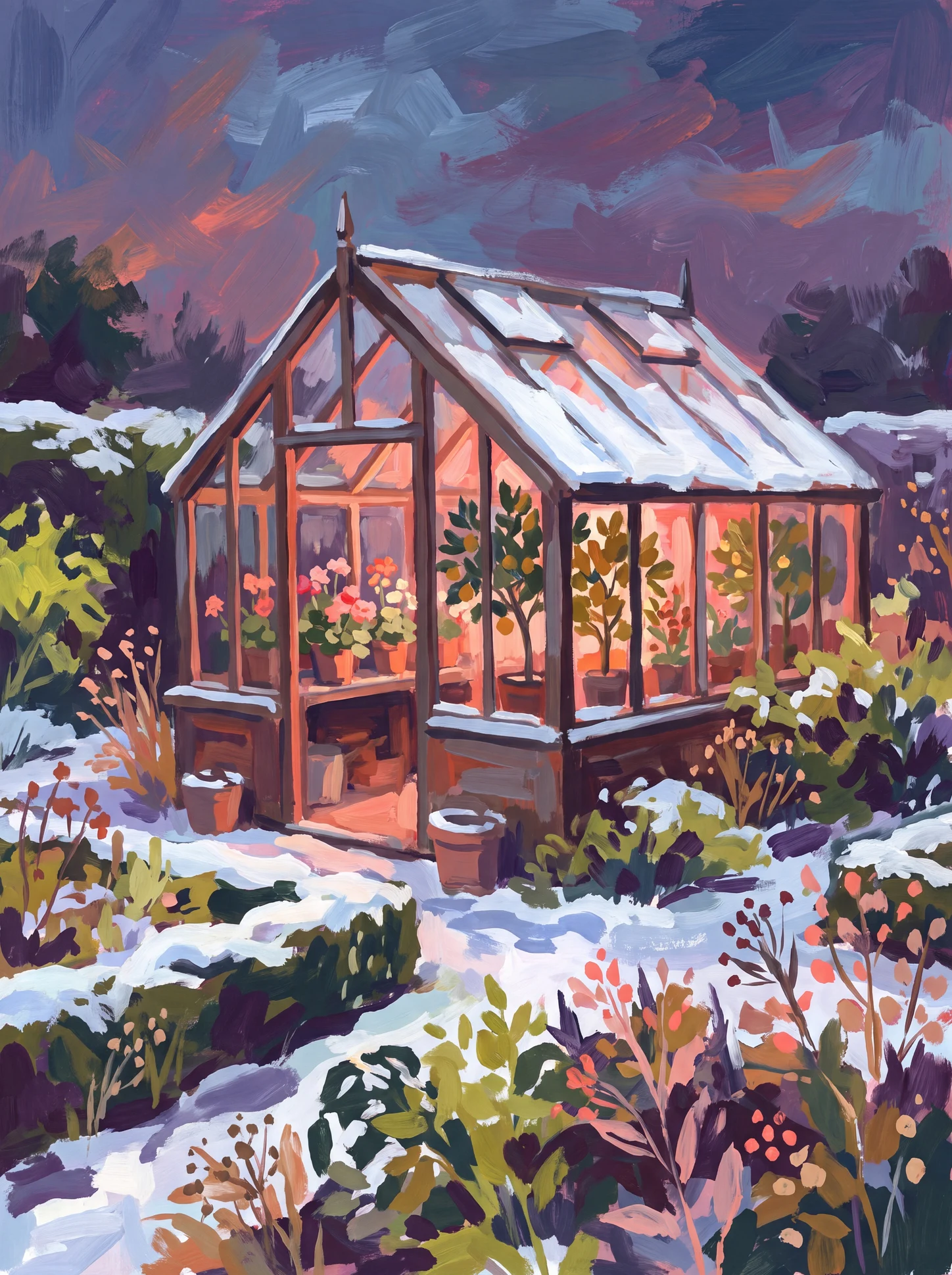
Christmas, indoors and out
If you're also buying plants to bring inside, see our guides to poinsettia, amaryllis and Christmas cactus care. The tree needs care too. The RHS calls Norway spruce the traditional tree, with a good scent but quick to drop its needles. It describes Nordmann fir as very slow to drop them, though more expensive. Keep the tree away from a fire or radiator, which causes needle drop. Saw 2.5cm off the bottom, stand it in a well of water and check it daily. With care, a cut tree should last about four weeks. A potted tree should come indoors as late as possible, and the RHS suggests the weekend before Christmas. It should not stay in the house longer than 12 days. For gifts for the gardener, our Christmas gifts for gardeners are printed to order, and our November planting guide covers the month before.
A bare-root hedge looks like nothing when it goes in. Photograph the trench on the day, and again in summer. Upload your garden photo, and the free preview shows how an art style treats it.
Sources
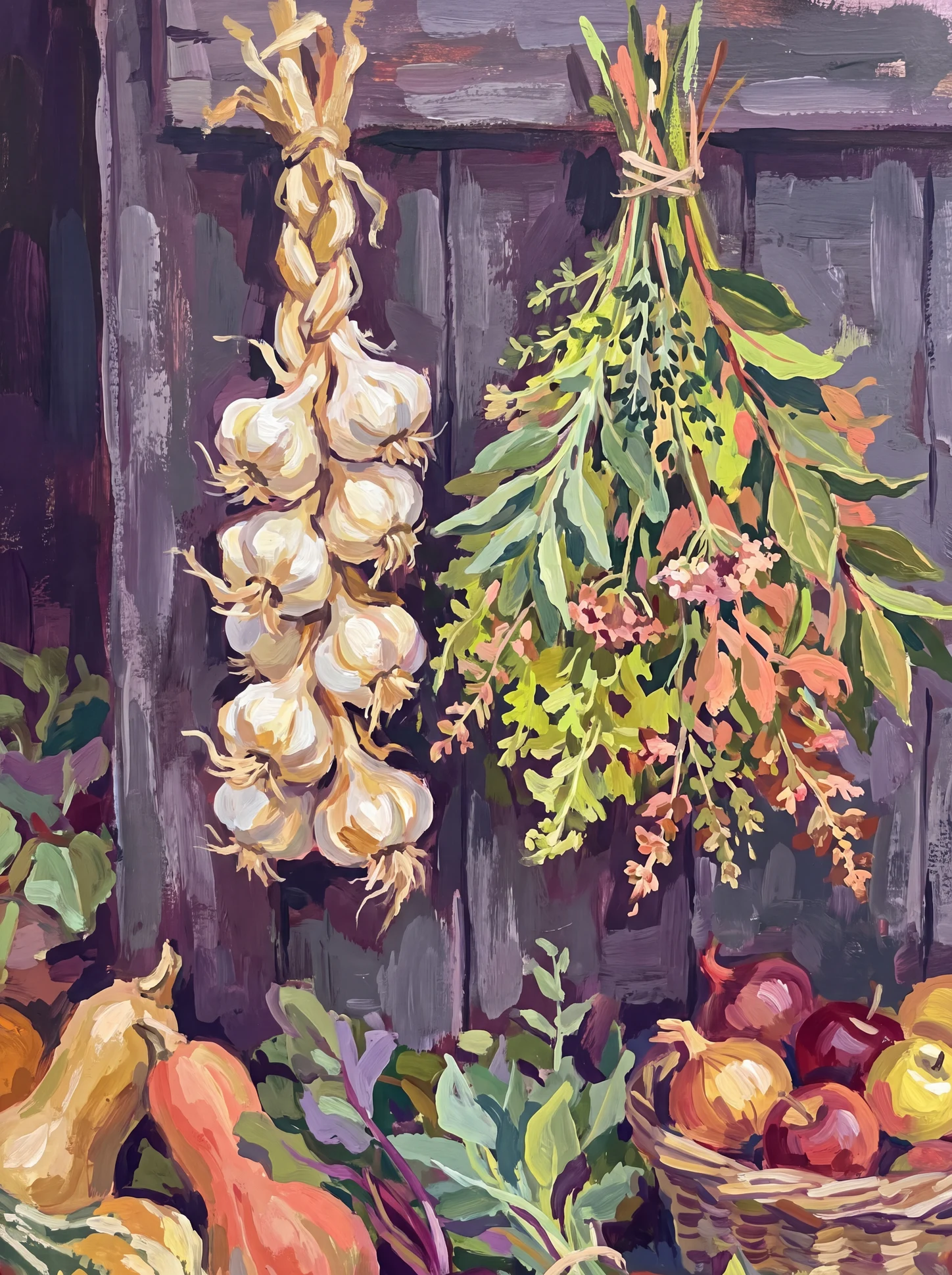
Garden art prints to go with it
Questions people ask
What can I plant in December?
Bare-root hedging, trees and roses, and new fruit trees and bushes, as long as the ground is neither frozen nor waterlogged. Garlic and shallots can go in too in mild areas with well-drained soil.
What vegetables can I plant in December?
Only garlic and shallots, in mild areas with well-drained soil. The RHS lists no vegetable sowing for December.
What flowers in the garden in December?
Witch hazel and the Christmas rose, Helleborus niger, from December to March, and Clematis cirrhosa from November.