When to prune apple trees
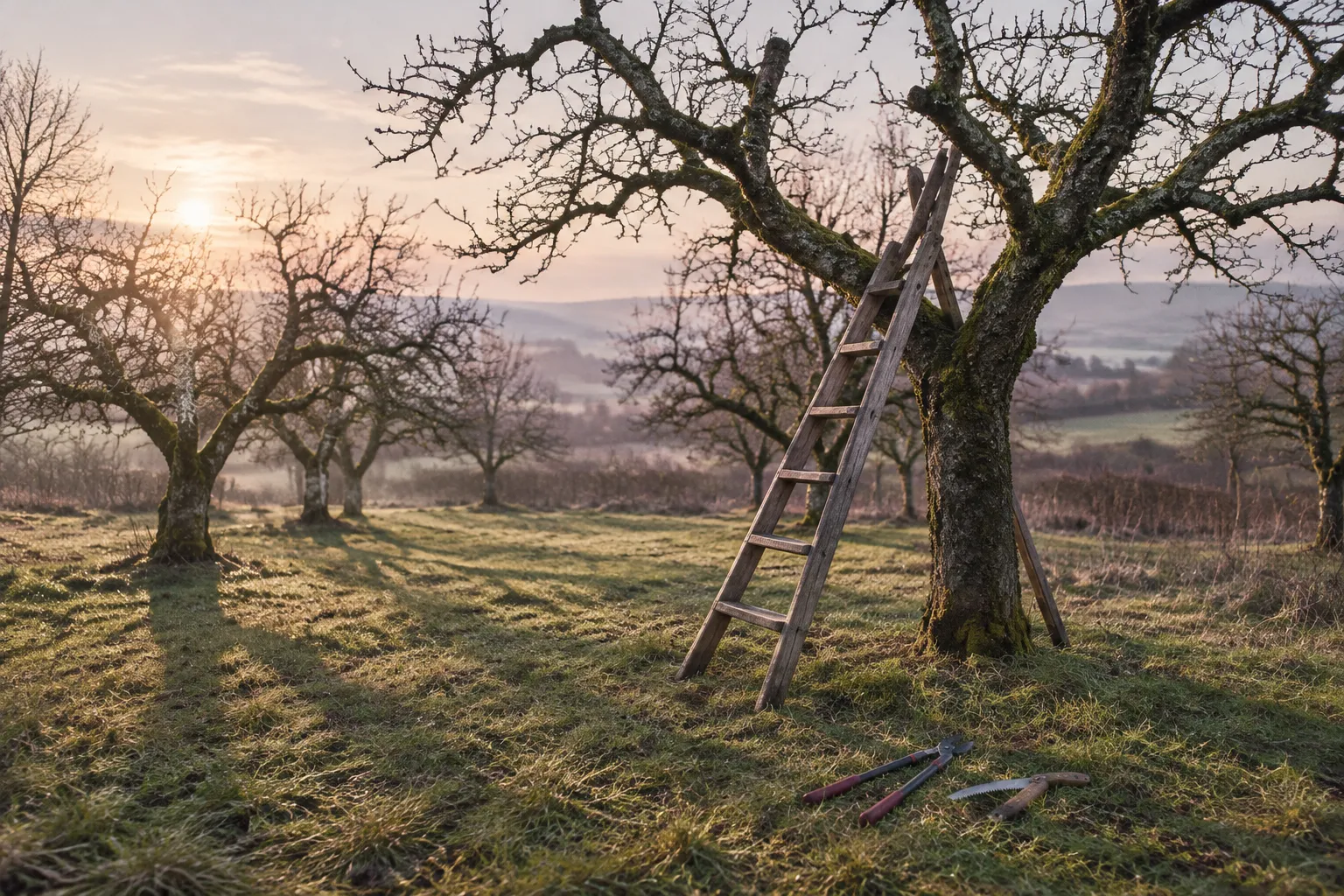
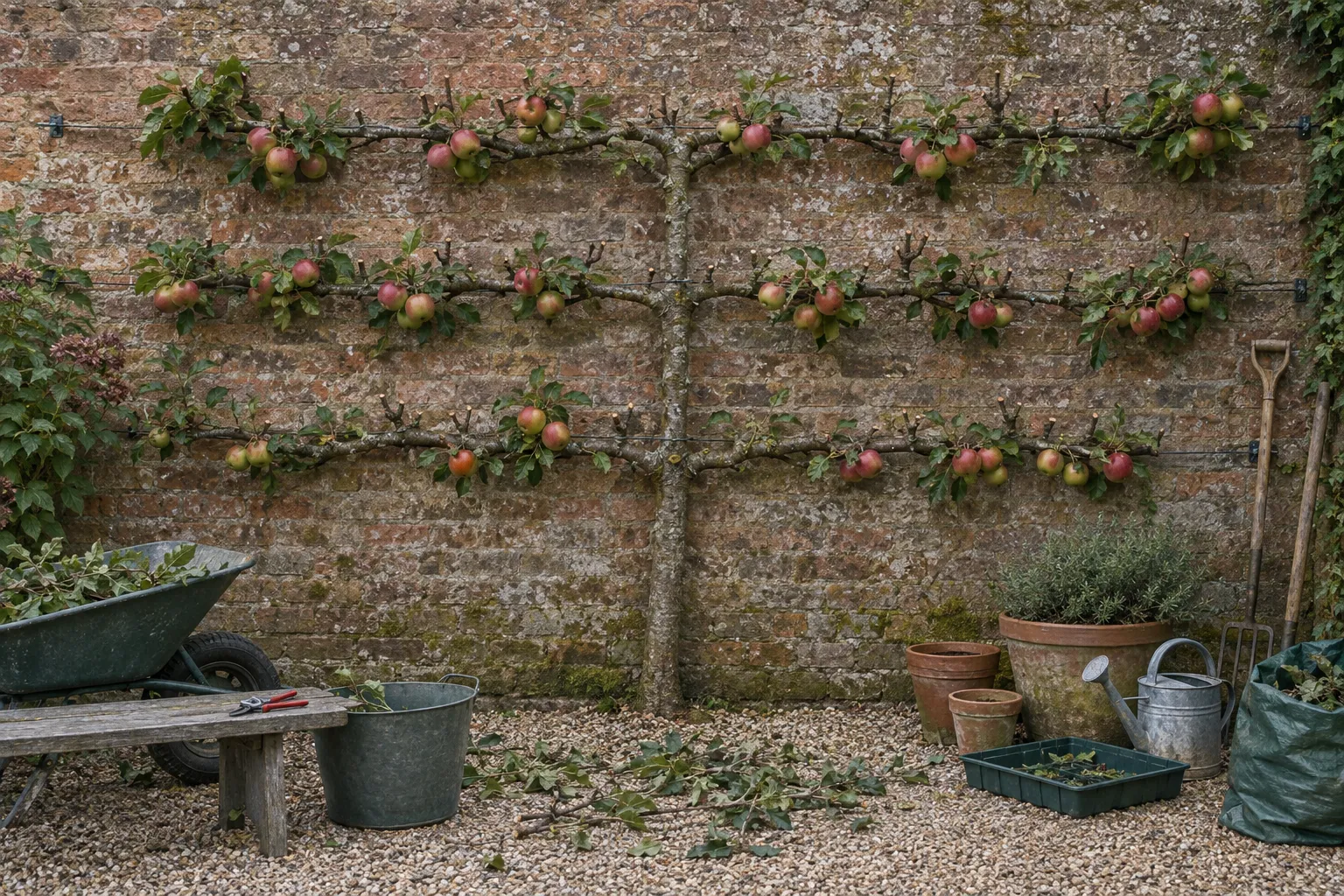
Free-standing apple trees are pruned in winter, while they are dormant. Trained forms such as cordons and espaliers are pruned in late summer. Which one you have decides the month.
Apple pruning at a glance
| Kind of tree | When | How much |
|---|---|---|
| Bush, standard or half-standard | Winter, from November to early March, while the tree is dormant | About 10 to 20 per cent of the canopy |
| Cordon, espalier, fan or pyramid | Summer, mid to late August for apples (pears late July to early August) | New shoots over 20cm cut back to about 5cm, or 2.5cm on existing spurs |
| Old, overgrown tree | Late autumn to late winter, with the tree out of leaf | No more than 25 per cent of the canopy in any one year |
| Missed the summer prune | Autumn or winter, do not wait a year | As for the summer cuts |
Two kinds of tree, two seasons
An apple tree grown as a bush, a standard or a half-standard is pruned in winter. A cordon, espalier, fan or pyramid is pruned in summer. That's the RHS split, and it settles most questions about when.
The RHS winter window runs from November to early March. The tree needs to be dormant, which means after leaf fall and before the buds burst. A tree still holding its leaves is too early.
For trained trees, summer pruning comes in mid to late August for apples. Pears go earlier, in late July or early August.
Winter pruning a bush or standard tree
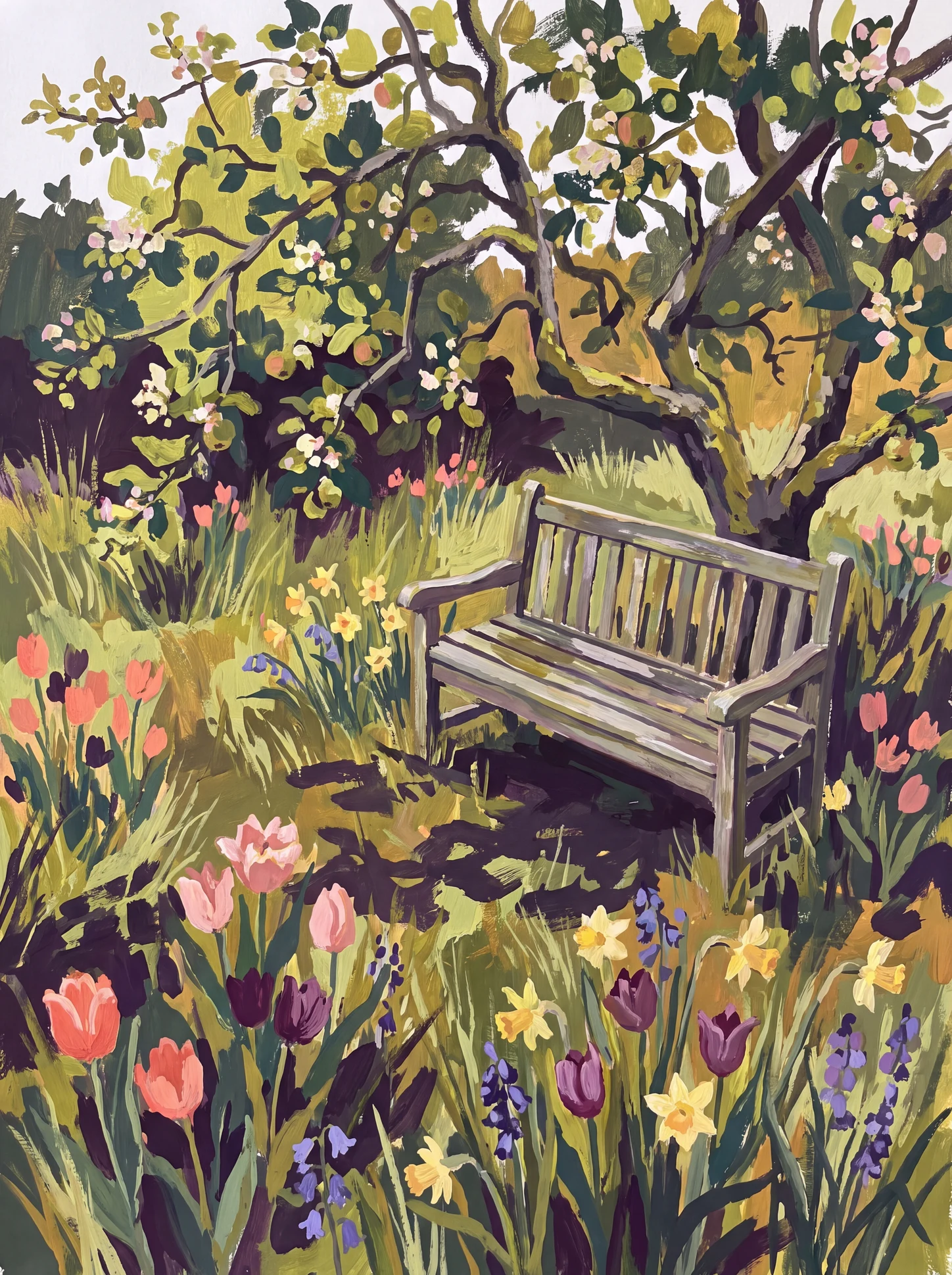
This is for established trees, usually from four or five years after planting. Younger trees follow different advice. The RHS month-by-month pages are a useful check. December suggests pruning open-grown apples and pears, and January says to winter prune them. February and March each call it the last chance before growth starts.
How much should come out? Routine pruning removes about 10 to 20 per cent of the canopy. Go harder and the tree answers with a mass of upright watershoots. So the job is steady judgement, not a drastic haircut.
Work through it in this order, following the RHS:
- Cut out dead, diseased and damaged shoots and branches first.
- Remove crossing shoots that rub together. Keep the better-placed, outward-facing one.
- Take out strong shoots growing towards the centre. Weaker ones up to 20cm long can stay.
- Prune low, downward-growing branches that get little light.
- Shorten the previous year's growth on the main branches by a quarter to a third, just above an outward-facing bud.
- Leave young side shoots alone unless they cross or crowd, so they can set fruit buds in their second year.
Then think about the kind of tree. On older spur-bearing trees, thin crowded spurs to about 10 to 15cm apart. Tip-bearers need a lighter touch, because heavy pruning removes the wood that would fruit. The RHS names 'Blenheim Orange', 'Bramley's Seedling', 'Cornish Gilliflower', 'Discovery', 'Lord Lambourne' and 'Worcester Pearmain' as examples.
If the tree has simply got too big, shorten larger branches by up to a third. Cut back to a strong outward- and upward-facing side branch that's at least a third of the thickness of the one you're removing.
Sharp blades make the work easier and the cuts cleaner. Add a sturdy ladder, ideally a tripod one, eye protection and gloves.
An old, overgrown tree
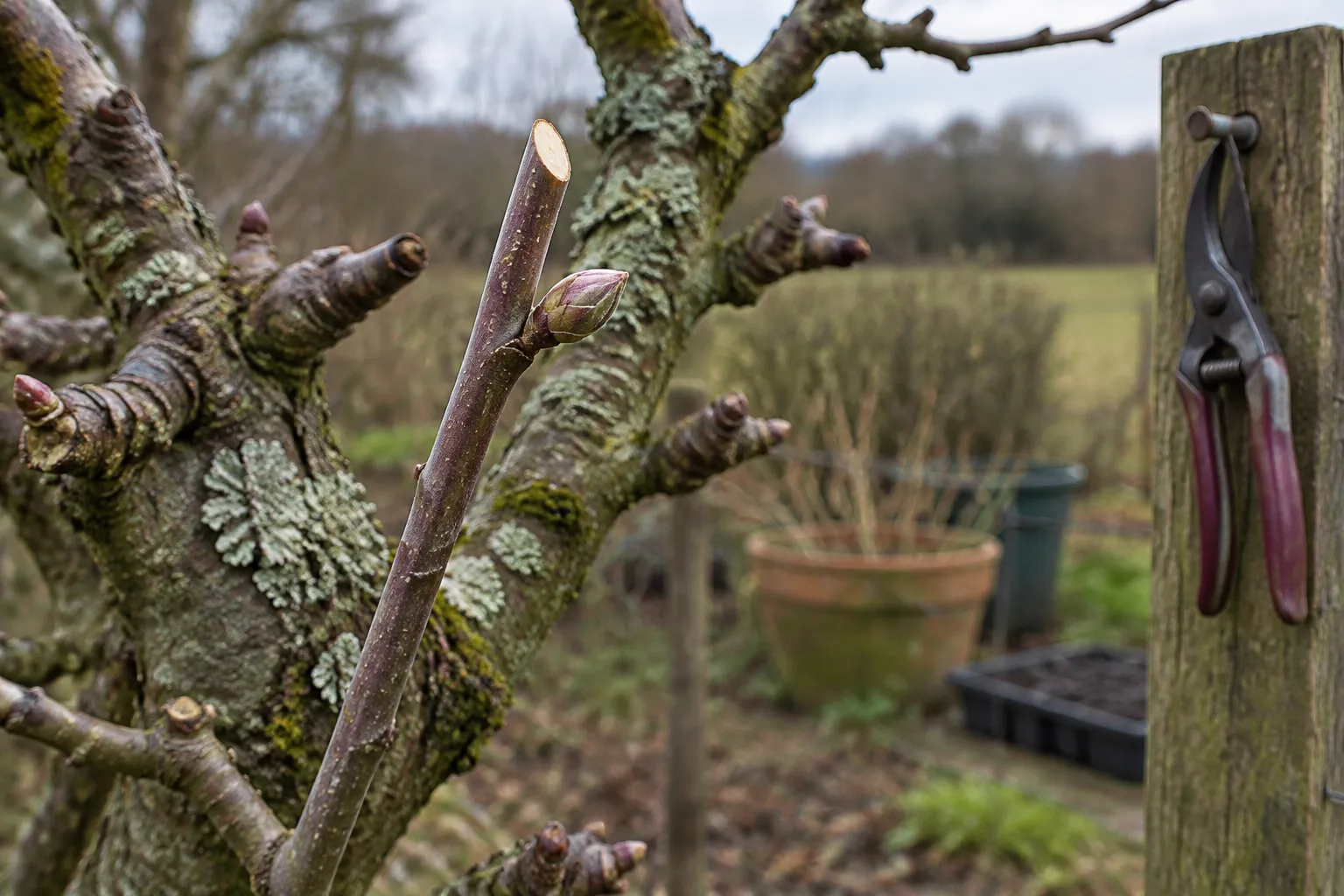
A neglected tree is worth saving, the RHS says, as long as the trunk and main branches are healthy. They must still be producing new growth and fruit. Have a large tree checked by a qualified arborist first. Renovation pruning is done between late autumn and late winter, with the tree out of leaf. The aim is an open, goblet-shaped crown, with light and air reaching every part.
The limit is 25 per cent of the canopy in any one year. It's tempting to do the lot at once, but the tree answers with upright watershoots that crowd the crown again. So spread the work over several years. Aim for well-spaced main branches, 50 to 60cm apart, measured from halfway along each. Avoid leaving bare stumps. Unless you must, leave branches thicker than 20cm alone, because large wounds may not heal well. Once growth is under control, switch to routine winter pruning.
Summer pruning a cordon or espalier
Restricted shapes need pruning every year, in late summer, or they lose their form. The RHS explains the point: summer pruning restricts growth, lets light and air in, and encourages short fruiting spurs. Jim Arbury, the RHS specialist who discusses it there, notes that many allotments don't allow larger trees because they'd shade other plots. Trained forms get round that, which is one reason they suit an allotment.
Timing follows the tree. For cordons the cue is that the lower third of the new shoots has turned woody, in general mid to late August for apples. A heavy crop slows growth, so pruning can start earlier in August. A vigorous tree, a light crop, a wet summer or a home in the north or west means waiting a little longer.
The method has two steps:
- Tie in any shoots you need to extend the framework first, so you don't prune them off by accident.
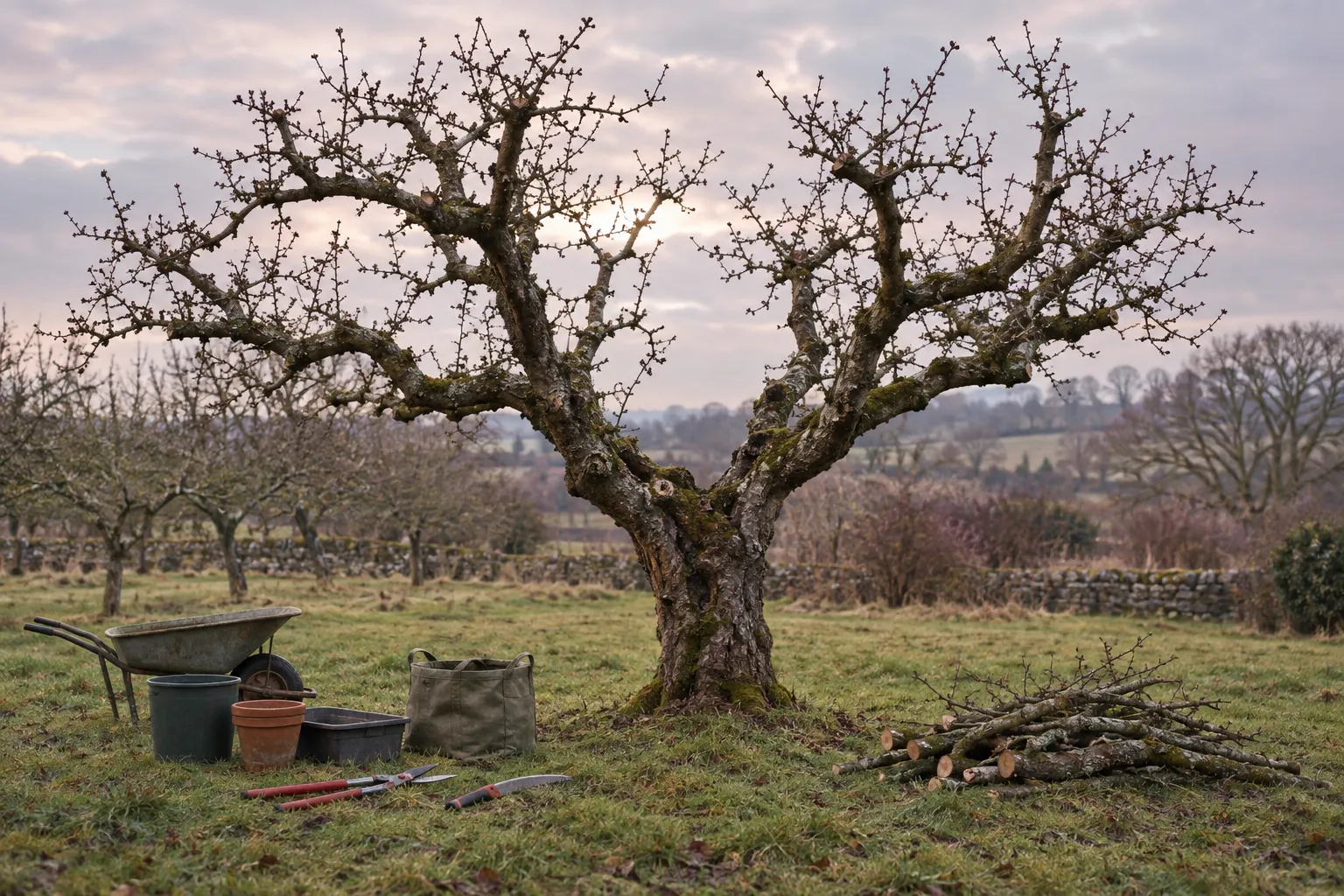
- Cut the rest of the young shoots that are longer than about 20cm. Growing straight from the framework, they go back to about 5cm. Growing from existing spurs, they go back to about 2.5cm.
On a cordon the RHS puts the cut at one leaf beyond the cluster of leaves at the base of the new growth. Shoots under 20cm stay. They usually end in a fruit bud.
If shoots regrow after pruning, you probably went too early. Cut the regrowth back in September to one leaf beyond your earlier cut.
And if you miss the summer prune, don't wait a year. Do it in autumn or winter instead. Once the tree is dormant, spurs that have grown too long can also be thinned in winter.
A large, vigorous tree
Some free-standing trees grow too much however lightly they're pruned. These can have a summer prune in addition to the winter one, spread between mid-August and mid-September. Side shoots with more than 30cm of this year's growth are cut back to 15cm, and only the more vigorous ones. This reduces vigour and helps fruit buds form.
Photograph the tree while it's fruiting
Pruning is a patient job, and the pay-off arrives in the autumn. The RHS September jobs say to harvest apples and pears. That's the time to photograph the tree, in leaf and loaded, before it goes bare again.
Upload that picture and decide later whether it stays a photograph or becomes art. For a bench under one old apple tree, try Bench under the Apple Tree. Planting a new tree this winter? RHS advice for November is in our planting calendar. A photo of someone else's old tree can become one of our personalised gifts for gardeners.
Sources
Garden art prints to go with it
Questions people ask
Is October too late to prune an apple tree?
October is usually too early. A free-standing apple tree is pruned in winter, from November to early March, once it has dropped its leaves and before the buds burst.
What are the common mistakes when pruning apple trees?
Pruning a trained cordon or espalier in winter instead of late summer, and taking out too much at once. Routine pruning removes about 10 to 20 per cent of the canopy; more than that brings a mass of upright watershoots.
How much can you cut off an old apple tree?
No more than 25 per cent of the canopy in one year. Spread the renovation of an overgrown tree over several winters.