Start with the bit you love.
A good garden photograph needs a clear subject more than perfect weather. Choose the view you recognise, then give it enough light and space to work on paper.
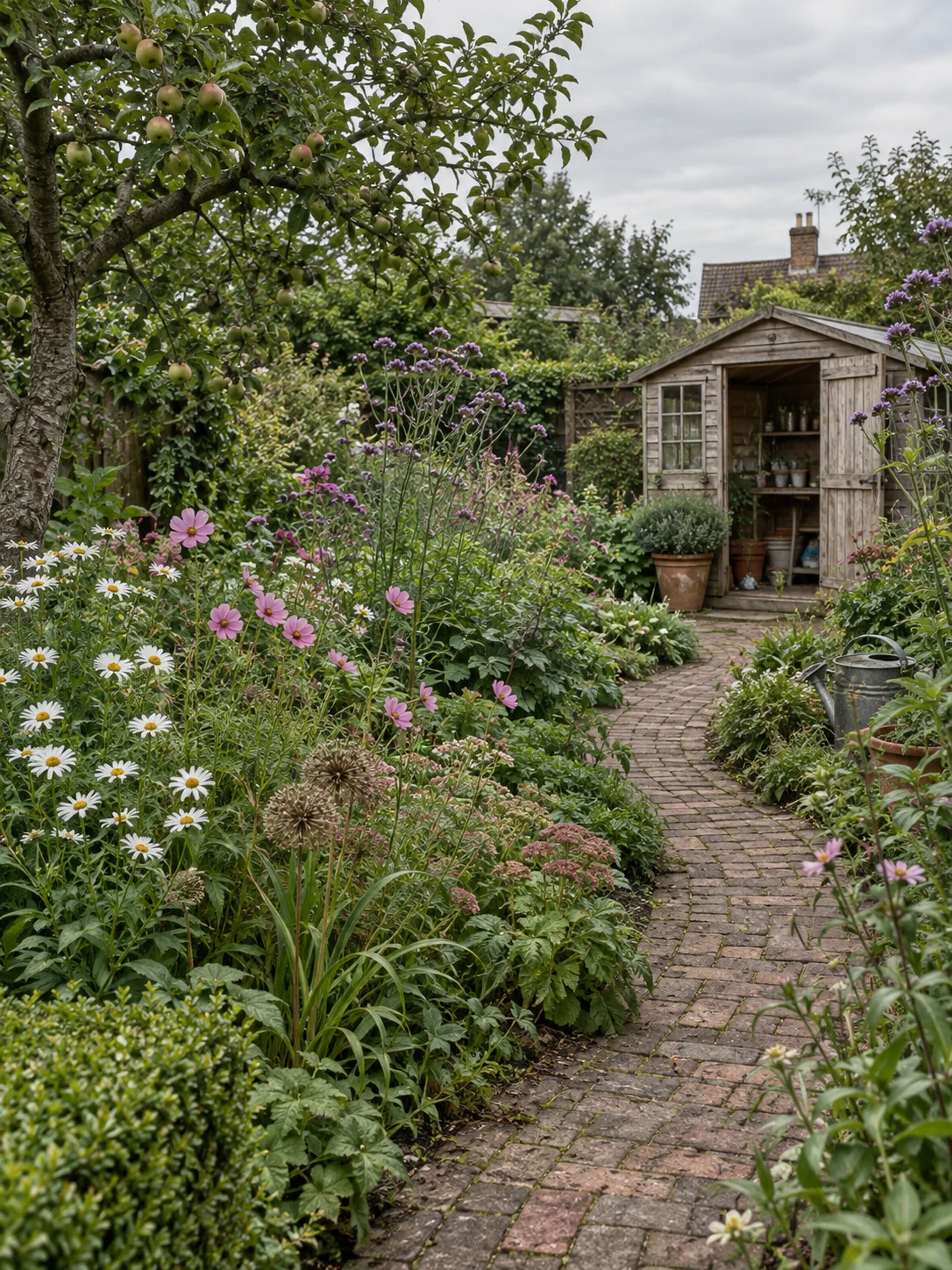
Choose one thing for the picture to be about
Before opening the camera, decide what you want to remember. It might be the curve of a path, a favourite bench, the first season on an allotment or a whole border in flower. Move until that subject is clear. A photograph with a path and a shed usually tells a different story from a close-up of one flower. Neither is better; they serve different memories.
The RHS's garden image guidance also recommends composing around a focal point. You can apply that principle to a small back garden without making it look like a show garden.
Look at the light on the screen
Bright sunshine can leave white flowers without visible detail and put the rest of a border into deep shadow. Try a second photograph when a cloud passes, or return when the light reaches the plants from the side. Tap the important area on your phone screen to focus. Look at the resulting photograph, not only the live preview.
Take a wider version and a closer version. Keep the phone steady, and check a flower or the shed roof at full size afterwards. If the subject is blurred, a larger print will not restore the missing detail. A breezy day may suit the garden beautifully but make a close flower photograph harder.
Leave room for the print shape
A tall phone photograph does not have the same proportions as every paper or canvas size. Leave some space around the flower heads and the edges of a building. The crop should not remove the part that made you take the picture. Compare portrait and landscape compositions if the view allows it.
For a group of plants, check all four corners. A bright bucket or an accidental strip of sky can pull attention away from the garden. You do not have to tidy away its character; simply choose what belongs in your picture.
Keep the original file
Use the original camera file at its highest quality. Avoid screenshots, messaging-app copies and photographs downloaded again from social media. The RHS community photography guidance likewise recommends a full-resolution camera setting. Transfer the original file when somebody else takes the photograph for you.
Decide how faithful the result needs to be
Direct photo printing keeps the supplied image without an AI art treatment. Choose that for a careful record of planting or a particular flower. An AI garden portrait can give the scene a painterly character, but it may alter plant shapes, paths or structures. Inspect the preview before choosing it. Read our comparison of the two routes if you are unsure.