Botanical prints, to bring the border indoors
Botanical prints of twelve garden plants, from an old rose to a clump of snowdrops, each drawn on a cream ground in the manner of an old herbal. Printed to order as a poster, framed, or on canvas, metal or wood.
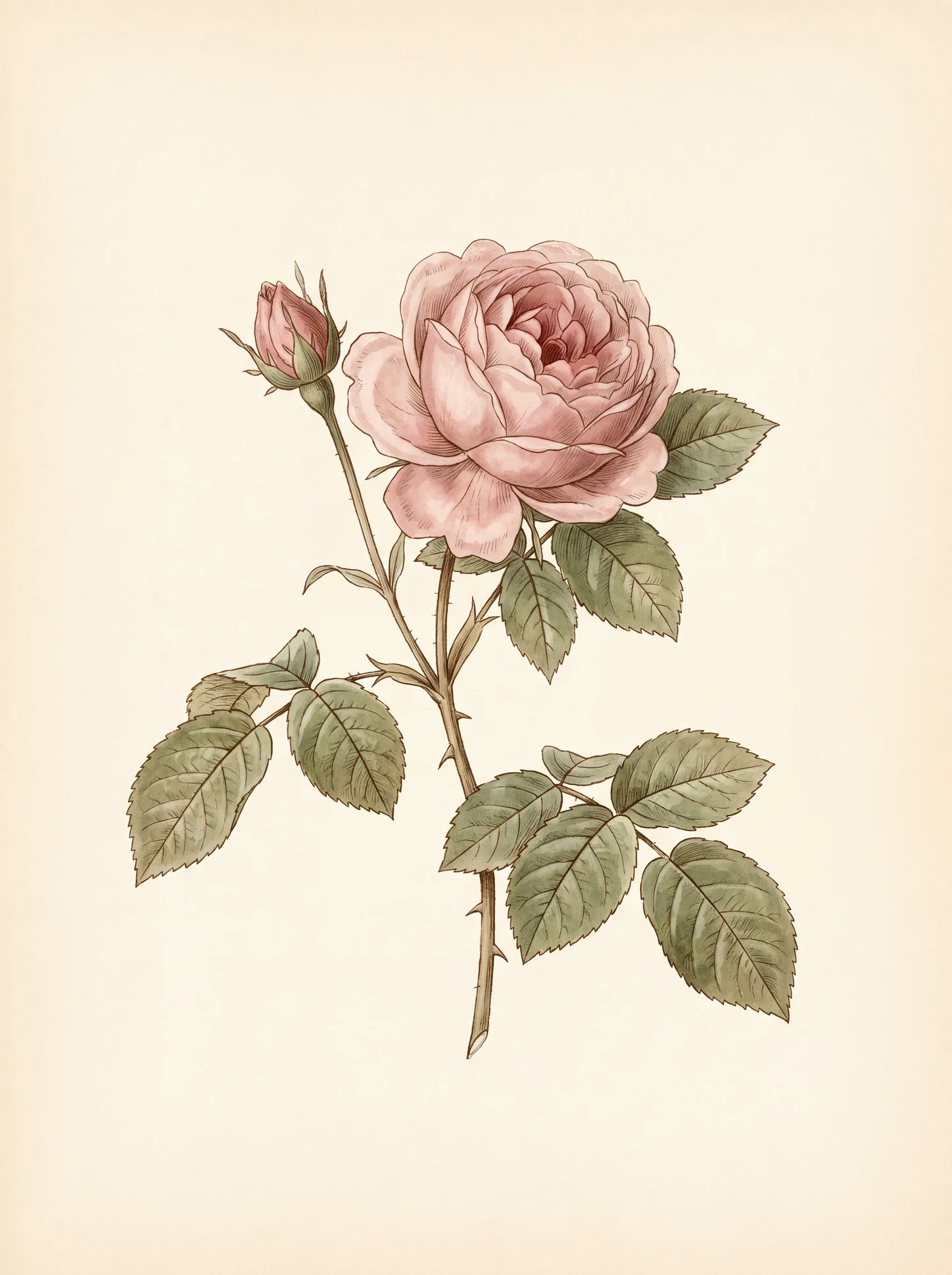 Botanical Rose (botanical style) Poster from £15.99
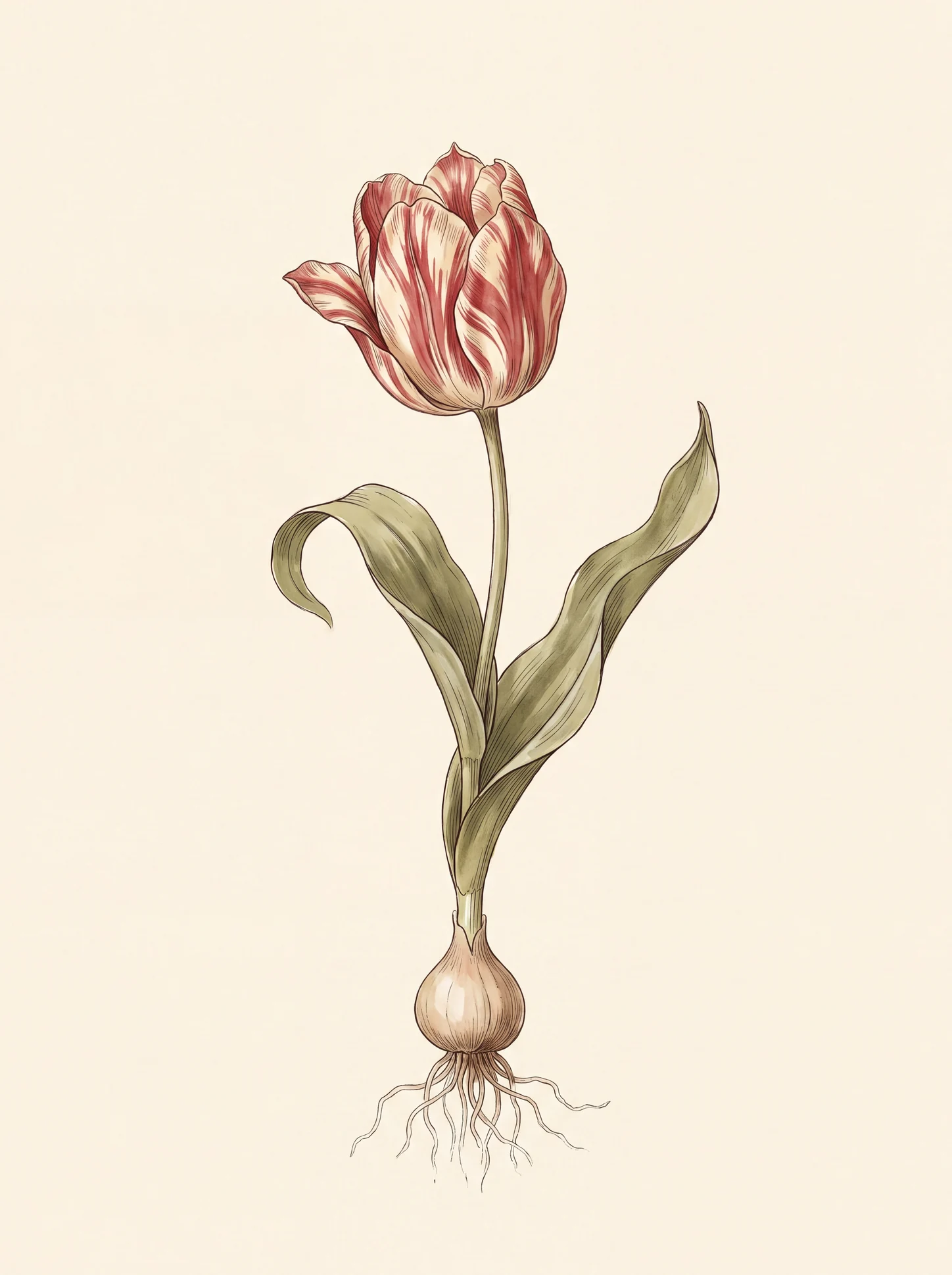 Botanical Tulip (botanical style) Poster from £15.99
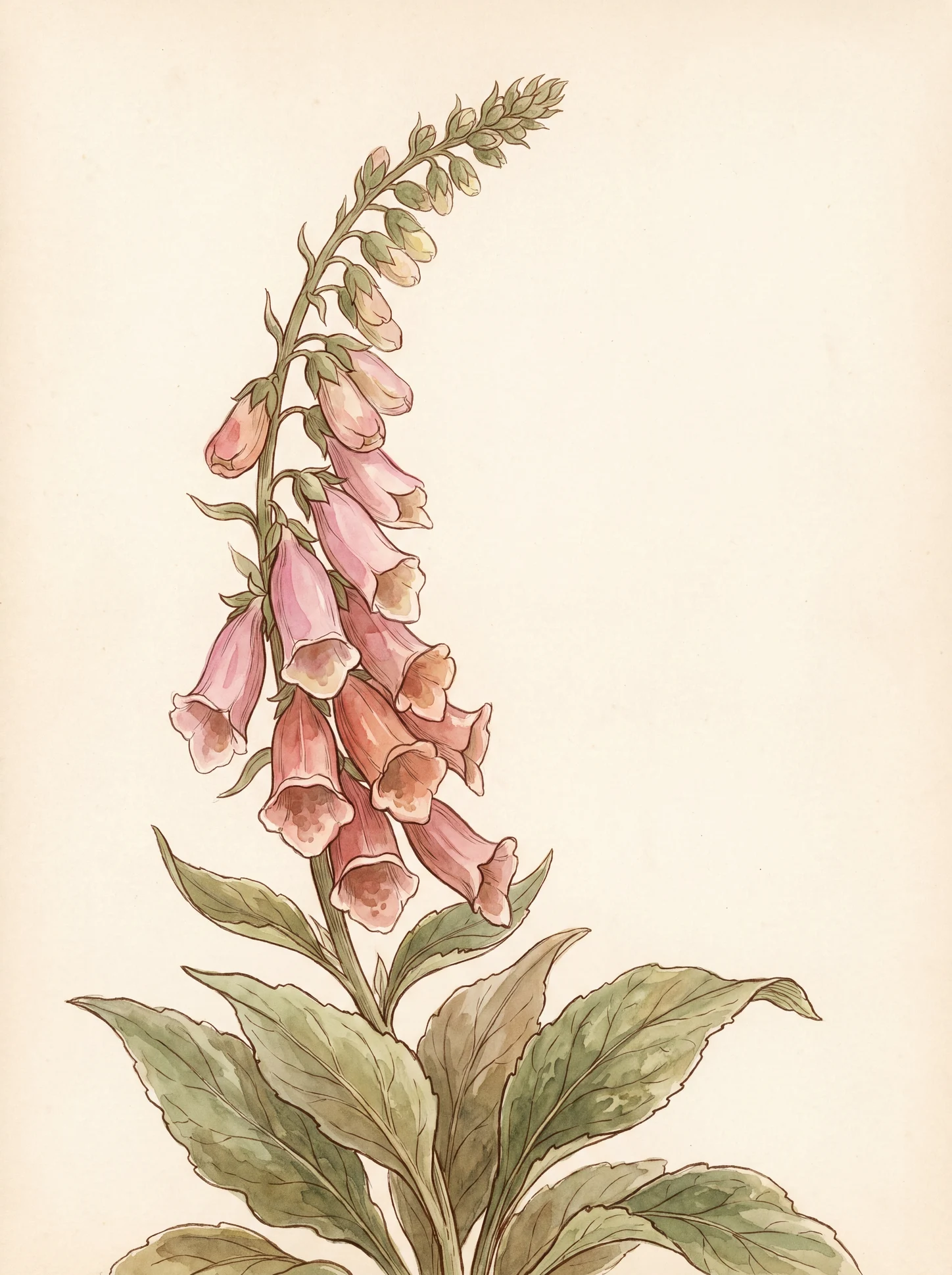 Botanical Foxglove (botanical style) Poster from £15.99
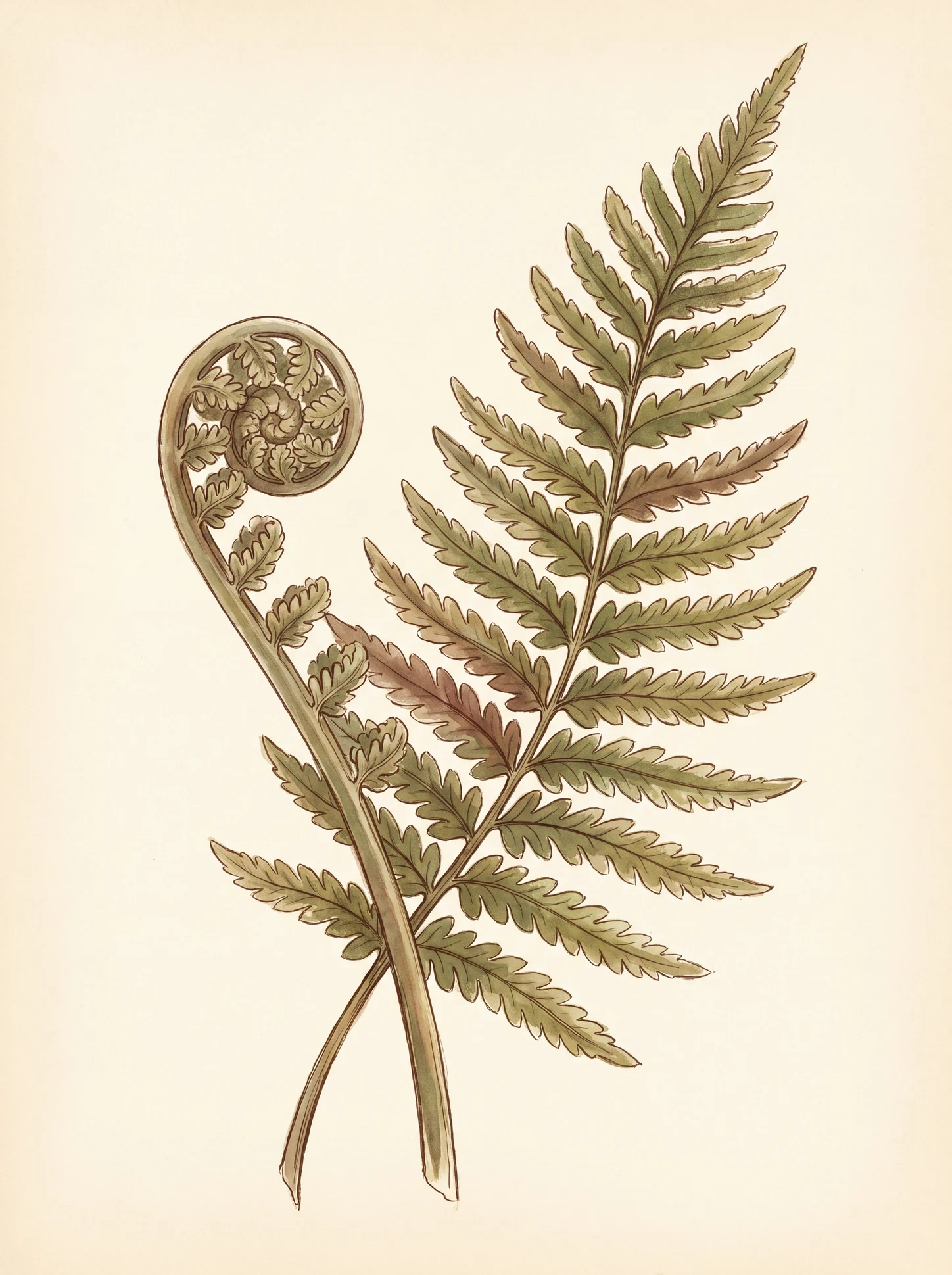 Botanical Fern (botanical style) Poster from £15.99
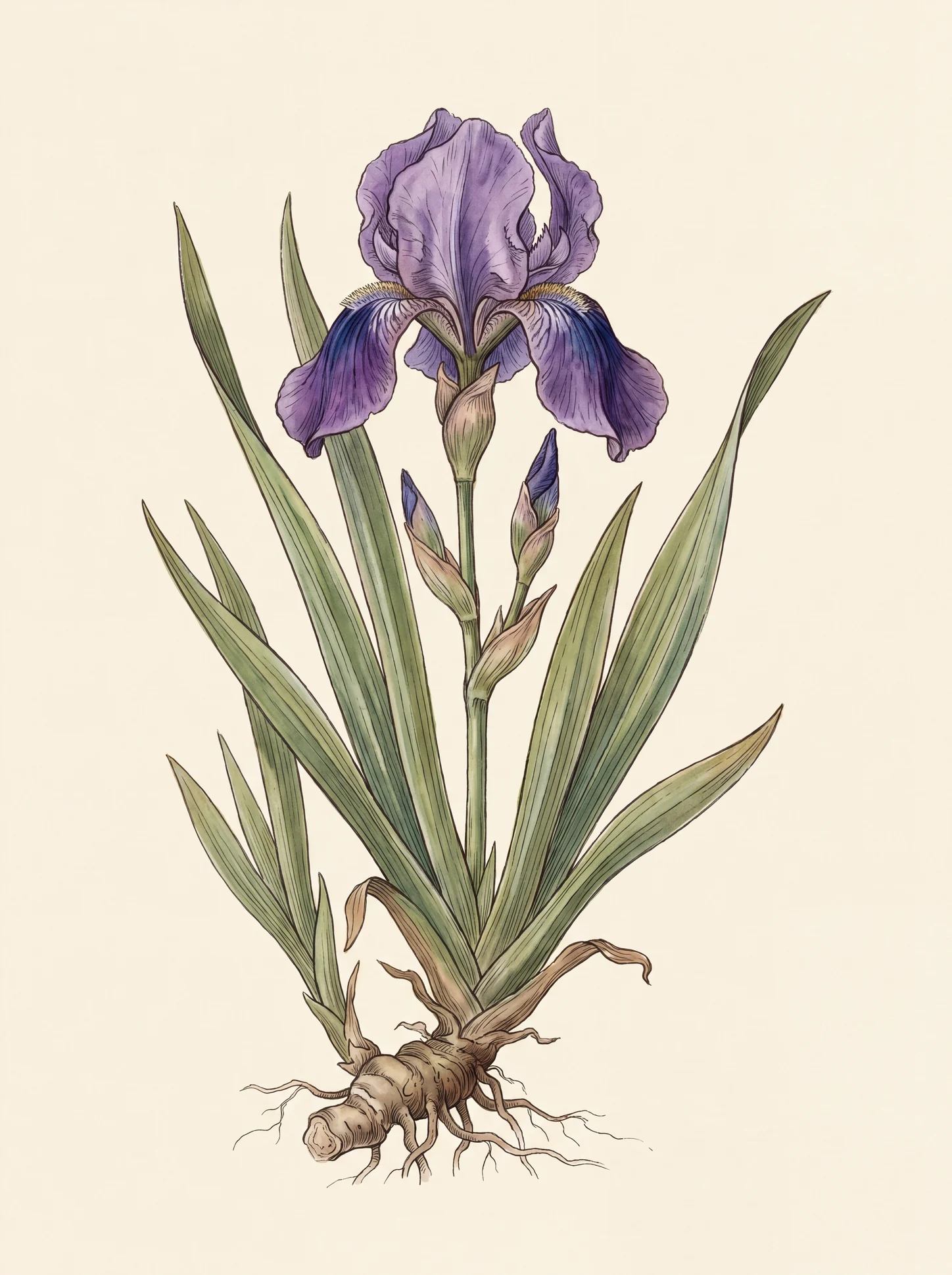 Botanical Iris (botanical style) Poster from £15.99
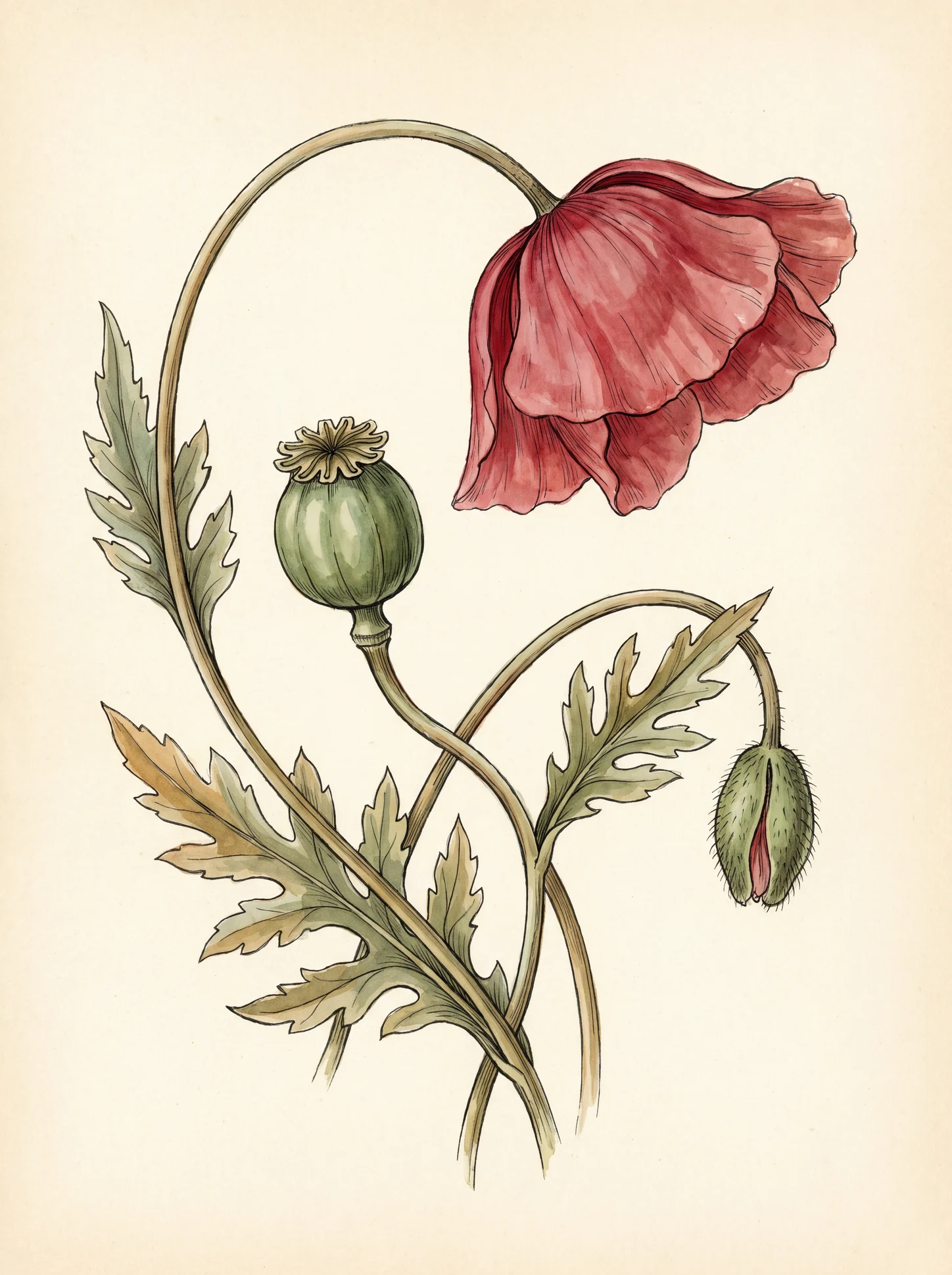 Botanical Poppy (botanical style) Poster from £15.99
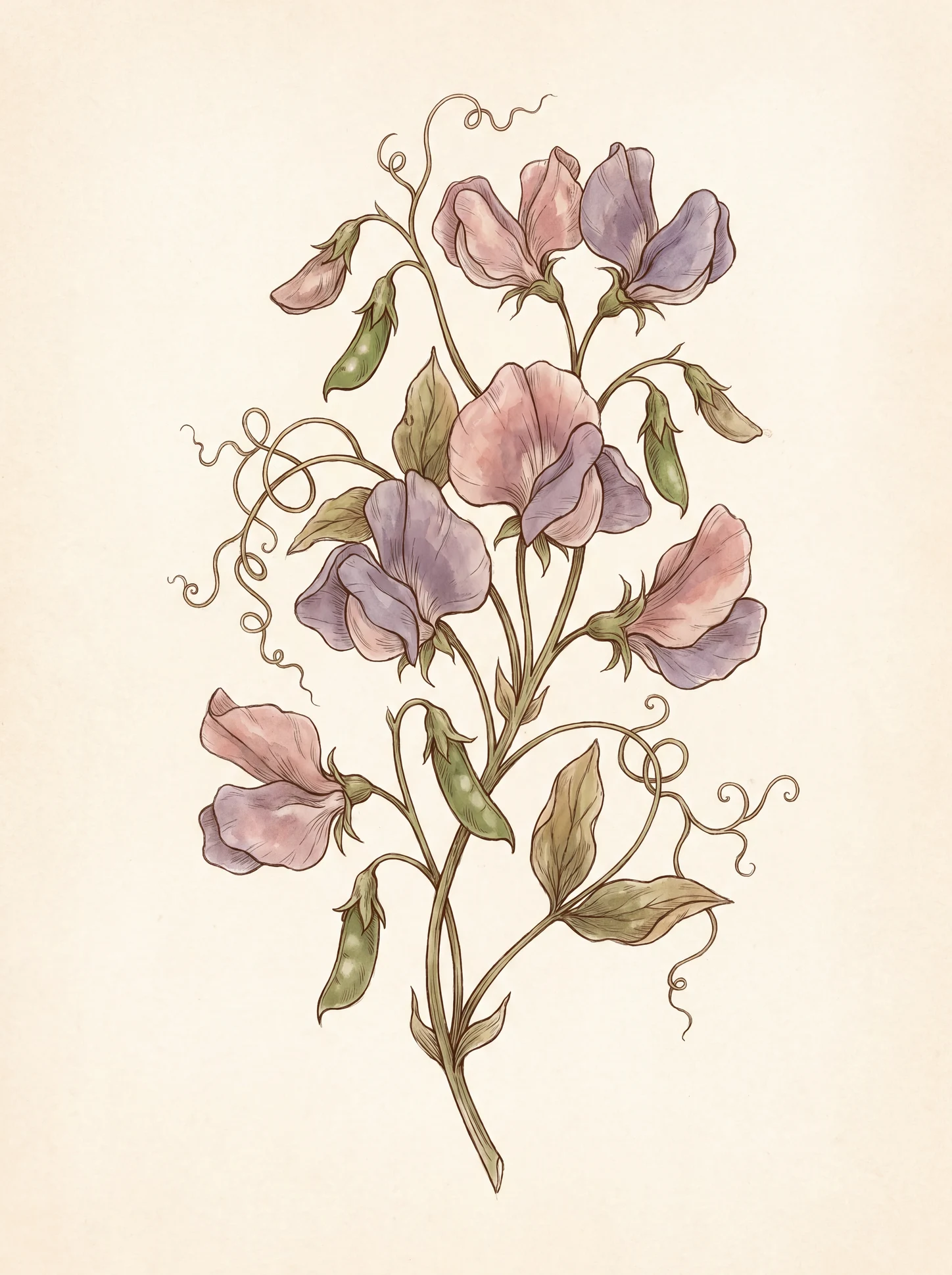 Botanical Sweet Pea (botanical style) Poster from £15.99
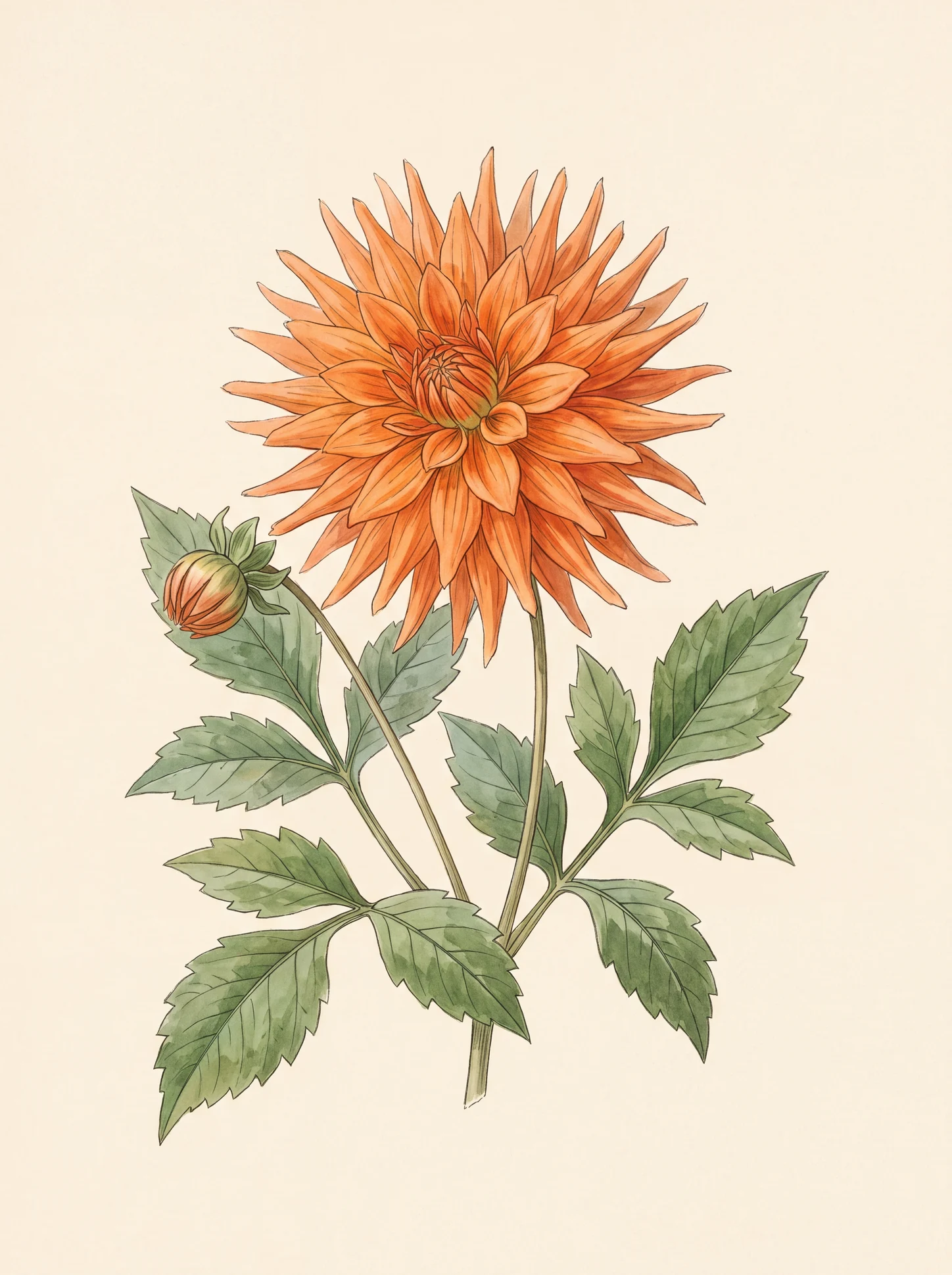 Botanical Dahlia (botanical style) Poster from £15.99
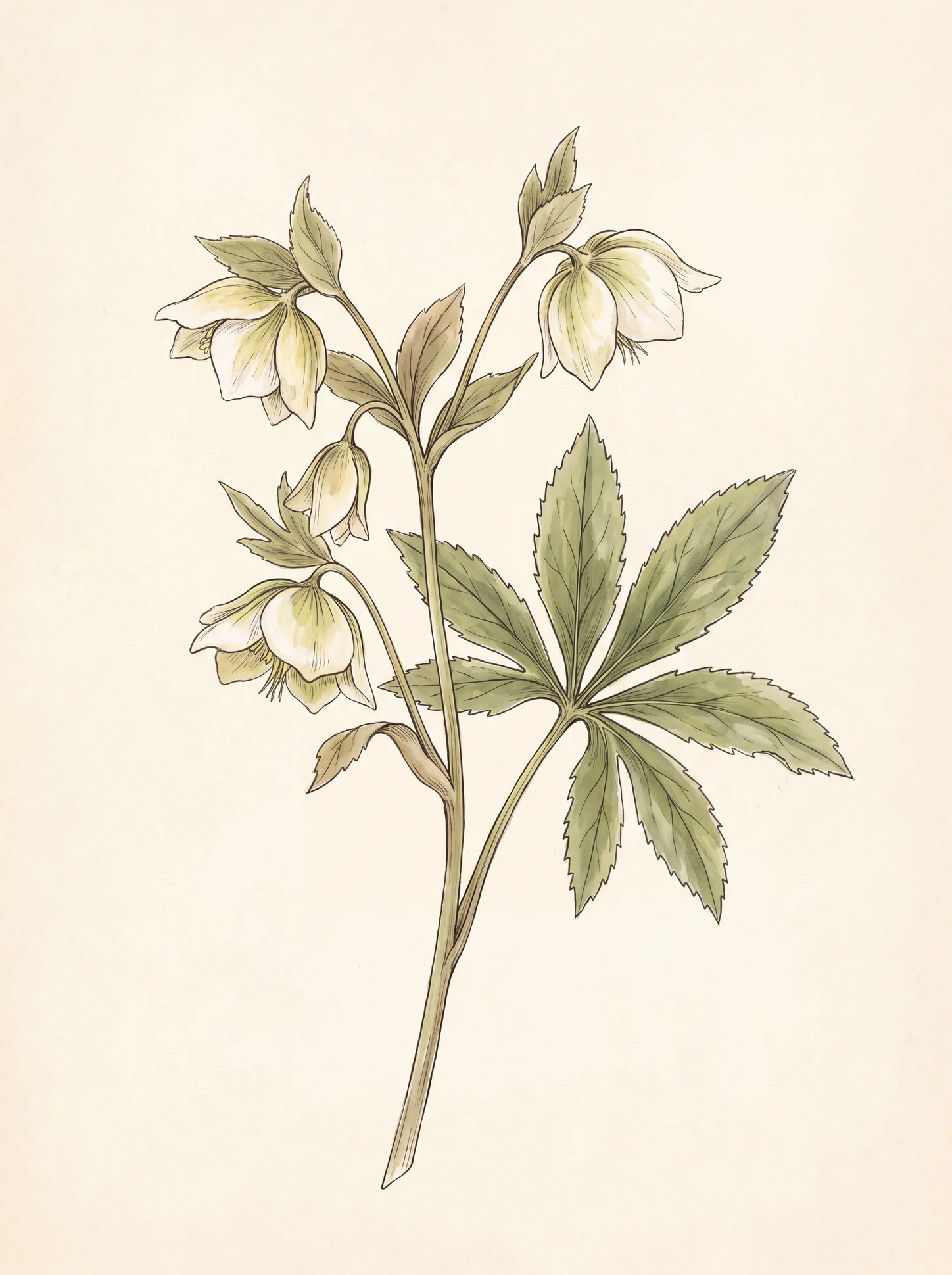 Botanical Hellebore (botanical style) Poster from £15.99
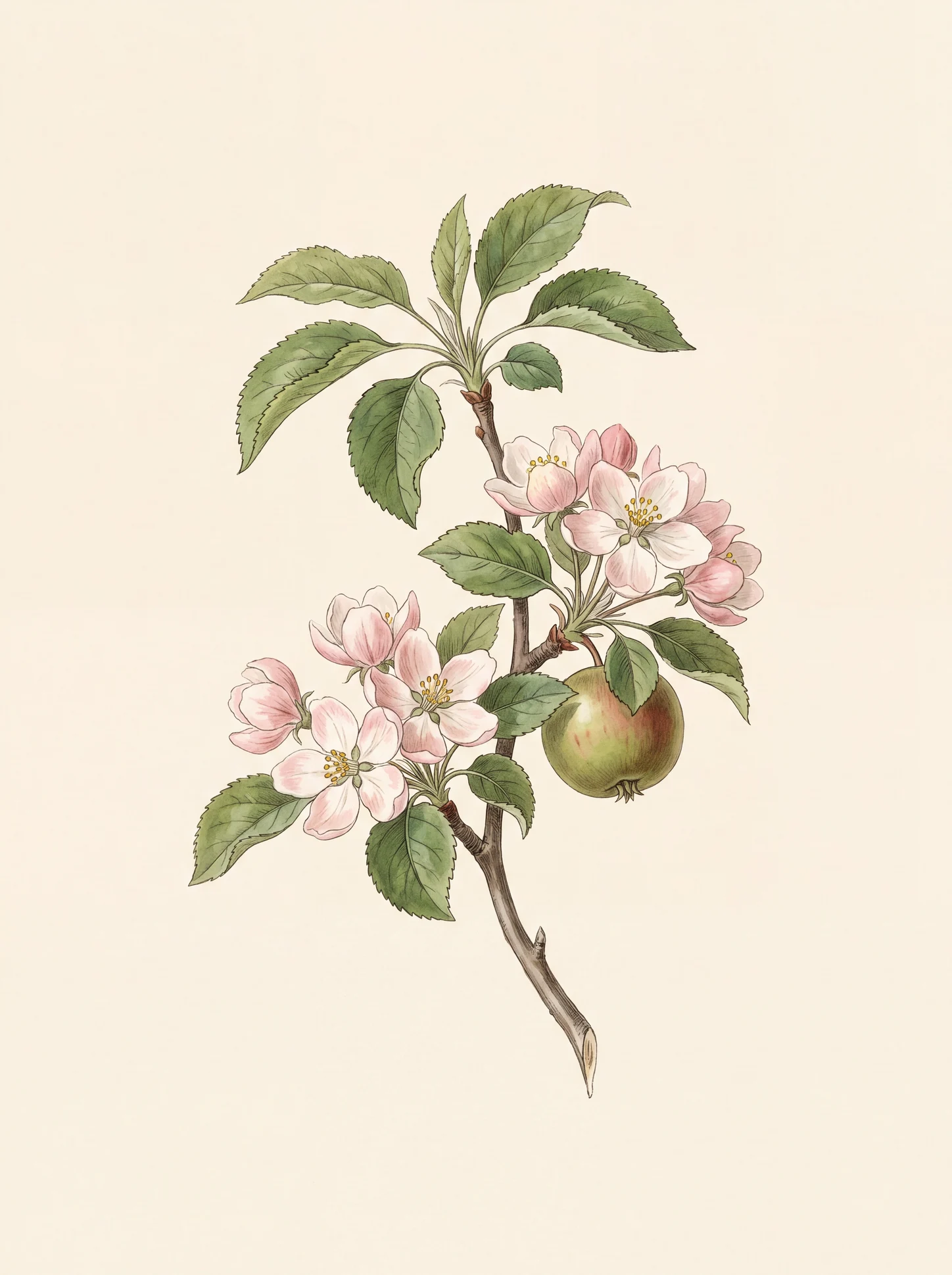 Botanical Apple Blossom (botanical style) Poster from £15.99
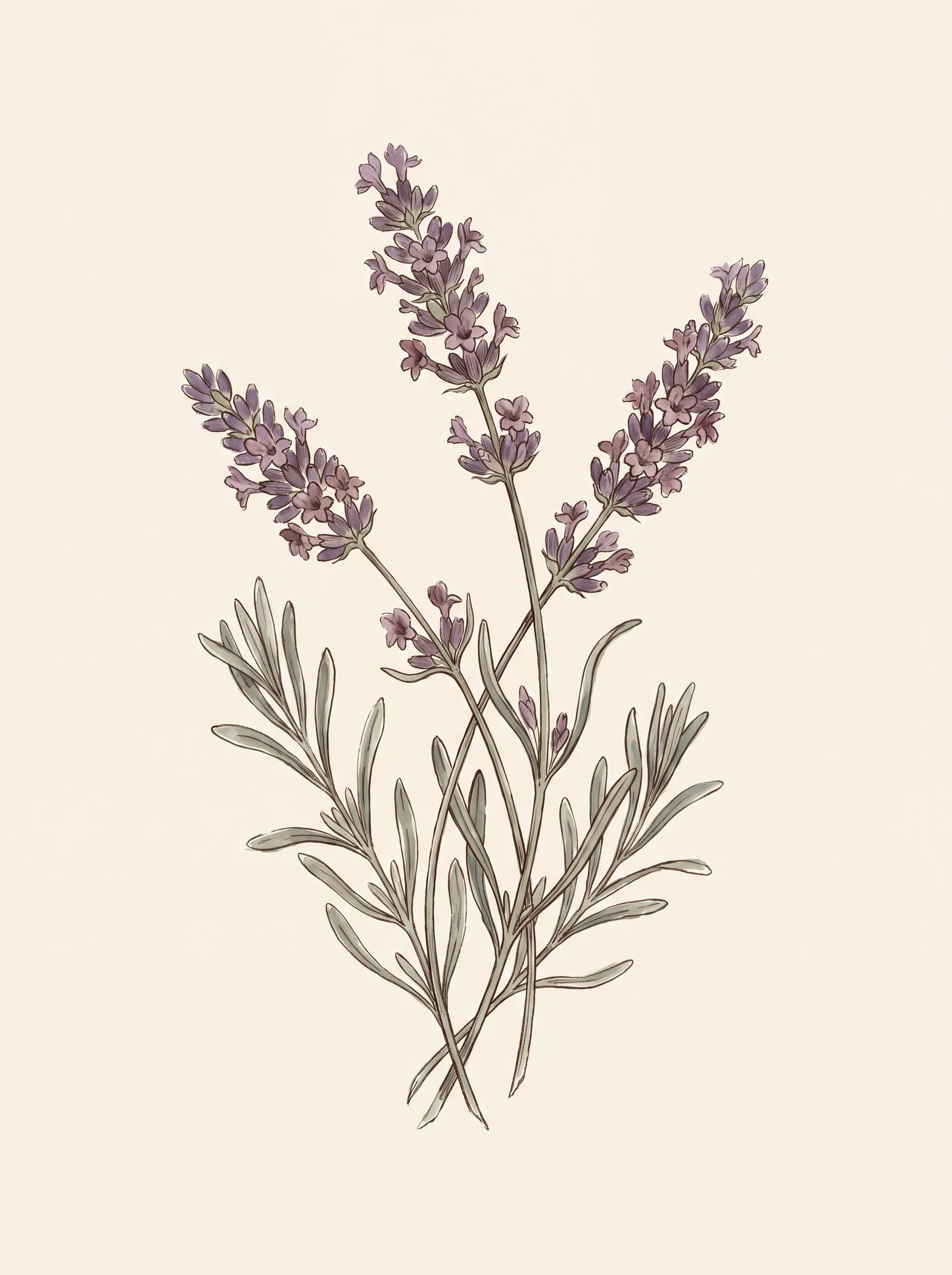 Botanical Lavender (botanical style) Poster from £15.99
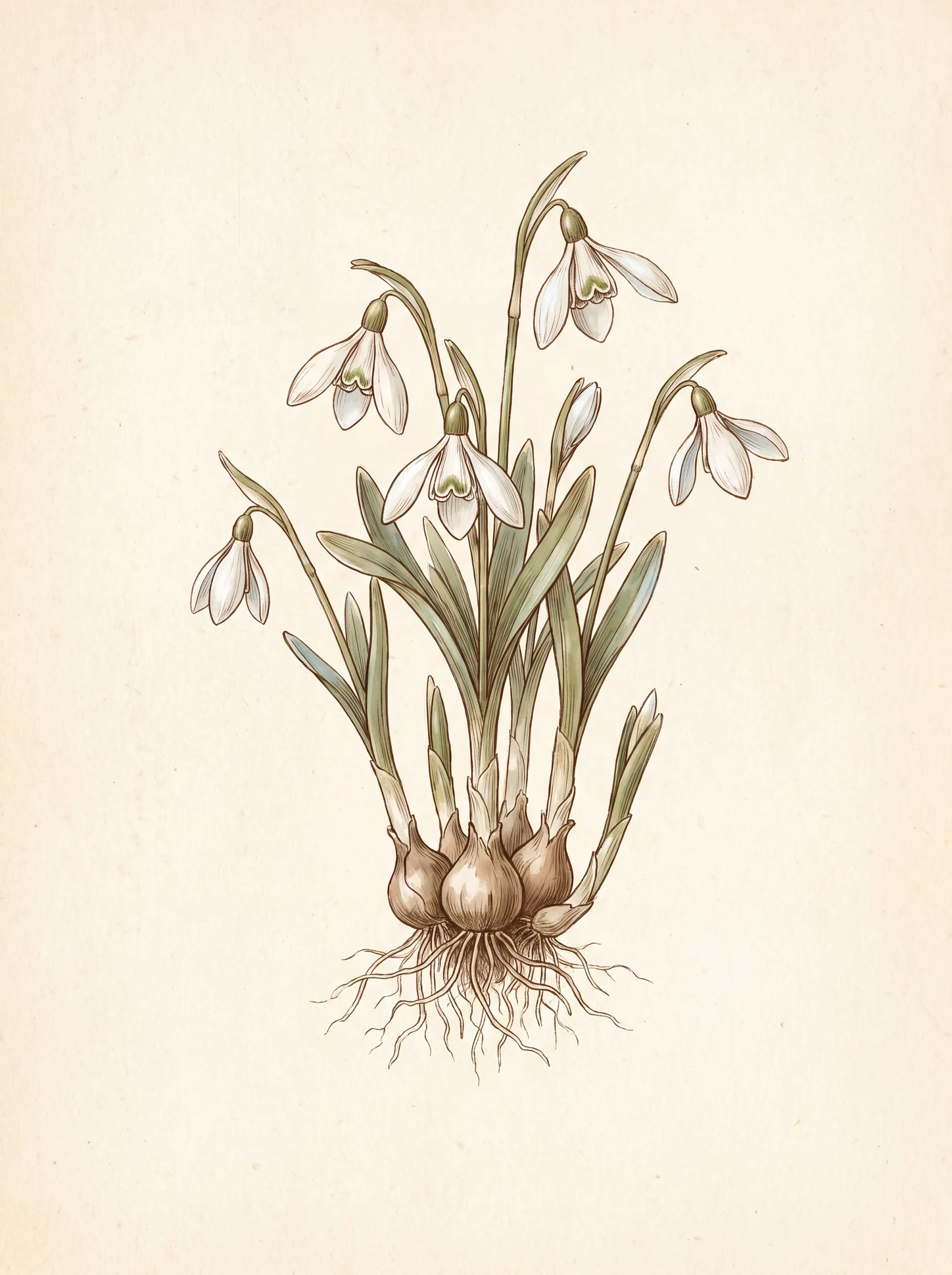 Botanical Snowdrop (botanical style) Poster from £15.99
Botanical prints of twelve garden plants
Each botanical print takes one plant and sets it on a plain cream ground, the way an old herbal or a seed catalogue would: the flower, the bud and often the bulb or the root as well. They are painted in a botanical style, not measured specimen drawings, so they suit a wall more than a field guide.
- Botanical Rose. A single old garden rose stem with an open pink bloom and a bud on a cream ground.
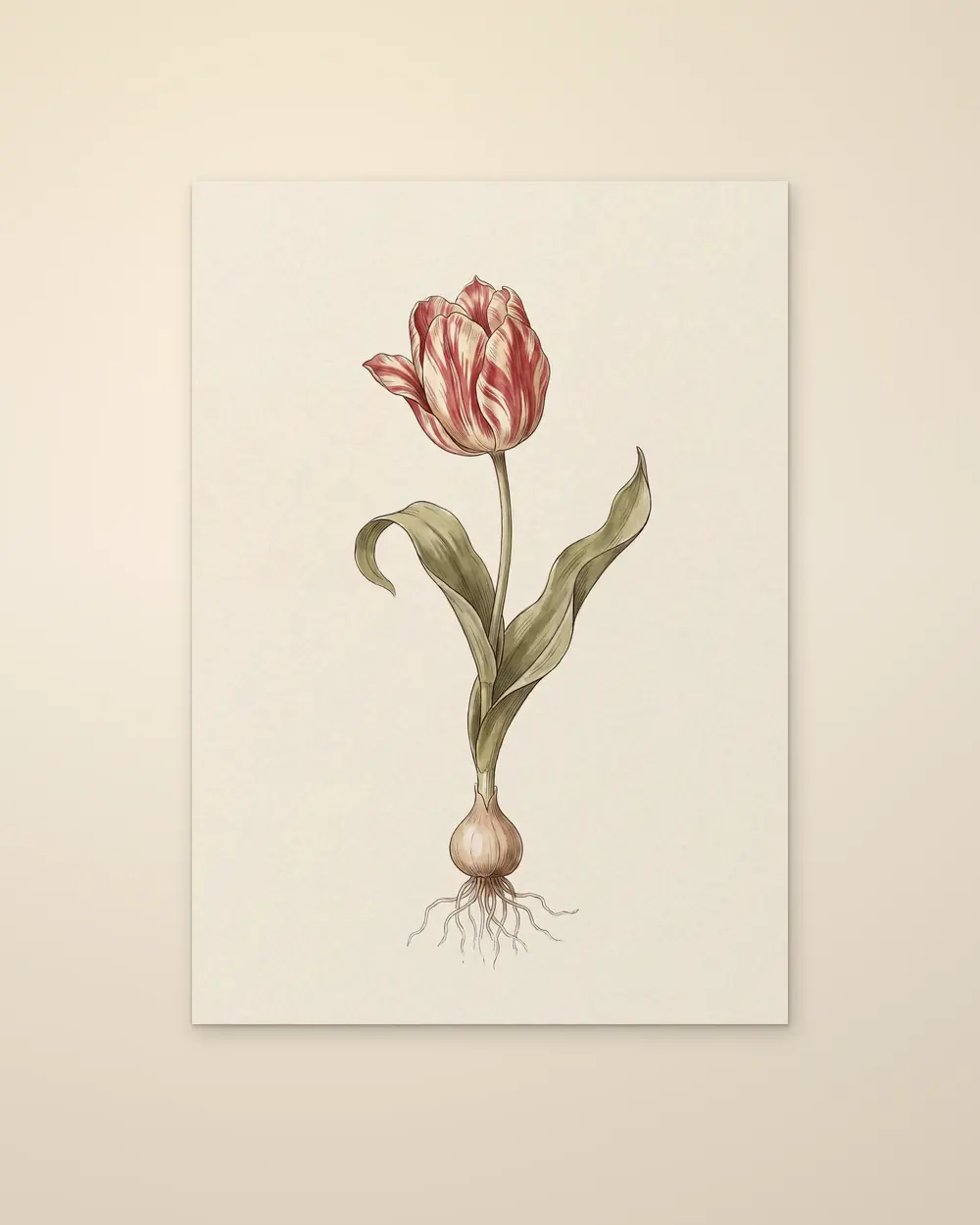
- Botanical Tulip. A striped red and cream tulip with bulb and roots on a cream ground.
- Botanical Foxglove. A pink foxglove spire with leaves on a cream ground.
- Botanical Fern. An unfurling fern frond crossed with a mature frond on a cream ground.
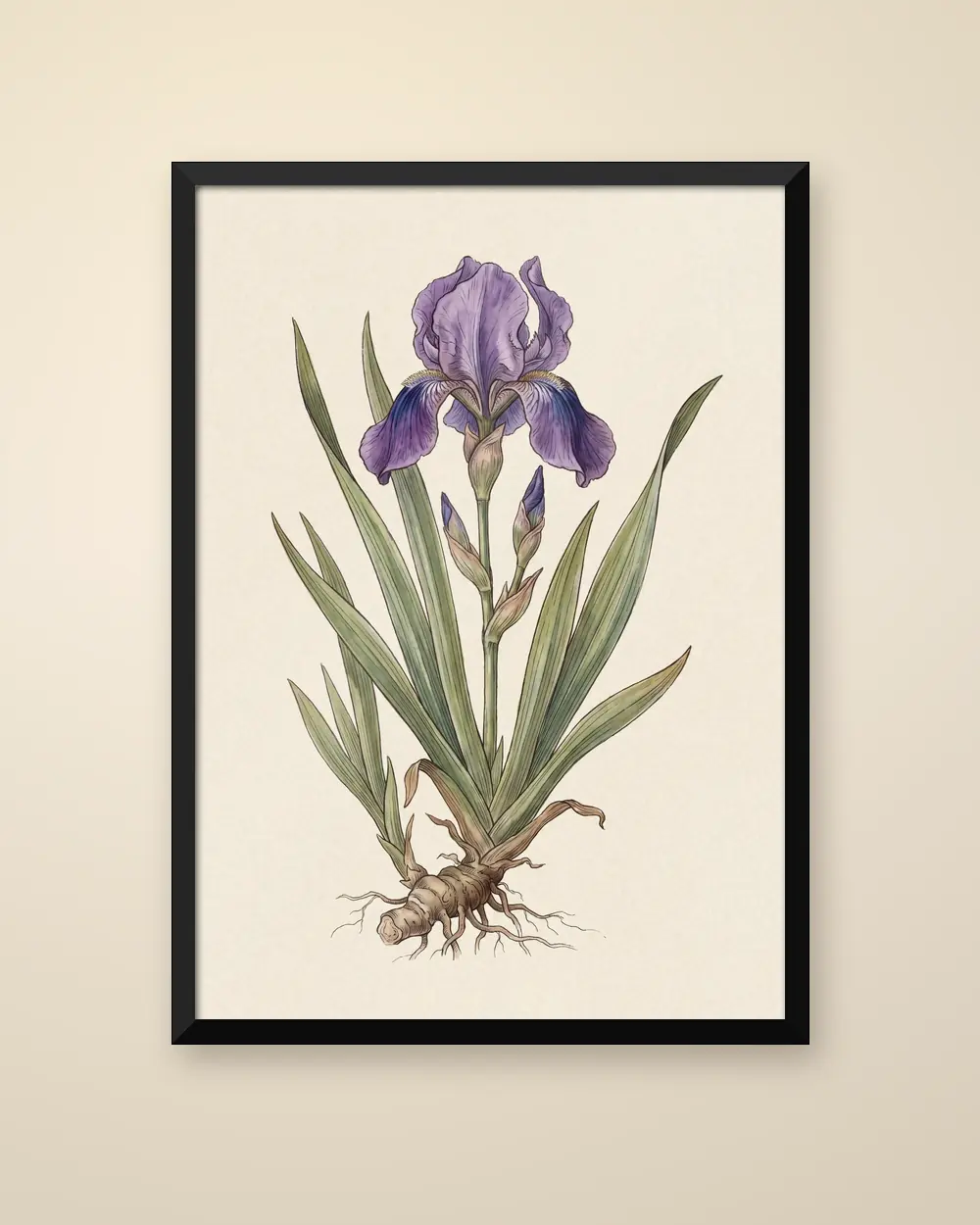
- Botanical Iris. A purple bearded iris with rhizome and leaves on a cream ground.
- Botanical Poppy. A red poppy flower, seed head and bud on curving stems on a cream ground.
- Botanical Sweet Pea. A stem of pink and purple sweet peas with tendrils and a pod on a cream ground.
- Botanical Dahlia. An orange cactus dahlia bloom with a bud and leaves on a cream ground.
- Botanical Hellebore. A stem of white-green nodding hellebores with a divided leaf on a cream ground.
- Botanical Apple Blossom. A twig of pink-white apple blossom with leaves and a small apple on a cream ground.
- Botanical Lavender. Three stems of lavender with grey-green leaves on a cream ground.
- Botanical Snowdrop. A clump of snowdrops with bulbs and roots on a cream ground.
Framed botanical prints
Every one of the twelve comes framed, in two ways. A framed poster is the print on 250gsm archival paper in a wooden frame 22 mm deep, with a plexiglass front, in A3 or A2 and in black or natural wood. It arrives in its frame, ready to hang. A framed canvas puts the print on canvas over a 2 cm stretcher inside a wooden float frame 32 mm deep. It comes in three sizes, 30x40, 40x50 and 50x70 cm, with a black, dark wood or natural wood frame. The prices below are the live ones for each frame.
Not sure about a frame? An unframed poster leaves the choice to you, and the canvas, metal and wood prints hang without glass.
Vintage botanical prints, newly drawn
If you are after vintage botanical prints, it helps to know what is on offer. An antique plate is a page taken from an old book. A reproduction is a modern print of one of those pages. Ours are neither. Each is a new artwork that borrows the look of an old herbal: a pale cream ground, the plant drawn in fine line with soft colour, and often the parts below ground as well. Botanical Tulip and Botanical Snowdrop show the bulb and roots, and Botanical Iris shows the rhizome. So you get the vintage look, printed new, at the size and frame you choose.
Botanical wall art for each room
The matching cream grounds make these the easiest prints to hang in a group. Three in a row along a hallway, or a grid of four or six above a sofa, works because the backgrounds match. For a single larger piece, the rose, the iris and the dahlia hold the most colour at A2. In a bathroom or kitchen, choose a metal or framed print, which copes better with steam than an unframed poster.
Botanical illustration, and what these are instead
The older meaning of a botanical print is botanical illustration: pictures made to show a plant's form, colour and detail accurately enough to describe the species. Georg Dionysius Ehret, Pierre-Joseph Redouté and Ferdinand Bauer are among its best-known names, and Redouté's Les Roses came out between 1817 and 1824. Our botanical prints borrow that look, but they are artworks for a wall, not a scientific record, so please don't use one to identify a plant.
Choosing botanical art prints: the piece, then the finish
Open an artwork to see its available print sizes, surfaces and current prices. Think about the room as well as the subject: the rose, the iris and the dahlia carry more colour than the fern, the hellebore and the snowdrop, which are quieter. Read our guide to hanging botanical art before choosing a pair.
For the flowers you grew yourself
A favourite bloom from your own garden can be more personal still. Print the original photograph for faithful detail, or try an art style. An art style may change flower structures, so it isn't a substitute for a botanical record.
Questions before you choose
What are botanical prints called?
Botanical prints, botanical art and botanical wall art are all names in use, and they overlap with flower prints. The scientific tradition behind them is called botanical illustration. Ours are botanical-style artworks, made for a wall in the look of an old herbal, not as a scientific record, so don't use one to identify a plant.
Can I buy a botanical print already framed?
Yes. Each of the twelve comes as a framed poster at A3 or A2 with a black or natural wood frame, delivered in its frame and ready to hang, or as a framed canvas in three sizes with a black, dark wood or natural wood frame. Open a print to see the frame prices.
Are these vintage botanical prints?
They are new artworks in a vintage style, not antique plates or copies of old book pages. Each one is drawn on a cream ground in the manner of an old herbal, and printed to order.
Who are some famous botanical print artists?
Georg Dionysius Ehret, Pierre-Joseph Redouté and Ferdinand Bauer are three of the best-known botanical illustrators of the 18th and early 19th centuries, and Redouté's Les Roses was published between 1817 and 1824 (Botanical illustration, Wikipedia, read 1 October 2026). Our flower pieces are our own artworks, not reproductions of their plates.
How can I make botanical prints at home?
Pressing or inking real leaves is a craft we don't sell or teach. What we can help with is a print of a flower you grew: photograph it in soft, flat light against a plain background, keep the original file, and upload it on Print your photograph to print it unchanged as a poster from A4 to 70x100 cm, or on canvas, metal or wood. The upload tool shows which sizes the file can carry.
Where is the best place to buy prints online?
We won't rank print companies, but these are the things to check wherever you buy: what the paper or panel is, which sizes and frames are offered, whether delivery is in the price, and what happens if a print arrives damaged. Here, our artworks come as posters from A4 to 50x70 cm, framed posters, canvas, framed canvas, metal and wood; UK delivery is included; and if a print arrives damaged or with a print fault, we reprint or refund it at our cost.
Where can I find free art prints online?
Not here: every print is made to order and paid for. For free images of historic botanical art, the Biodiversity Heritage Library describes itself as the world's largest open access digital library for biodiversity literature and archives, with scanned natural-history books whose plates you can view free (read 1 October 2026).