Amaryllis care
The RHS says to plant an amaryllis bulb in October for flowers at Christmas. One RHS page gives six to eight weeks from planting to flowering, another about ten. This guide covers planting it, making the flowers last and getting it to bloom again.
Amaryllis care at a glance
| Question | Answer |
|---|---|
| When to plant | October for Christmas flowers. The RHS gives October to January as the planting window. |
| Time to flower | Six to eight weeks on one RHS page, about ten on another. Count back ten. |
| Compost and depth | Peat-free John Innes No 2 or multipurpose, in a pot a little larger than the bulb. Leave two thirds of the bulb above the surface. |
| Warmth | About 21°C to start it off, then 15 to 18°C once it is in flower to make the flowers last. |
| Water | Sparingly until the leaves show, then regularly. Never let water stand in the saucer. |
| After flowering | Cut the spent spike to the base, keep the leaves and feed weekly. Or dry the bulb off from late September. |
| Pets | The ASPCA lists amaryllis as toxic to dogs, cats and horses. |
A bulb to plant now
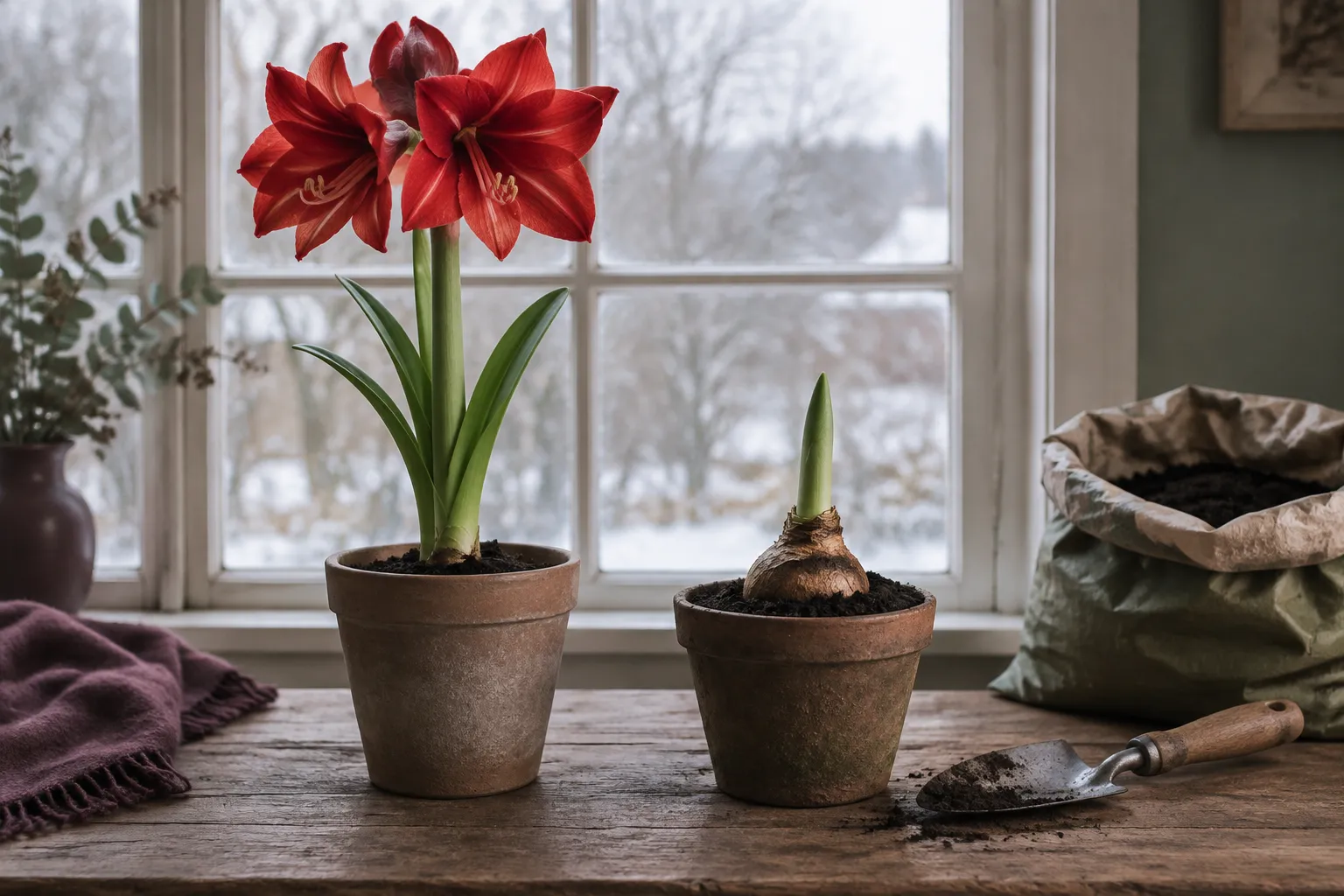
What most of us call an amaryllis is a Hippeastrum, and the RHS notes that it's a popular gift at Christmas. It's a tender bulb, so it lives in a pot indoors. The growing guide gives October to January as the planting time, and says the bulb should flower about six to eight weeks later. Its Christmas bulbs page gives a different figure. Plant in October for flowers at Christmas, it says, because the bulbs take about ten weeks from planting to flowering.
The two pages disagree, so don't treat either as exact. To have flowers on a particular day, count back the longer figure, ten weeks.
Planting it
Use a peat-free John Innes No 2 or a peat-free multipurpose compost, in a pot a little larger than the bulb. Plant it so that two thirds of the bulb stays above the surface. Put it somewhere well lit and warm, about 21°C.
Then go gently. Water sparingly until the new leaves appear, and only then start watering regularly. The compost shouldn't dry out, but don't let water collect in the saucer. Turn the pot every so often so the flower stalk doesn't lean towards the light, and stake the large-flowered kinds.
Once it's in flower, move the plant somewhere cooler, around 15 to 18°C. That extends the flowering.
After the flowers
Don't throw the bulb away. The RHS gives two ways to bring it back.
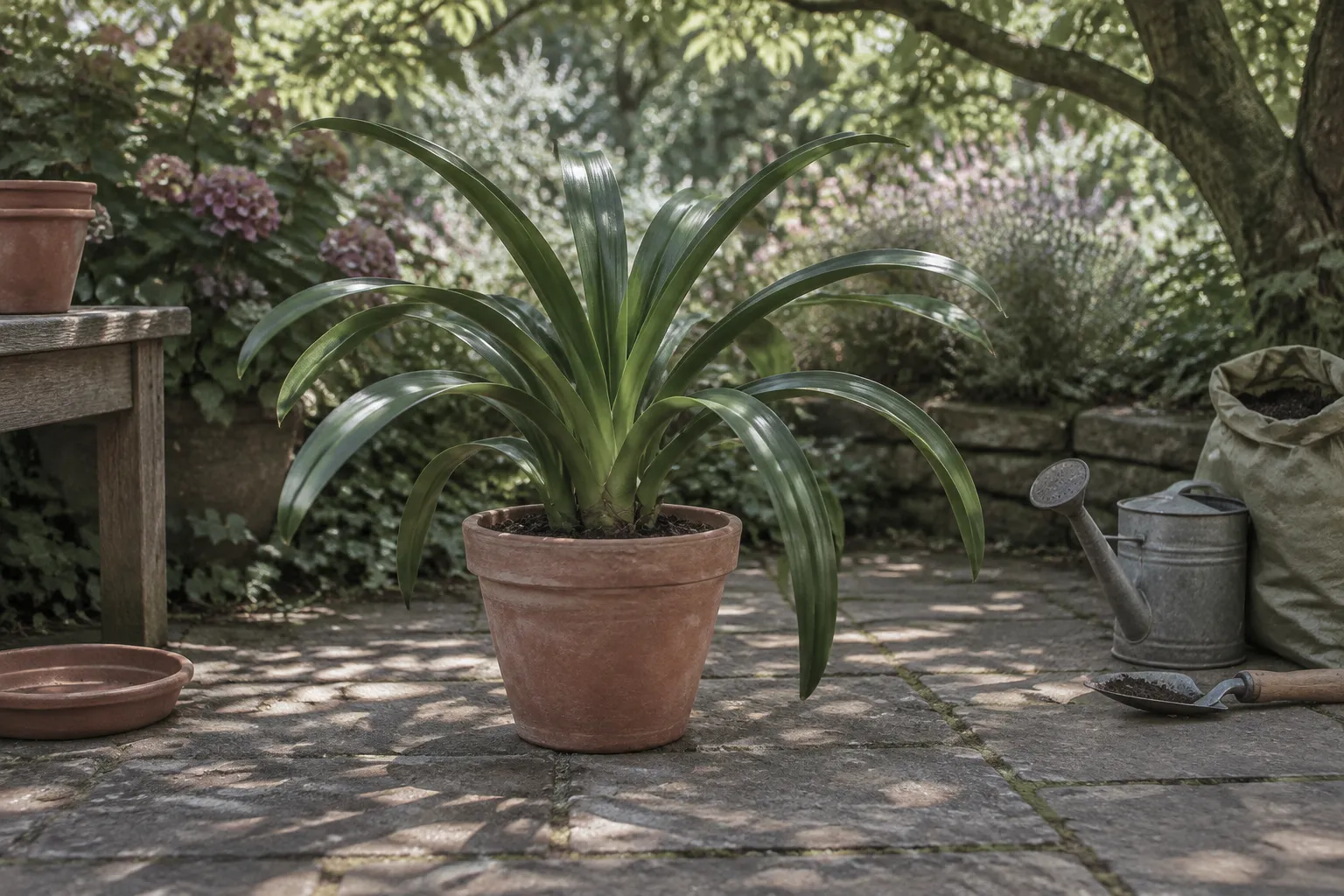
Method one: keep the leaves going. Cut the spent flower spikes down to the base, but leave the leaves. Keep them growing with careful watering and a weekly balanced liquid feed. Put the pot outside or in the greenhouse for the summer, shaded from scorching sun and watered regularly. In late September, bring it to a well-lit position at about 13°C for eight to ten weeks. Stop feeding and water less, so the plant goes semi-dormant. After that cool spell, cut the old leaves to 10cm above the neck of the bulb. Replace the top 2.5 to 5cm of compost, and start it off as if it were a new bulb.
Method two: dry it off. In late September, stop watering and let the plant dry out gradually. It may die back. Cut spent spikes and yellow leaves to the base. Keep the pot in a cool place, such as a greenhouse or garage, for one to two months, and light isn't necessary. Then bring it indoors into the light, and start watering and feeding again.
Repot every two or three years in January to March, after flowering.
If it won't flower
There are three likely reasons. The bulb may have been dried off too early. It may have grown in too much shade. Or it may have been short of water the previous summer. Fungal diseases and bulb pests can also be to blame, and slugs and snails are worth watching for if the pot spends summer outside.
Growing more
Seedlings are slow. Seed-raised plants can take up to six years to reach flowering size, and they usually differ from the parent. Offsets are quicker. Look for any that have their own roots, and separate them when you repot in January to March. Pot them up individually and keep them warm. They should flower in three to four years, identical to the parent.
Other bulbs for Christmas
The same RHS page covers two companions. For hyacinths in flower at Christmas, buy bulbs labelled 'prepared'. The timing varies by cultivar. 'Pink Pearl', the RHS's example, needs ten weeks of cool conditions, so it goes in on 24 September for Christmas blooms.
Paperwhites are easier. The narcissus 'Paper White' is also planted in September, and good bulbs flower in six to ten weeks. Buy bulbs sold for growing indoors as pot plants and set several in one pot with the tips just below the surface. Use peat-free multipurpose compost or bulb fibre. Water well and stand the pot on a warm, sunny windowsill. They can get lanky, so be ready to support them. After flowering, leave them in a frost-free place to die down, then plant them outdoors in a sheltered, sunny spot.
Choosing a variety
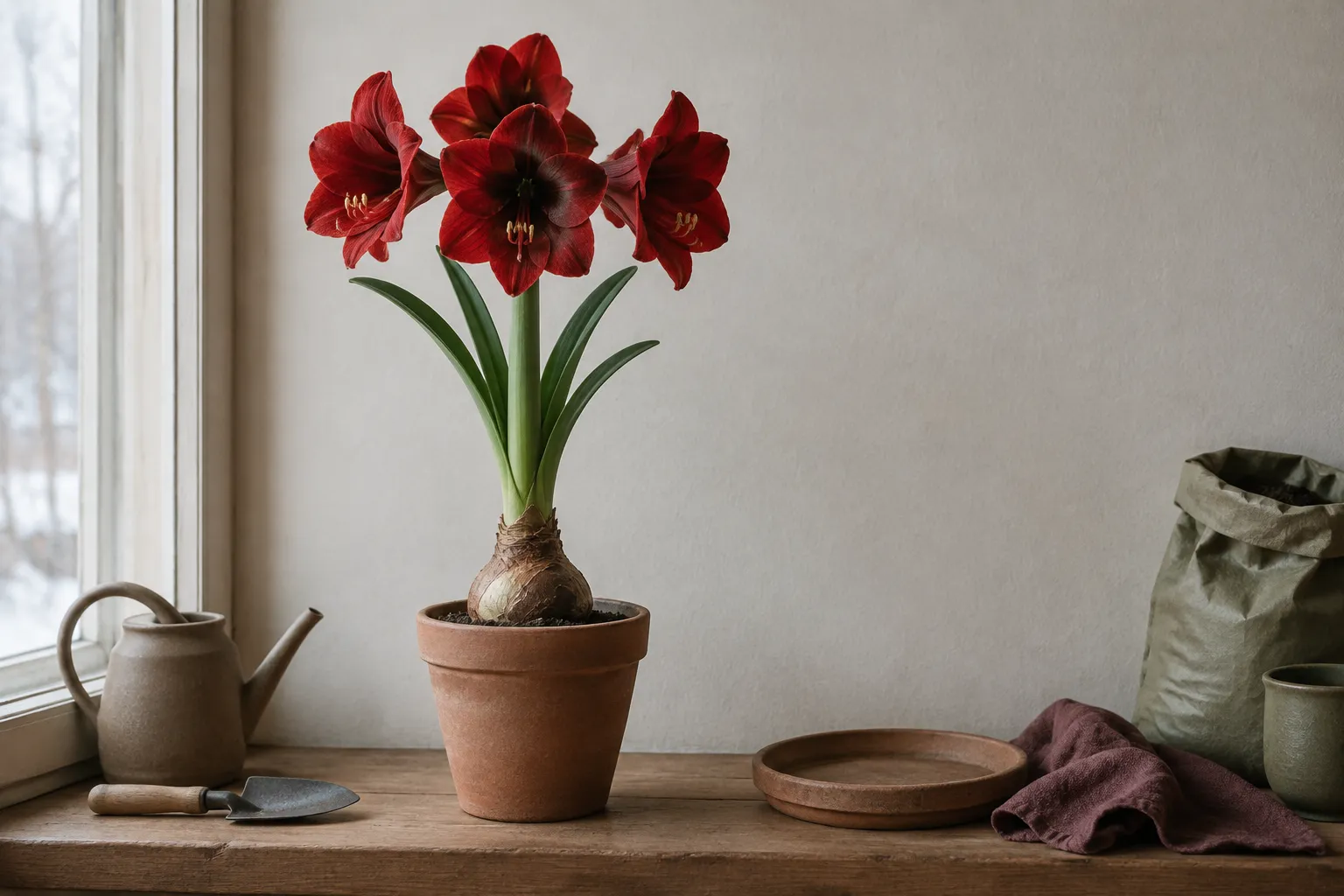
The RHS names a handful. 'Belinda' has deep crimson flowers, 'Bestseller' cerise pink, and 'Red Lion' a strong red. 'Star of Holland' is red with white markings, and 'Lady Jane' has semi-double salmon-pink blooms. Hippeastrum papilio is the unusual one, white with deep red streaks and touches of green. Heights run from 25cm to 90cm.
Amaryllis and pets
The ASPCA lists amaryllis as toxic to dogs, cats and horses, naming lycorine among the toxic principles. The signs it gives are vomiting (not in horses), depression, diarrhoea, abdominal pain, drooling, loss of appetite and tremors. Its entry is filed under Amaryllis species rather than Hippeastrum. The ASPCA is a US organisation, so if your pet has chewed a bulb or leaf, contact your vet.
On the bench
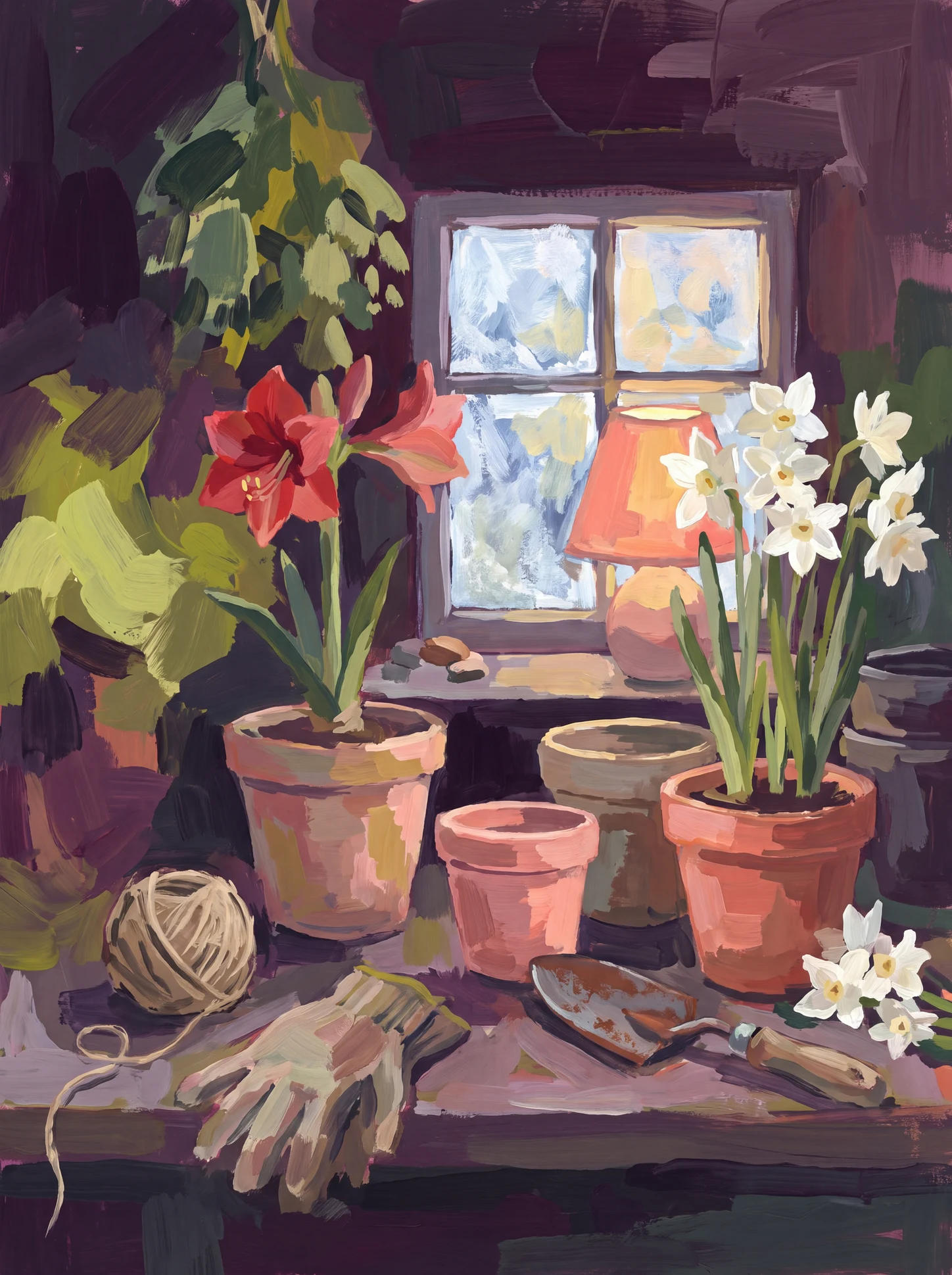
An amaryllis suits the potting-shed look, and so does a picture of one. Paperwhites on the Bench is a scene of a shed bench with white narcissi and a red amaryllis. You'll find more in our Christmas gifts for gardeners.
If you grow a good one, photograph it in flower against a plain wall or window. Upload that picture and choose a straight print or a style. The other plants that flower at Christmas have their own guides: poinsettia care and Christmas cactus care.
Sources
Garden art prints to go with it
Questions people ask
What do you do with amaryllis bulbs after they have flowered?
Cut the spent flower spike to the base but keep the leaves growing, with careful watering and a weekly liquid feed. Put the pot outside or in a greenhouse for summer, then give it a cool, drier rest from late September.
Do amaryllis come back every year?
Yes, if the bulb is fed after flowering and given its rest in autumn. If it fails to flower, it was probably dried off too early, grown in too much shade, or short of water the summer before.
When should I plant an amaryllis for Christmas?
In October. The RHS gives about ten weeks from planting to flowering on one page and six to eight weeks on another, so count back the longer figure.