Christmas cactus care
A Christmas cactus isn't a desert plant. It wants bright light but no full sun, regular water in summer, and two cooler, drier spells a year to set its buds.
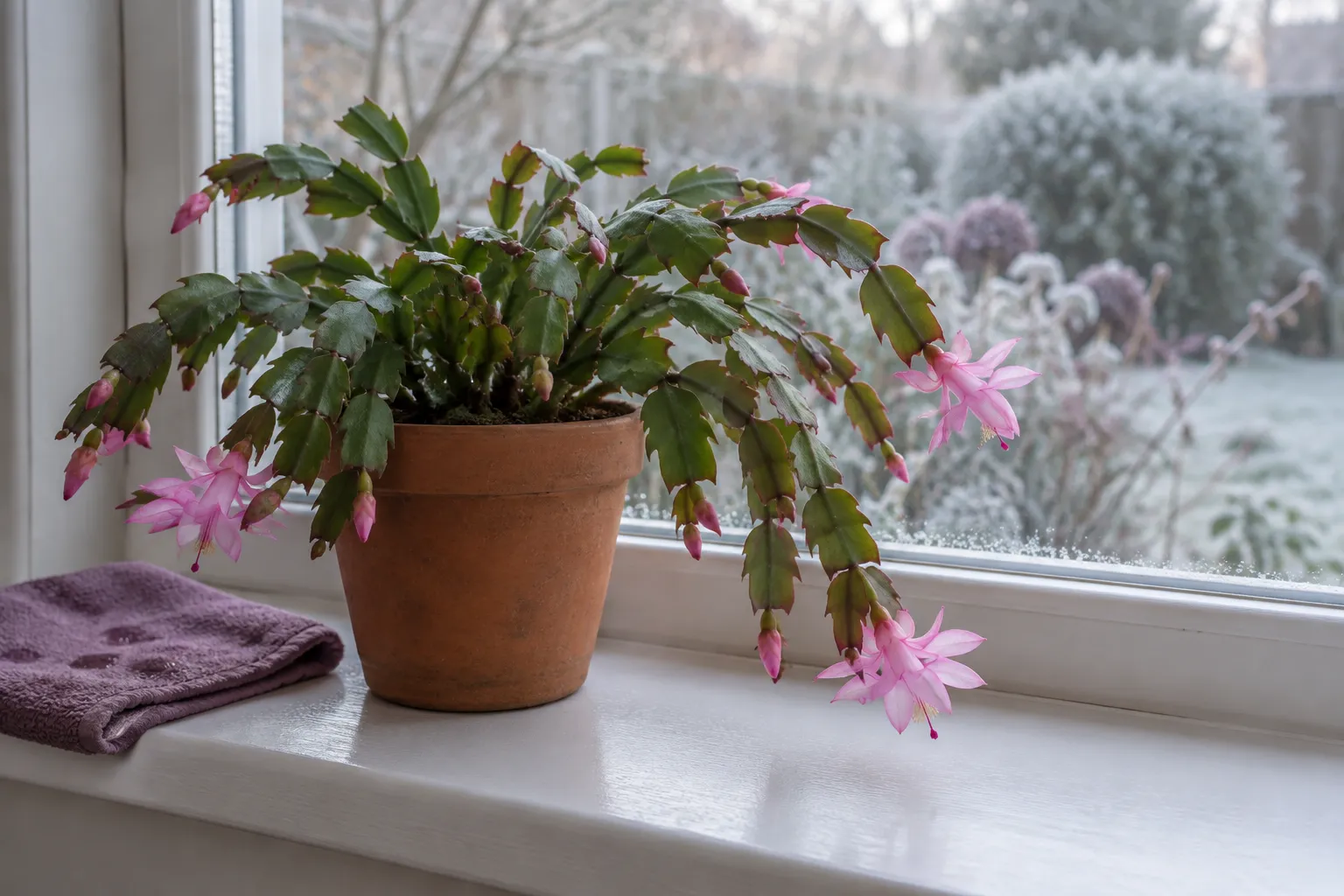
Christmas cactus care at a glance
| Question | Answer |
|---|---|
| Light | Indirect or filtered light. An east-facing windowsill is usually ideal. |
| Warmth | Above 10°C, and a pleasant 18 to 20°C while it grows and flowers. |
| Cool spells to flower | Mid-September until buds show, and late January to late March, at 12 to 15°C with less water. |
| Water and feed | From April to September keep the compost moist, never waterlogged. Liquid houseplant feed over the same months. |
| Repotting | Every year or two at the end of March, in a pot only slightly larger. |
| New plants | Take stem cuttings in May. They root in three to twelve weeks. |
| Pets | The ASPCA lists it as non-toxic to dogs, cats and horses. |
The two cool spells that make it flower
A Christmas cactus needs two periods of cooler temperatures, at 12 to 15°C, and two matching rest periods of reduced watering:
- Autumn: from mid-September until the buds appear. Water less, letting the top few centimetres of compost dry between waterings, but never let it dry out entirely. When you see flower buds, return to the usual 18 to 20°C and water regularly until the flowers fade.
- After flowering: from late January to late March, with the same cooler, drier routine. Then go back to regular watering through spring and summer, until mid-September.
You can arrange the cool by moving the pot to a cooler room, or by letting a windowsill dip naturally away from heat sources. Exact temperatures aren't critical, but there should be a distinct drop. The shortening days of autumn do part of the work too.
If it doesn't flower, the likely cause is that the day length isn't shortening, or the temperature isn't dropping to mimic autumn. A plant that sits near an artificial light after dark, or never gets cooler than 18°C, is an example.
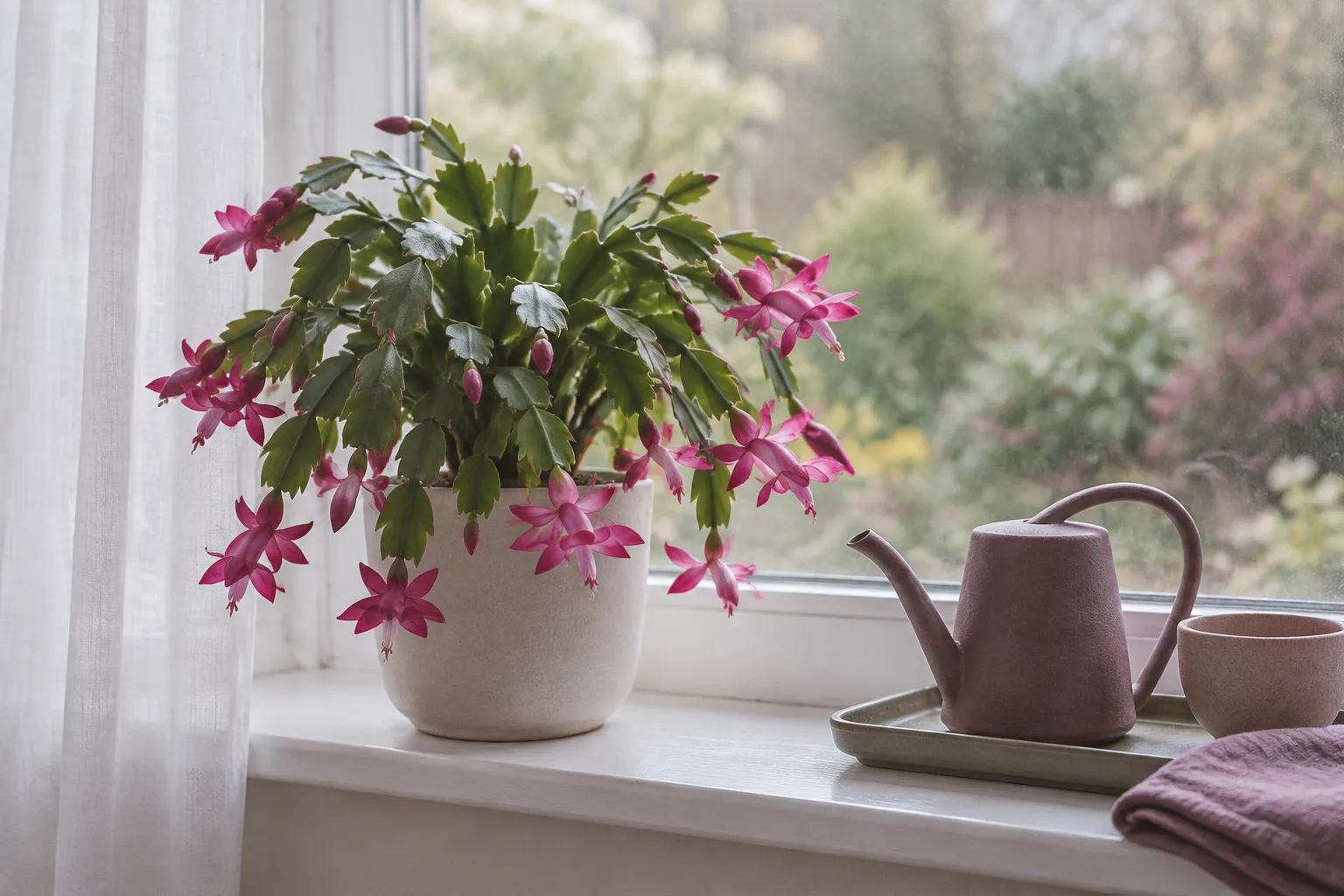
A rainforest plant on a windowsill
Christmas cacti come from tropical rainforests, where they grow in dappled light and warm, humid air. That's the key difference from the cacti of the desert, according to the RHS. Keep them out of strong sun, give them regular water and, if you can, humid air. The flowers, in red, pink or white, appear at the tip of each stem, between late November and late January.
The plants can be long lived. The more stems they have, the more flowers they produce.
When the buds drop
Fluctuating temperatures are the usual cause: too hot by day and too cold by night. Overwatering can do it too. A steady spot, away from heaters and cold glass, avoids the swing.
Light and warmth
Indirect or filtered light suits it, and an east-facing windowsill is usually ideal. Keep it above 10°C. Through the growing season, and while it's in flower, it prefers a pleasantly warm 18 to 20°C.
In summer you can move it outside to a warm, sheltered, shady spot. This helps new growth ripen and encourages flowering. Keep it out of full sun, watch for slugs and snails, and bring it back in before temperatures begin to drop. Now and then, wipe the flat stems with a damp cloth to remove dust.
Watering, feeding and humidity
From April to September water regularly. The compost should stay moist but never waterlogged, because the roots may rot if the pot sits in damp compost. Feed with a liquid houseplant feed from April to the end of September. These are rainforest plants, so mist them regularly, or stand the pot on a tray of damp gravel without letting the compost become waterlogged.
Pots, pruning and new plants
These plants like to be snug, so choose a pot only slightly larger. A newly bought plant can usually stay in its original pot for a couple of years. After that, repot every year or two, once the roots fill the pot, at the end of March, when the growing season starts. Use standard cactus compost, or a peat-free loam-based mix such as John Innes No 2 with leafmould and grit for drainage.
Flowers form only at the stem tips, so more stems mean more flowers. To get a bushier plant, remove some of the end segments in spring after flowering. Take whole segments, so the plant keeps its natural look. Those segments make cuttings in May.
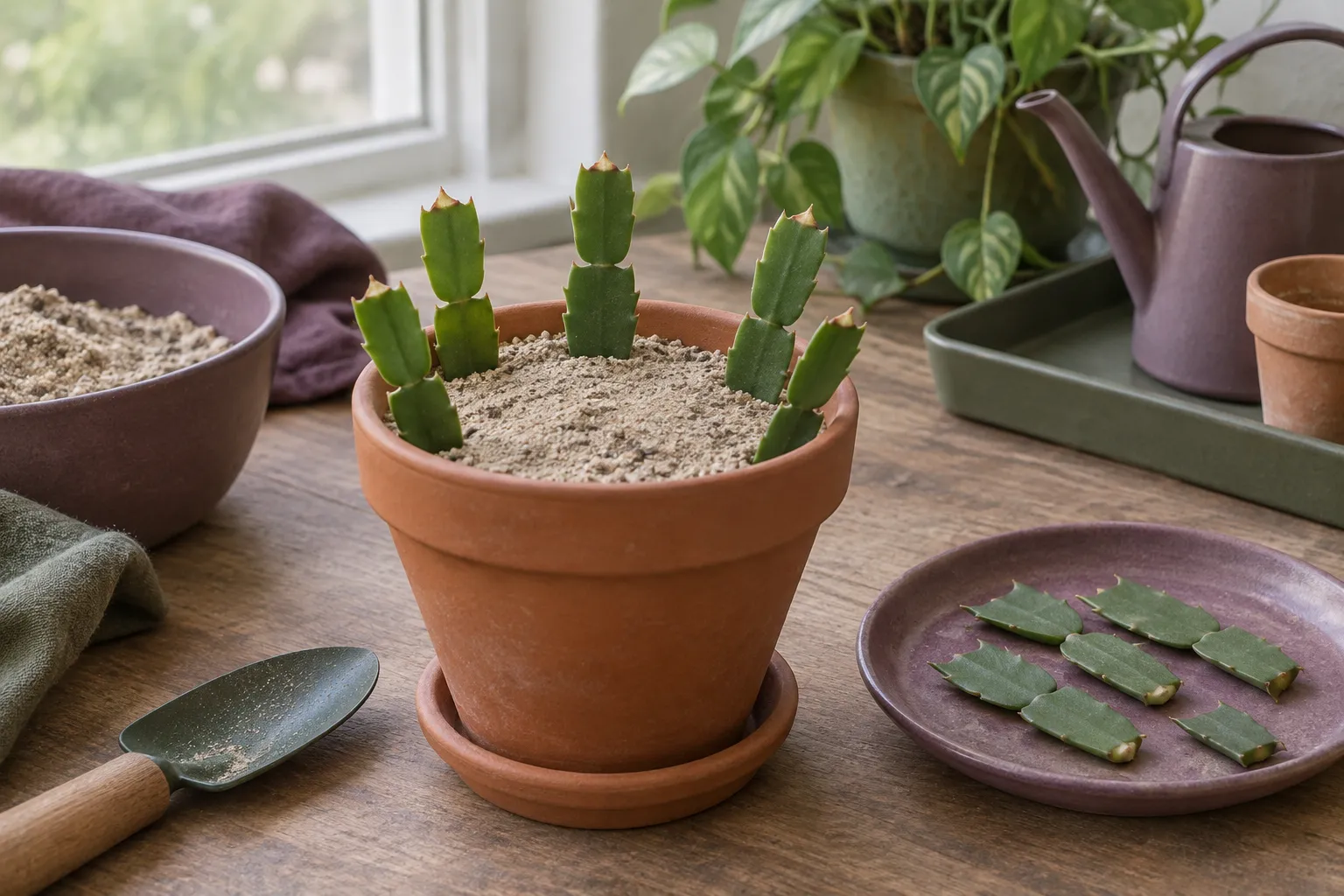
The RHS method for those cuttings is simple:
- Take a cutting from the end of a stem, removing a couple of segments. Snap them off at a joint or cut carefully between the segments.
- Leave it for a day or two, so the wound at the base dries.
- Fill a pot with a 50:50 mix of peat-free seed or cuttings compost and sharp sand. Push the cutting in about 1cm, deep enough to keep it upright. Too deep and it's more likely to rot. Several cuttings can share a pot, around the edge.
- Keep the pot somewhere bright, out of direct sun, at 18 to 24°C. Water very sparingly and mist occasionally.
Cuttings take from three to twelve weeks to root. Once they have, pot them up individually.
Christmas cactus and pets
The ASPCA lists Christmas cactus as non-toxic to dogs, cats and horses. That's worth knowing next to poinsettias and amaryllis, which it lists as toxic. See our guides to poinsettia care and amaryllis care.
Choosing one, for you or as a present
There are two species, Schlumbergera truncata and Schlumbergera × buckleyi. There are also many cultivars in shades and combinations of pink, mauve, red and white, sometimes with a touch of yellow or orange. S. × buckleyi holds the RHS Award of Garden Merit, a mark of reliable performance. The plant is compact and trailing, up to about 45cm high and 45cm across, and it's mainly sold young and inexpensively.
Choose a plant with plenty of buds instead of one in full flower, because the display will last longer. Check that the shop hasn't left it in a cold, draughty spot. Protect it on the way home, because low temperatures can make the buds drop. Buying it as a present? Our Christmas gifts for gardeners include garden art to give alongside it.
A Christmas cactus in flower on a December windowsill is a nice thing to keep. Photograph yours when it's out, then upload the picture and pick a format. For gifts that last past January, see gardening gifts.
Sources
Garden art prints to go with it
Questions people ask
What makes a Christmas cactus flower?
Two cool, drier spells at 12 to 15°C: one from mid-September until the buds appear, and one from late January to late March. Shortening autumn days do part of the work.
Can I leave my Christmas cactus outside in the summer?
Yes, in a warm, sheltered, shady spot out of full sun. It helps new growth ripen. Bring it back in before the temperature starts to drop.
When should I feed my Christmas cactus?
From April to the end of September, with a liquid houseplant feed.