Poinsettia care
The commonest poinsettia problem is cold damage, and it usually happens before you buy. Choose one from a warm shop, keep it out of draughts, water sparingly, and it can last past Christmas.
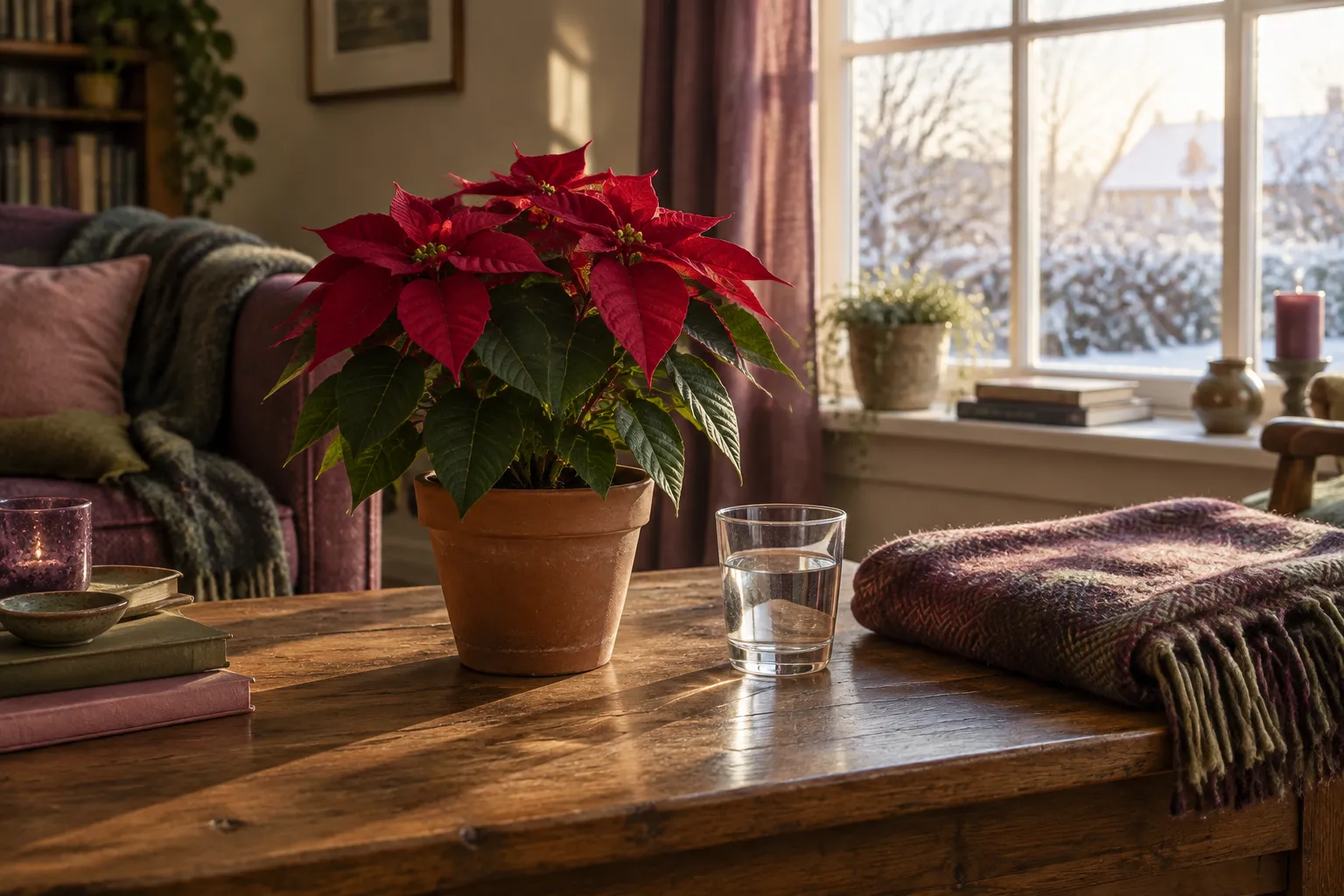
Poinsettia care at a glance
| Question | Answer |
|---|---|
| Warmth | At least 13 to 16°C. Colder and the plant goes into shock and drops its leaves and bracts. |
| Light | Bright, out of direct sun and away from draughts. |
| Water | Only when the surface of the compost feels dry. Stand the pot in tepid water for 10 to 20 minutes, then let it drain. |
| Feed | Only if you keep it into the new year: a high-potassium feed such as tomato feed, once a month. |
| Next year | Cut back to about 10cm in April, repot in early May, then give it eight to ten weeks of short days from late September. |
| Pets | The ASPCA lists it as toxic to dogs, cats and horses, mainly an irritant to mouth and stomach. |
Choosing one that will last
The coloured parts of a poinsettia aren't petals. They're leaf bracts, and the RHS says the plants are usually sold in full colour from November to Christmas. They need a minimum temperature of 13 to 16°C. Colder than that and the plant goes into what the RHS calls physiological shock, then drops its leaves and bracts.
That's why the buying matters. Look for a healthy plant that isn't drooping, and avoid any displayed in a cold, draughty doorway or on a chilly pavement. The most common problem is cold damage, usually from a spell in an unsuitably chilly shop or doorway. If a plant starts dropping leaves once you get it home, it will usually keep going downhill whatever you do.
The journey home counts too. Ask for the plant to be wrapped over the top, or put it in a bag. Get it to the car quickly and bring it indoors straight away. It helps to buy on a mild day rather than a frosty one.
After the cold, there are only two things to choose: colour and size. Red is traditional, but poinsettias come in colours from cream to salmon pink, and striped. A plant 40 to 60cm tall makes a bold splash in an average living room. A group of minis 10 to 15cm tall is a creative alternative. Shops rarely sell by cultivar, so choose the one you like the look of. If it's a gift, our Christmas gifts for gardeners have ideas to go with it.
Where to put it
Poinsettias like bright light, out of direct sun, and they want to be kept away from draughts. A table a little way back from a living-room window is usually ideal. Avoid windowsills above a radiator, where the heat dries the plant, and any spot where the cold behind the curtains reaches it at night. Draughty hearths and unheated rooms such as porches are out too.
There's no need to repot a plant that's only in the house for the festive period.
Watering and feeding
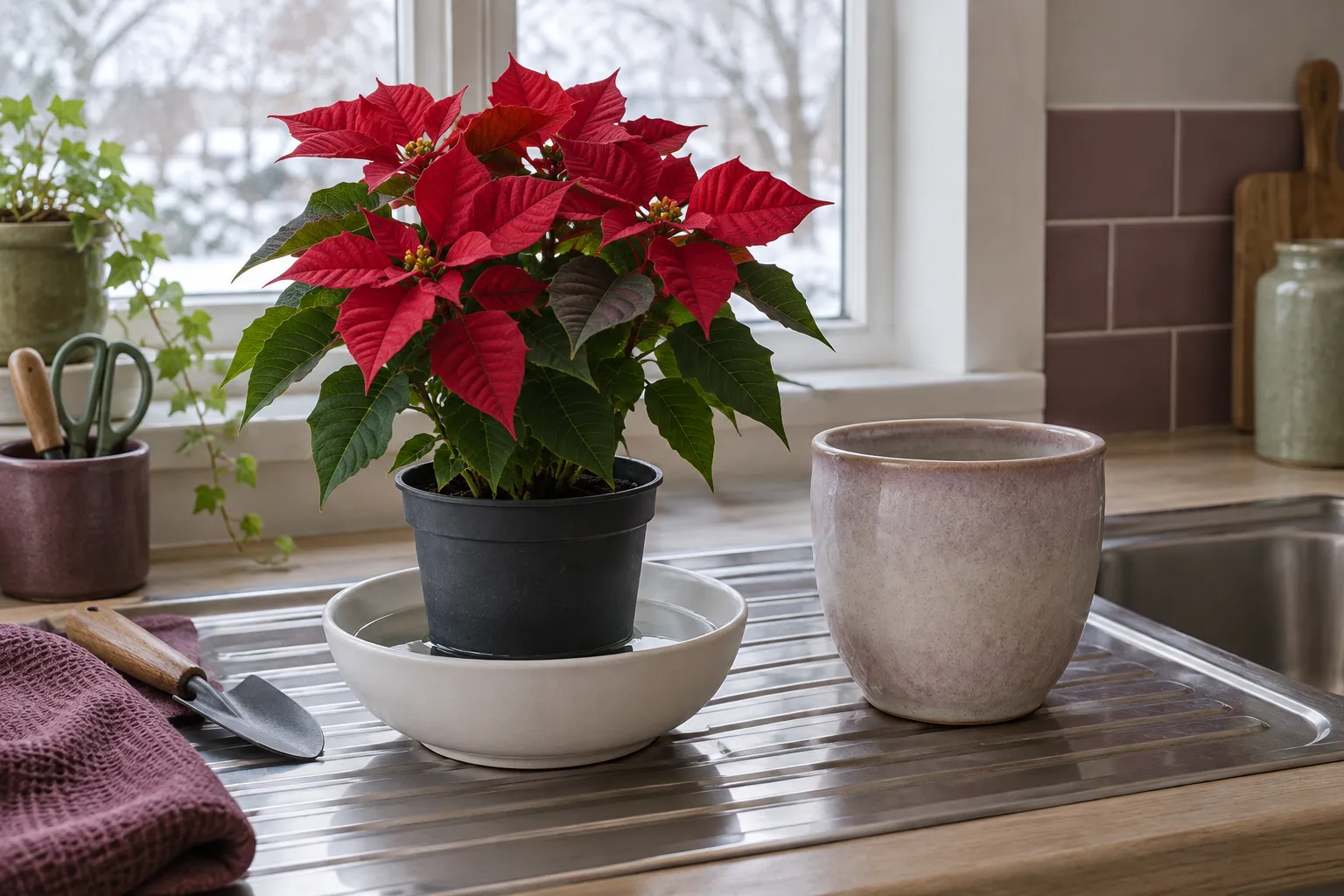
Water sparingly. Overwatering can damage the plant, so water only when the surface of the compost has begun to feel dry. A good method is to stand the pot in a bowl of tepid water for 10 to 20 minutes. Let it drain, and then return it to its decorative pot. Misting every day helps, because humidity extends the flowering time.
Feeding is only needed if you're keeping the plant into the new year. Give it a high-potassium feed such as tomato feed, once a month.
Keeping it for next year
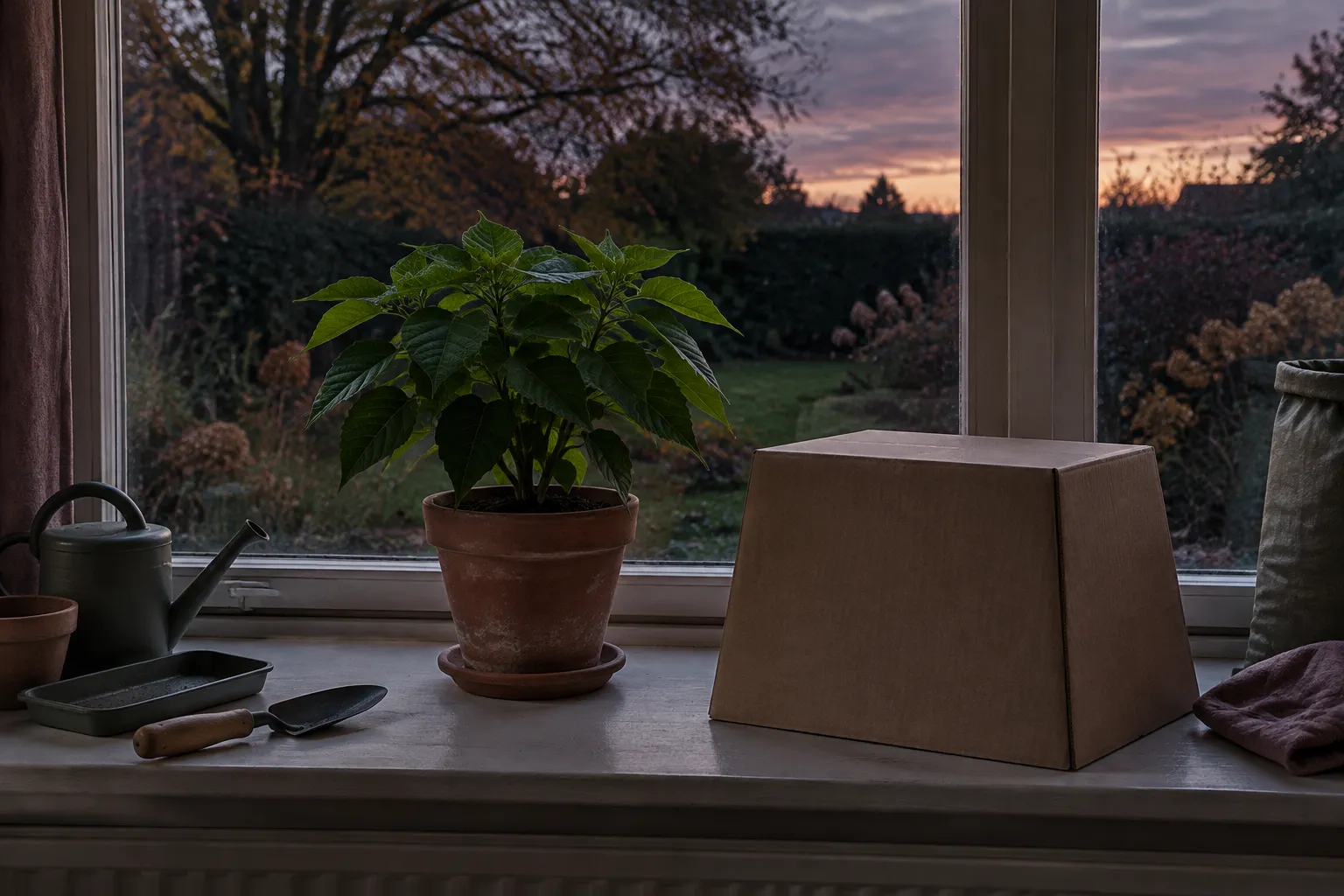
Most people compost their poinsettia after Christmas, because it's cheap and easy to replace. If you'd like to try for a second year, the RHS method looks like this:
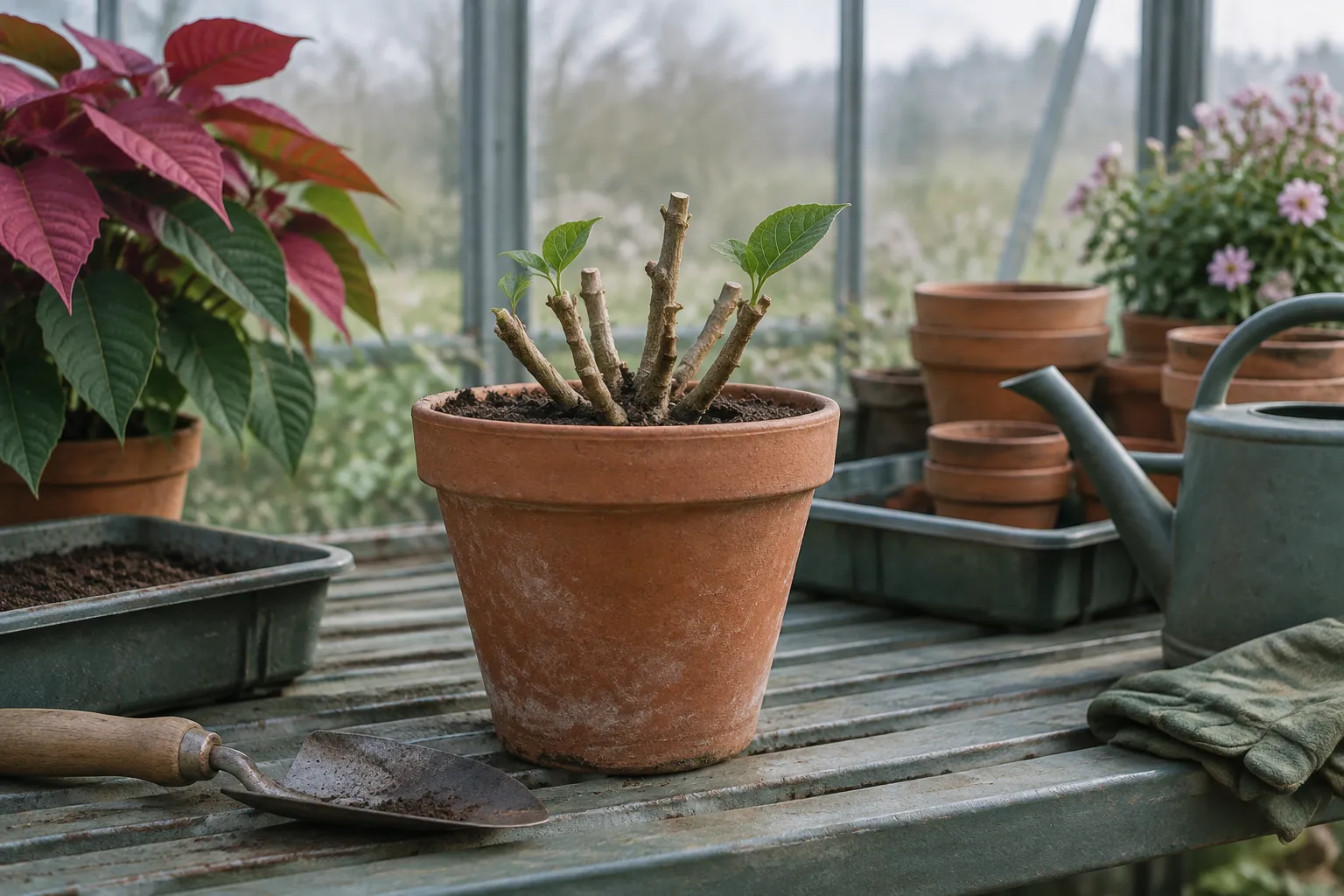
- April: prune the plant back hard, to about 10cm, and keep it at around 13°C.
- Early May: repot into three parts peat-free John Innes No 3 to one part grit. Grow it on somewhere light and cool, with 15 to 18°C ideal over summer.
- From late September: give it short days. Colour starts when the days shorten, and it needs about eight to ten weeks of less than 12 hours of light. Cover the plant or move it to a dark room after 12 hours of daylight each day. Keep it away from artificial light, including the room light going on.
- Through the colouring period: keep it at a constant 18°C or so.
Be ready for a difference. Shop plants are often treated with growth suppressants to keep them compact, so one grown on at home reverts to its taller natural shape.
What goes wrong
Besides cold damage, watch for grey mould on overwatered plants, and the usual houseplant pests such as scale insect and mealybug. If leaves fall slowly over a couple of weeks after you bought it, the cause is likely cold damage before purchase. There's nothing to be done. If leaf drop starts later, check that the plant is warm, light and has just-moist compost.
Sap, and pets
If a leaf or stem is broken, the milky sap that comes out can irritate skin and eyes, so wear gloves when cutting the plant. The RHS says the poinsettia is considered considerably less toxic than other euphorbias, but it's still best to avoid eating it or touching the sap.
For pets, the ASPCA lists the poinsettia as toxic to dogs, cats and horses, because of its irritant sap. It says the effect is irritation of the mouth and stomach, sometimes with vomiting, but "generally over-rated in toxicity". The ASPCA is a US organisation. If your pet has chewed a plant, contact your vet.
Giving a poinsettia
Many people give poinsettias as gifts, and the RHS suggests matching the colour and size to the home they're going to. A plant lasts a season. A photograph of it on your windowsill, or of the garden beyond the window, can last much longer. Our Christmas gifts for gardeners are made to order, and our wider gardening gifts guide has ideas for every kind of gardener. For other plants that flower at Christmas, see amaryllis care and Christmas cactus care.
And when the garden is bare, photograph it in winter. A frosty border has its own look, and we can print it as it is or in an art style.
Sources
Garden art prints to go with it
Questions people ask
How long will a potted poinsettia last?
Through Christmas and often well into the new year, if it was kept warm in the shop and at home. It needs at least 13 to 16°C, bright light out of direct sun, and water only when the compost surface feels dry.
Will a poinsettia survive outside in the UK?
No. Below 13 to 16°C it goes into shock and drops its leaves and bracts, so it stays indoors, away from draughts and cold windows.
How do I save my poinsettia for next year?
Prune it hard to about 10cm in April, repot in early May, grow it on somewhere light and cool over summer, then give it eight to ten weeks of short days from late September so the bracts colour again.