Flower meanings
Flower meanings come from Victorian books, and the books disagreed with each other. This guide follows one of them, Kate Greenaway's Language of Flowers, on the flowers people ask about.
Where flower meanings come from
No one decided what flowers mean. The idea reached England in books, and the books were many. In 1819 a small volume called Le Langage des fleurs appeared in Paris under the name Charlotte de la Tour. Within a decade the fashion had spread, according to Brent Elliott of the RHS Lindley Library, and by the 1850s, he says, its system had achieved extraordinary popularity in England. That was not, as he puts it, without "numerous alterations".
Those alterations are the catch. In a 2013 paper for the RHS, Elliott writes that there's "no comprehensive dictionary of the various suggested meanings". He adds that websites on the subject acknowledge "the inconsistency of the various systems available". From 1869, when John Ingram published Flora Symbolica in England, a generation of books assembled every meaning proposed in the earlier ones. According to Elliott, their compilers were generally writers, or in Kate Greenaway's case illustrators, rather than gardeners. Many listed the same plant under different names.
So there's no official list of flower meanings. There are books, and the one below is free to read in full.
What Greenaway says
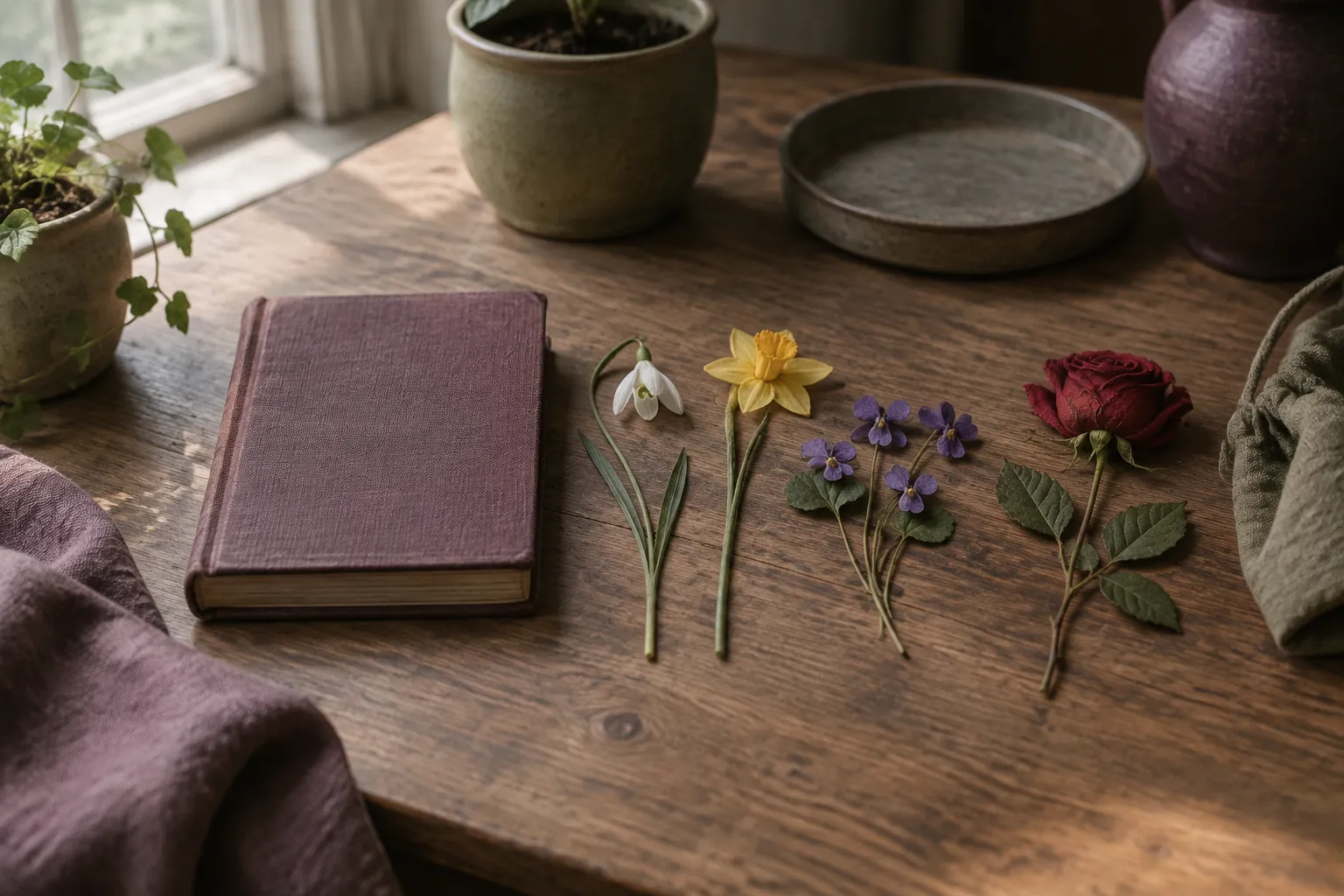
Kate Greenaway's Language of Flowers was published in London by George Routledge and Sons, printed in colours by Edmund Evans. It's an alphabetical list, and the full text is free on Project Gutenberg. These are its entries for some of the flowers people look up, quoted as the book prints them.
| Flower | Meaning in the book | Group |
|---|---|---|
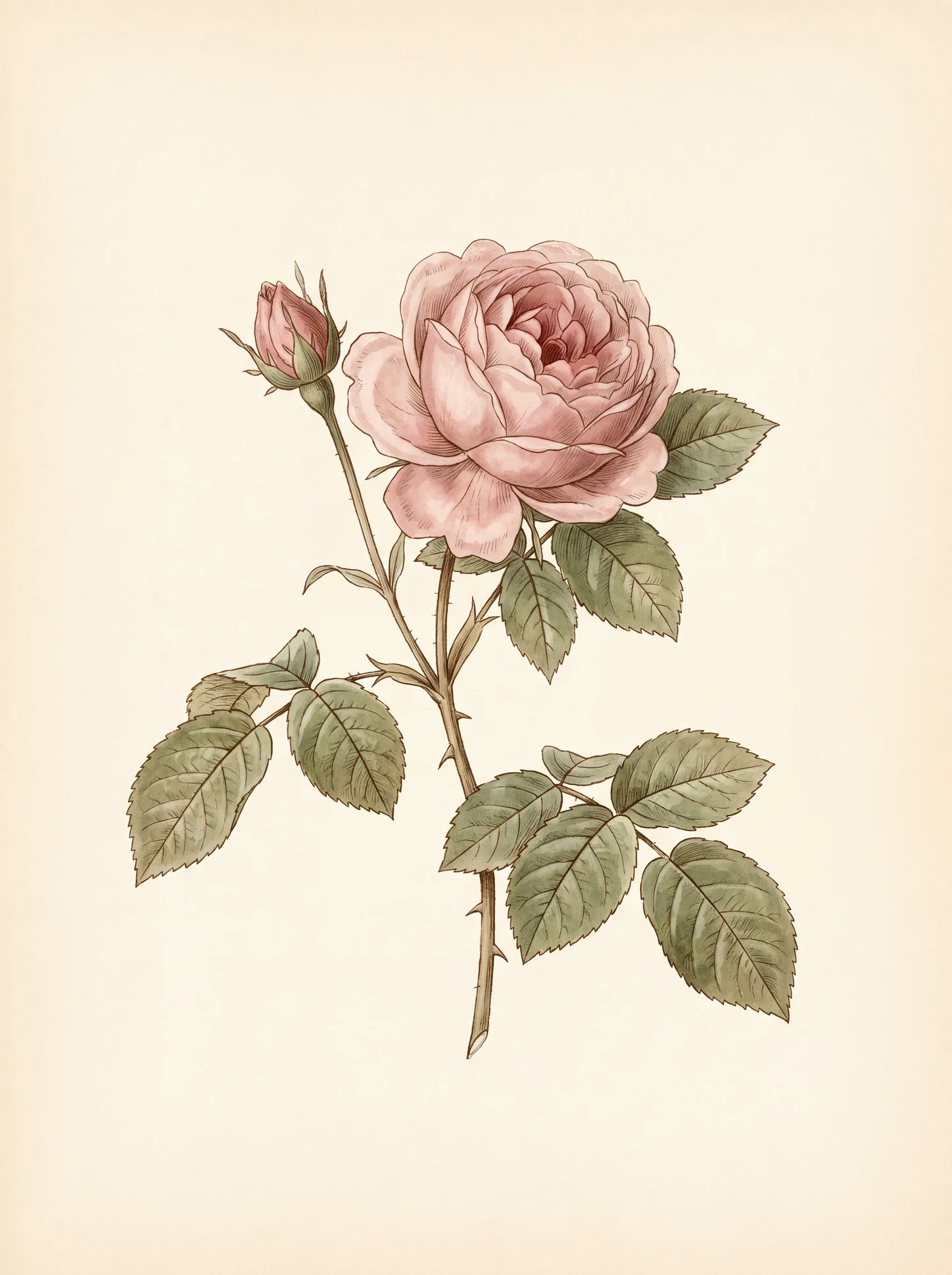
| Rose | "Love." | Roses |
| Rose, white | "I am worthy of you." | Roses |
| Rose, deep red | "Bashful shame." | Roses |
| Rosebud, red | "Pure and lovely." | Roses |
| Rose, yellow | "Decrease of love. Jealously." (spelled that way in the book) | Roses |
| Snowdrop | "Hope." | Spring flowers |
| Daffodil | "Regard." | Spring flowers |
| Violet, sweet | "Modesty." | Spring flowers |
| Violet, blue | "Faithfulness." | Spring flowers |
| Primrose | "Early youth." | Spring flowers |
| Forget me not | "True love. Forget me not." | Spring flowers |
| Hawthorn | "Hope." | Spring flowers |
| Lily of the valley | "Return of happiness." | Spring flowers |
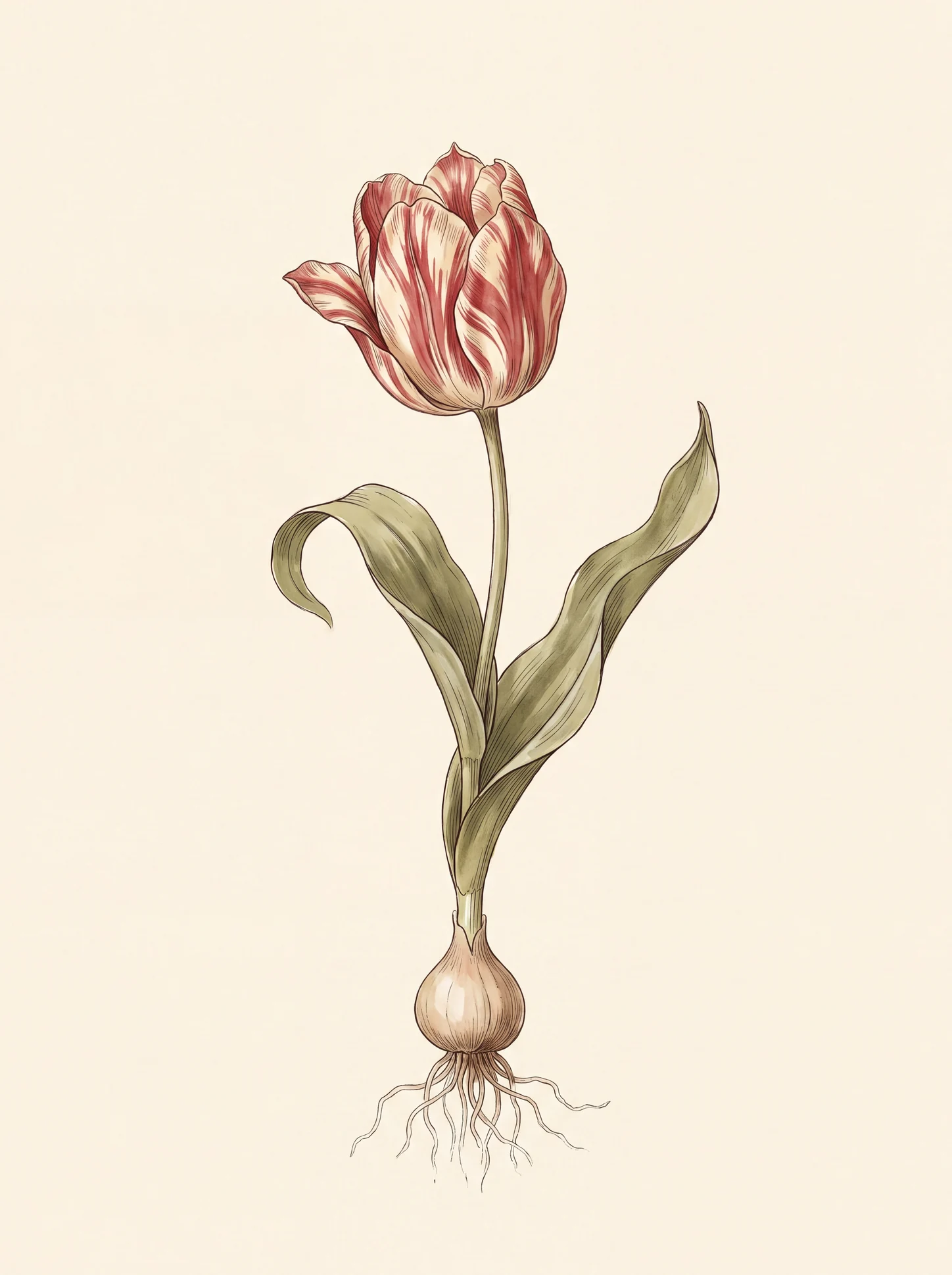
| Tulip | "Fame." | Spring flowers |
| Tulip, red | "Declaration of love." | Spring flowers |
| Tulip, yellow | "Hopeless love." | Spring flowers |
| Sweet pea | "Delicate pleasures." | Summer flowers |
| Honeysuckle | "Generous and devoted affection." | Summer flowers |
| Poppy, red | "Consolation." | Summer flowers |
| Poppy, white | "Sleep. My bane. My antidote." | Summer flowers |
| Iris | "Message." | Summer flowers |
| Lavender | "Distrust." | Summer flowers |
| Peony | "Shame. Bashfulness." | Summer flowers |
| Foxglove | "Insincerity." | Summer flowers |
| Dahlia | "Instability." | Summer flowers |
| Hydrangea | "A boaster. Heartlessness." | Summer flowers |
| Basil | "Hatred." | Herbs and wild flowers |
| Sweet basil | "Good wishes." | Herbs and wild flowers |
| Mint | "Virtue." | Herbs and wild flowers |
| Sage | "Domestic virtue." | Herbs and wild flowers |
| Thyme | "Activity." | Herbs and wild flowers |
| Bluebell | "Constancy." | Herbs and wild flowers |
| Buttercup | "Ingratitude. Childishness." | Herbs and wild flowers |
| Clover, four-leaved | "Be mine." | Herbs and wild flowers |
| Clover, white | "Think of me." | Herbs and wild flowers |
| Chrysanthemum, red | "I love." | Autumn and winter |
| Chrysanthemum, white | "Truth." | Autumn and winter |
| Marigold | "Grief." | Autumn and winter |
| Holly | "Foresight." | Autumn and winter |
| Ivy | "Fidelity. Marriage." | Autumn and winter |
| Rosemary | "Remembrance." | Autumn and winter |
Not every entry is kind. A gardener could take offence at a bunch of dahlias, narcissus ("Egotism.") or hydrangeas. The book also runs the other way. Its later pages are an alphabetical list of feelings, each pointing back to a flower. So "Foresight" leads to holly and "Adoration" to the dwarf sunflower.
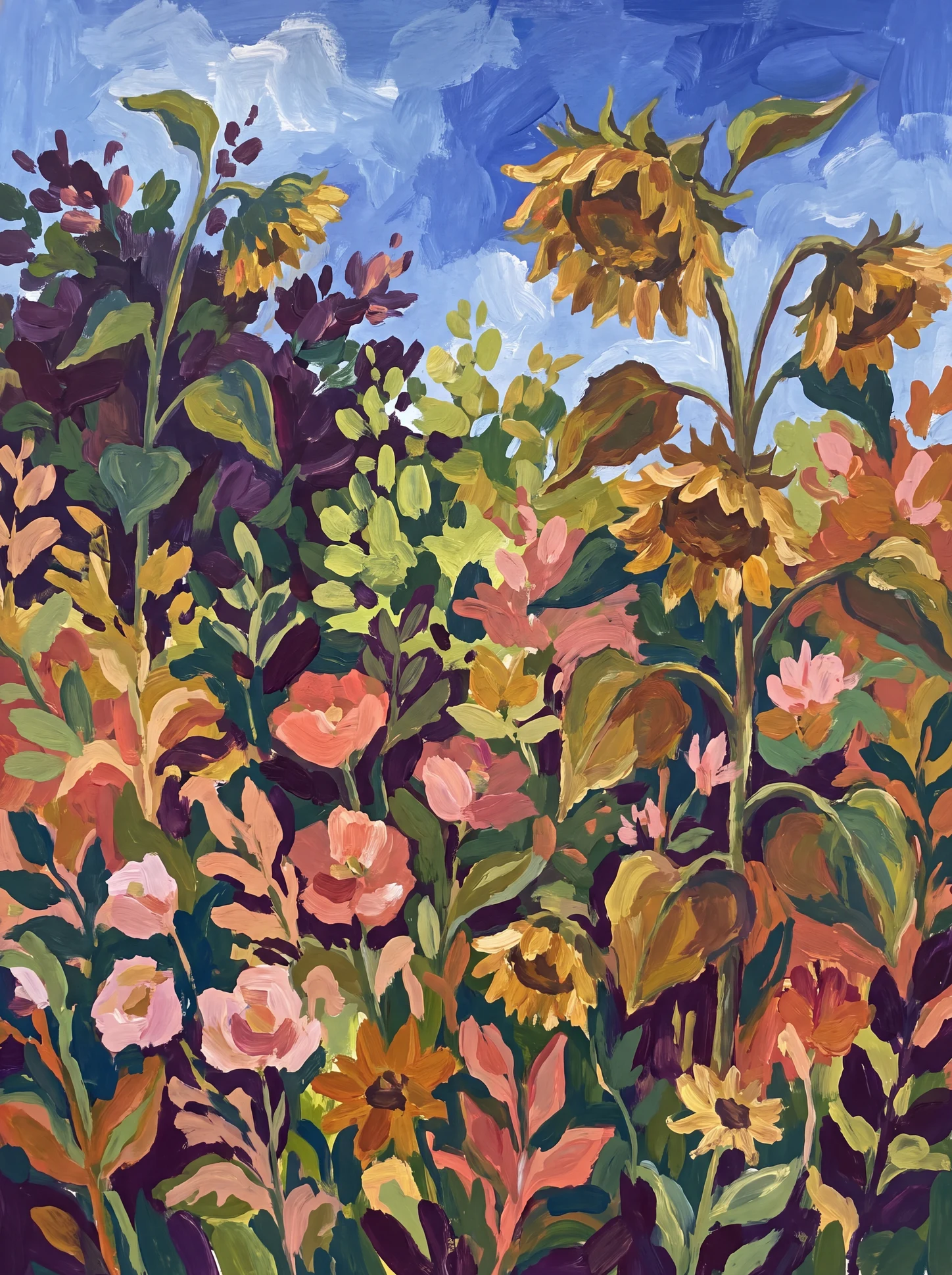
What does a sunflower mean?
Greenaway has no plain sunflower. She splits it by height. Sunflower, dwarf, is "Adoration." Sunflower, tall, is "Haughtiness." Other books in the RHS's comparison table give the sunflower "False riches". The table shows the same plant carrying different meanings from one book to the next.
So a sunflower can say adoration, pride or false riches, depending on which Victorian you ask. The plain, outdoor meaning is less confused. The RSPB says sunflowers are a great source of food for finches and sparrows during the colder months. Our garden birds guide says how to feed them safely. There's a sunflower print in the collection, and Great Tit on the Sunflower shows one of those visitors. More flower artwork is in our flower prints.
Roses, tulips and a muddle
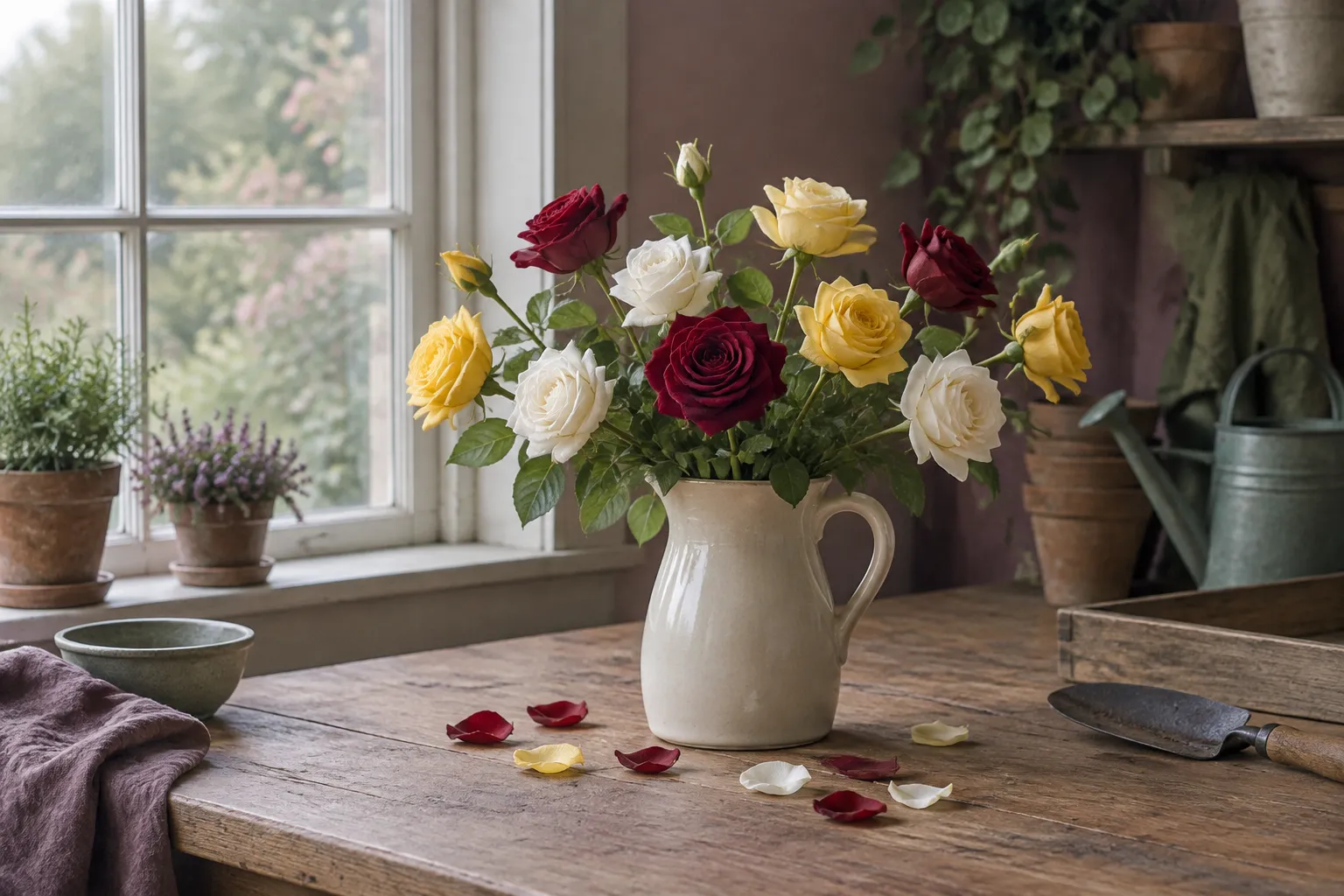
The roses show the problem in miniature. Greenaway gives the rose a whole run of meanings by colour and type. They run from "Love." for the plain rose to "Unity." for white and red together.
The tulip's "Fame" is an odd one. Elliott notes that the tulip was "saddled" with this meaning, which had previously belonged to the tulip tree. The other tulip entries are warmer. If you're growing them, the tulip planting guide has the timings, and roses have their own pruning guide.
Holly, ivy and Christmas
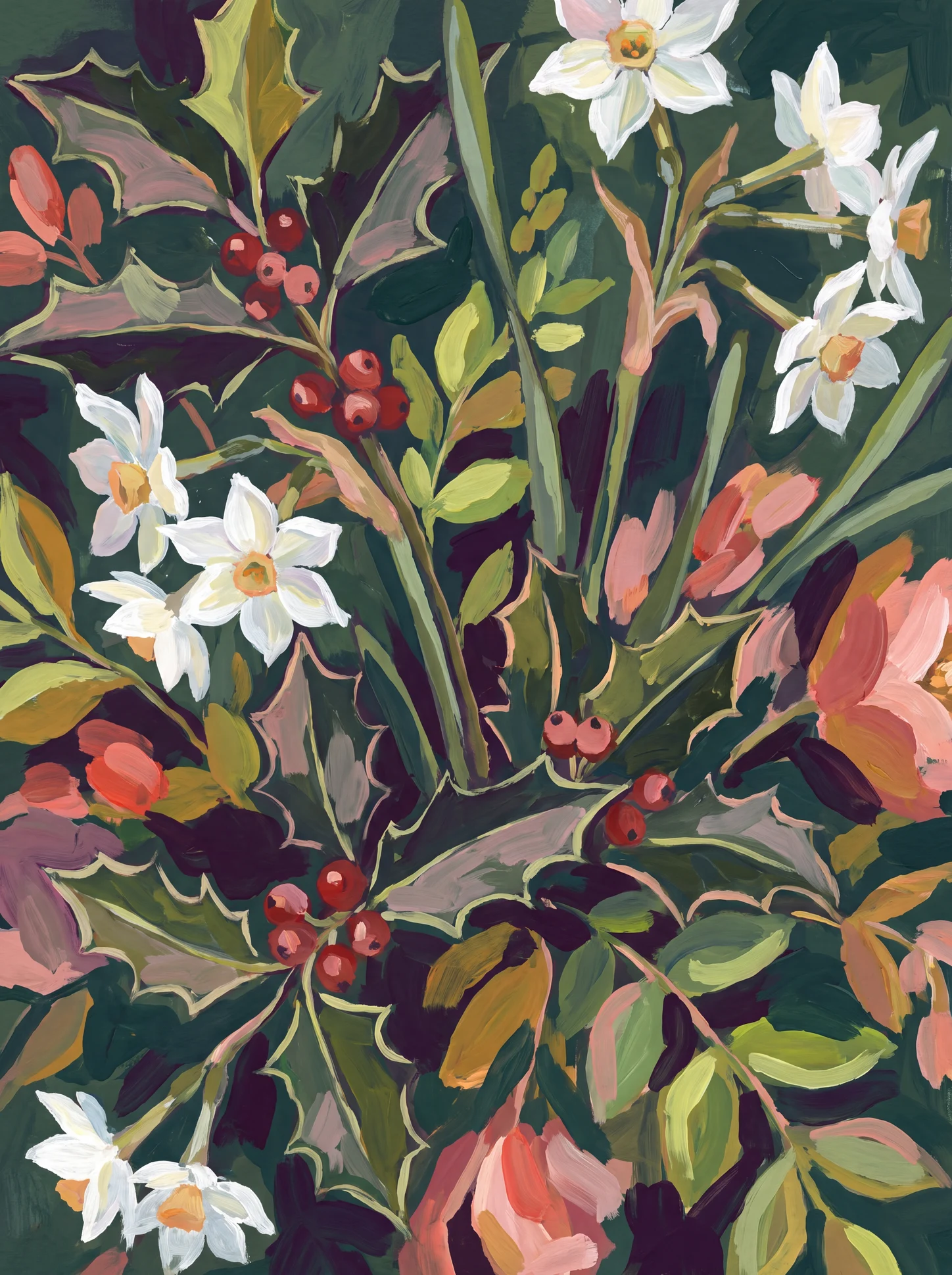
The Christmas plants have tidy entries. Holly means "Foresight." Ivy means "Fidelity. Marriage." Rosemary, "Remembrance." Our guide to making a Christmas wreath uses holly and ivy, with a note on picking them responsibly.
Using a meaning
A meaning is a nice reason to choose a flower, and a poor reason to worry about one. If someone asks what you meant by yellow roses, you can tell them what Greenaway says, and that the next book says something else.
For a gift, the more reliable meaning is the one you give it. Pick the flower they grow, or the one planted the year you met. Our gardening gifts for her start with a print of her own garden. Or photograph the flowers that mean something to you and print them as they are.
Sources
- Kate Greenaway, Language of Flowers, Project Gutenberg
- Brent Elliott, The Victorian Language of Flowers, RHS Lindley Library Occasional Papers vol. 10, 2013 (archived copy; the original address now returns an error)
- RSPB: Top garden plants to grow for birds