When to plant tulip bulbs in the UK
Plant tulip bulbs in autumn. The RHS names November as the month for tulips, and says December still works. This guide gives the depth, the spacing, and what to do if you are late.
Tulip planting at a glance
| Question | Answer |
|---|---|
| When | September to November, and the RHS autumn calendar says to plant tulips in November. December still works. |
| How deep | Two to three times the height of the bulb, pointed end up. A 5cm bulb wants a hole 10 to 15cm deep. |
| How far apart | At least twice the width of a bulb. In a border, 25 to 50 bulbs per square metre makes a full show. |
| In pots | Three parts peat-free multipurpose compost to one part grit. A 45cm pot takes about 12 bulbs, up to 20 for a fuller show. |
| Soil | Any ground that is not waterlogged. Tulips prefer neutral to alkaline soil. |
| Late planting | Plant them anyway. You may get shorter stems in the first year. |
| Next year | Lift once the leaves turn yellow, dry the bulbs and store them at 18 to 20°C, or treat them as bedding. |
The short answer: autumn, and November suits them
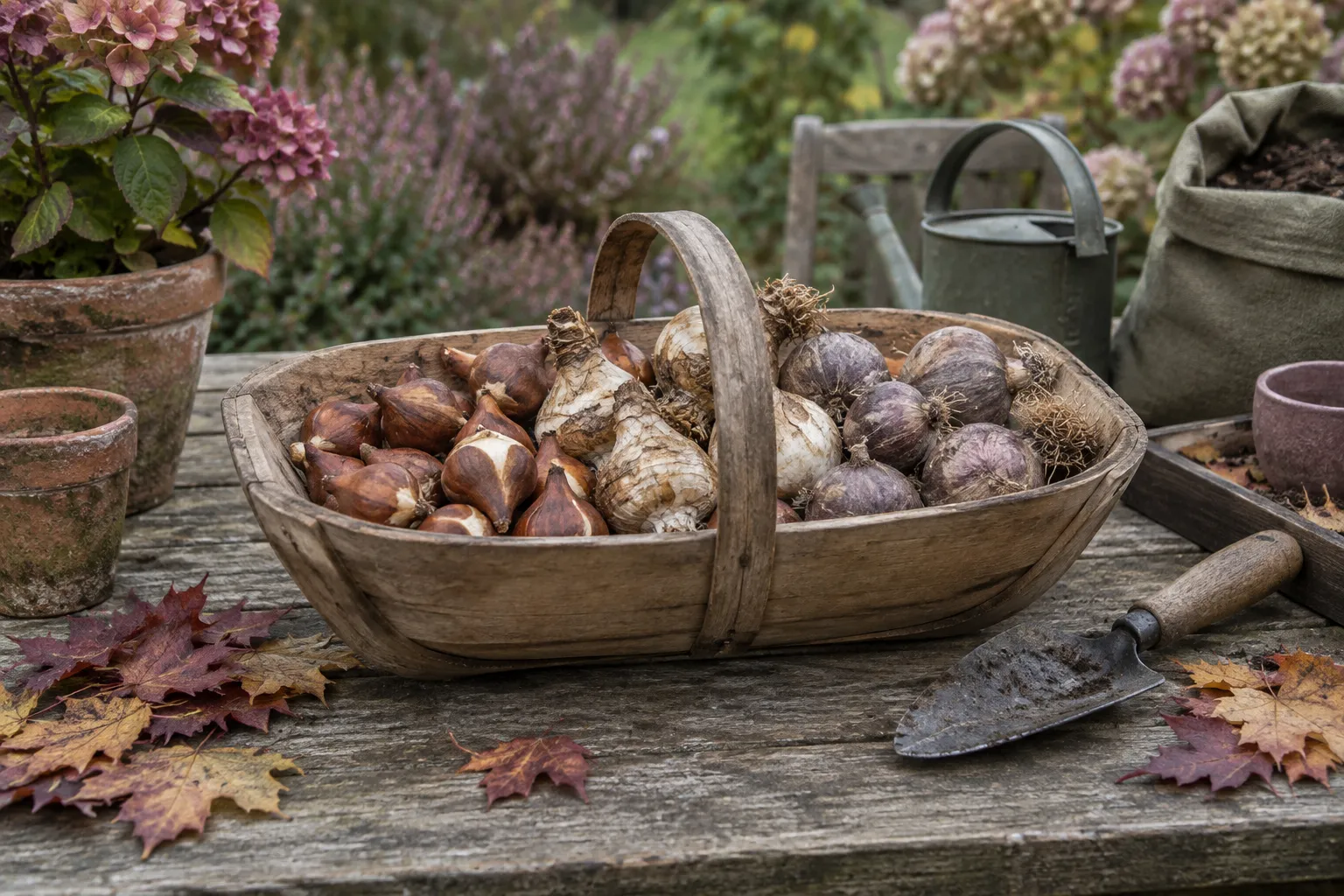
Tulip bulbs go in while they're dormant, in autumn. The RHS gives September to November as the window, and its autumn bulb calendar is more precise. Daffodils, crocuses and hyacinths should be in by the end of September. For tulips it says "Plant tulips in November".
So there's no rush. Bulbs that arrive early can wait somewhere cool and dry. They shouldn't wait long, because the RHS advises planting as soon as you can after buying, before they start to deteriorate.
In pots or in the ground
A border doesn't need perfect soil. The bulbs flower as long as the ground isn't waterlogged. Tulips prefer neutral to alkaline soil, so lime it if yours is very acidic (below pH 6).
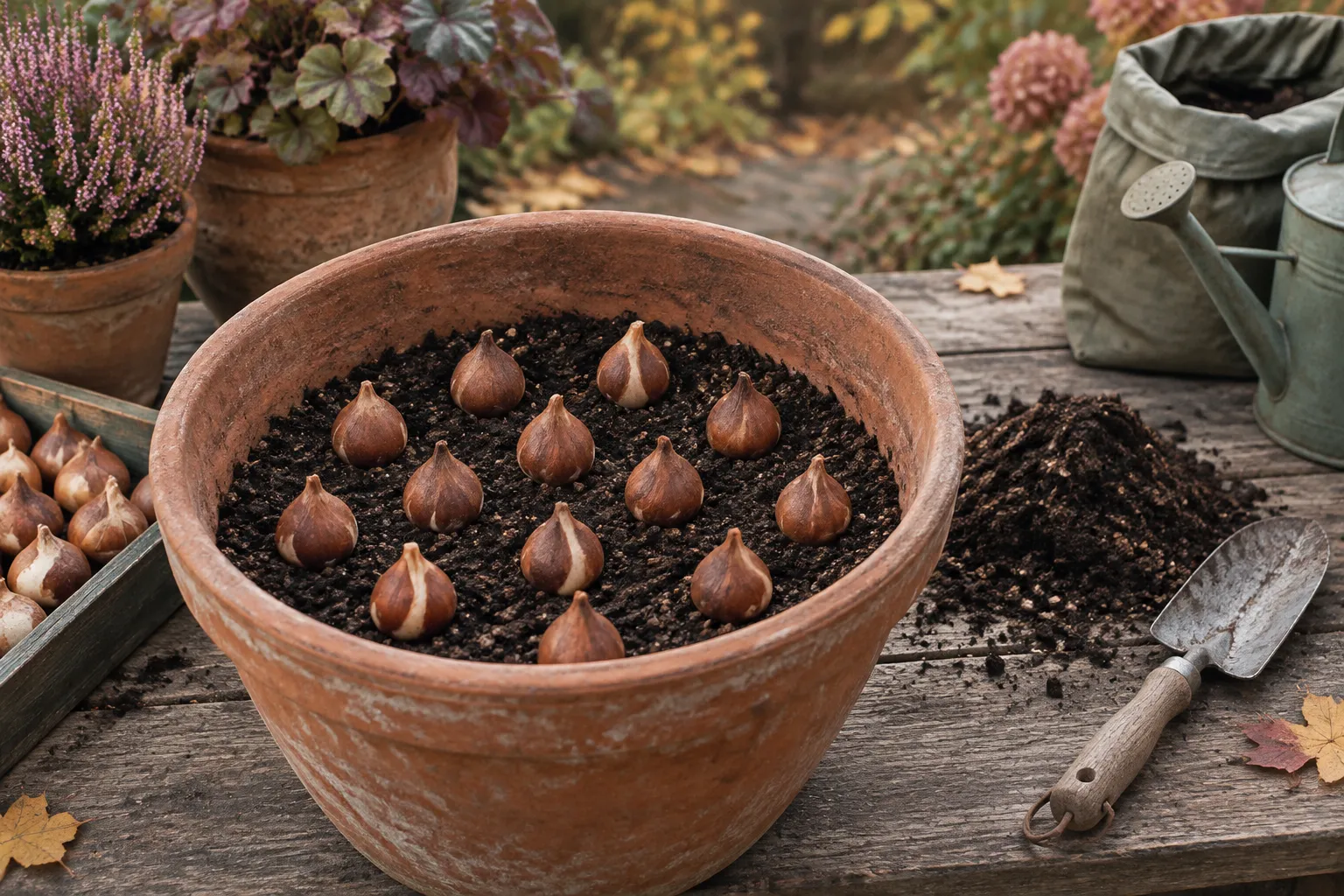
Pots take a bit more care. Mix three parts peat-free multipurpose compost to one part grit. Lay two or three bulbs end to end and fill the pot until the gap between the compost and the rim is that long. Sit the bulbs on top with about a finger's width between them, cover them, and firm the compost down to roughly 2.5cm below the rim. Water well and park the pot somewhere sheltered.
A 45cm pot takes around 12 bulbs, or up to 20 for a fuller show. Plant two or three layers in the same pot, a "bulb lasagne", and you'll get more flowers still.
One thing catches people out. If the compost looks sodden in wet weather before the shoots appear, move the pot against a fence or house wall until it drains. An unheated greenhouse works too.
How deep, and how far apart
Space bulbs at least twice their own width apart, and plant them two to three times their height deep with the pointed end up. A bulb 5cm tall wants a hole 10 to 15cm deep, which is the RHS's example for bulbs in general. Where winters are very cold, go deeper.
In a border, 25 to 50 bulbs per square metre makes a full display. You can use fewer if you fill the gaps with forget-me-nots, pansies, wallflowers or primroses. Groups of odd numbers look more natural, unless you're planting bedding. Frost arrives at different times across the country, so check the usual frost dates for your region before you plan a bed.
Grey squirrels dig up bulbs. Chicken wire over the soil until the leaves come through helps, and so do sprigs of holly pushed into the ground. Daffodils planted among the tulips may help too, since squirrels avoid them.
Can you plant tulips in December?
Yes. Tulips grow well when planted between September and December. The RHS doesn't say what happens after that, so we won't promise anything for January.
Late has a cost, though. Bulbs may flower poorly if they go in later than recommended, or after a long time in storage. Late planting can leave you with short stems. Mild winters can do the same.
If the bulbs are still in the bag, plant them now. Waiting only lets them deteriorate. Bin any that are soft or rotten and put the rest in. How long a bulb keeps varies by type, and the RHS calls the outcome "a bit hit and miss".
Expect a modest first year, with shorter flower stalks than usual. Mixing a balanced fertiliser into the soil at planting helps the bulbs recover.
Why tulips don't come back, and what to do about it
Border tulips often fail to flower in their second year if they're left where they are. That's why many gardeners treat them as bedding and buy fresh bulbs each autumn. Unlike daffodils, tulips tend to dwindle in number after planting, and the RHS keeps a list of those that last more than one year. Darwin hybrids and Kaufmanniana tulips reflower with more certainty. Specialist tulips, the ones close to wild species, often multiply.
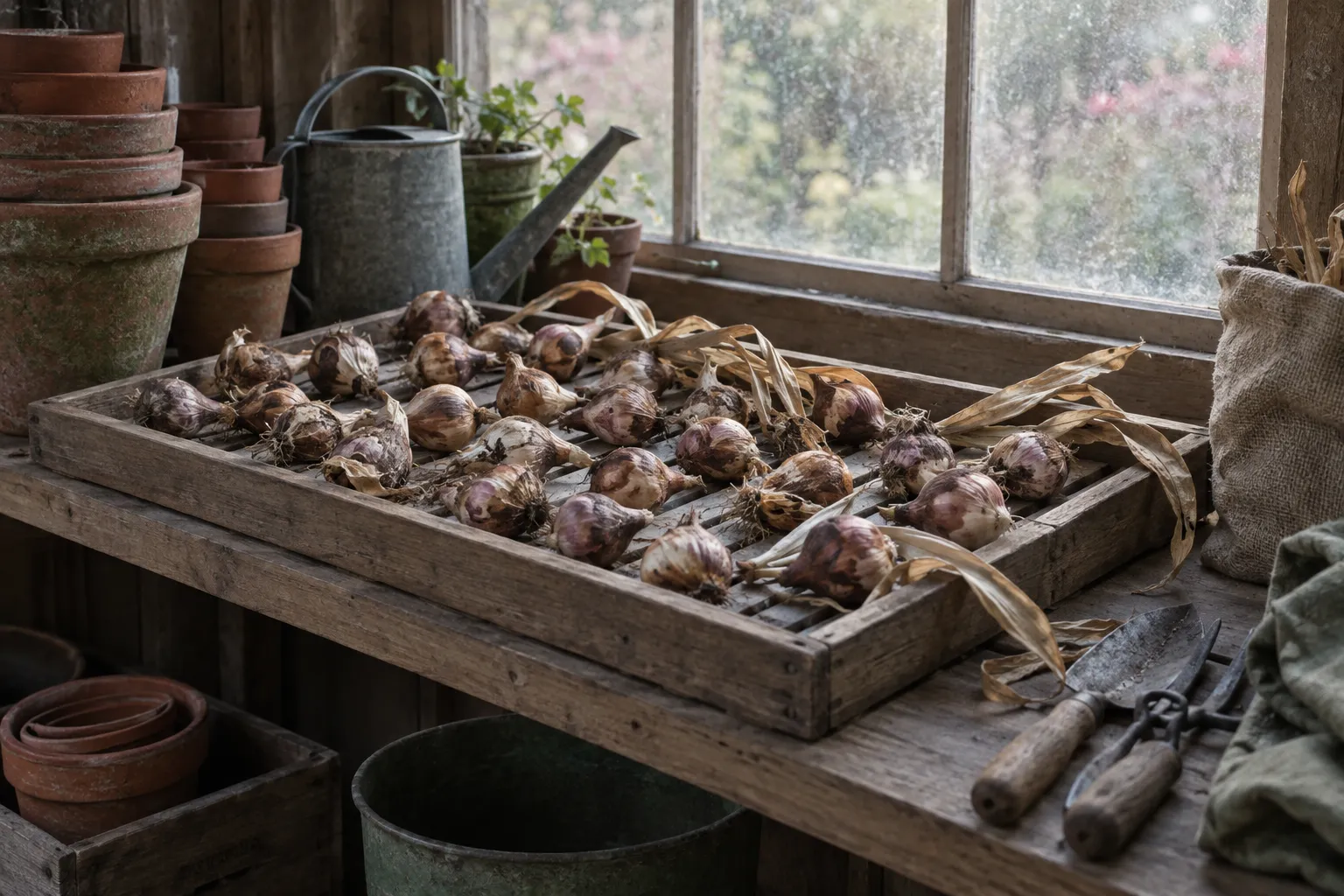
To try keeping yours, lift them once the leaves turn yellow, about six weeks after flowering. Clean off the soil and throw away any with damage, blue or white mould, or soft flesh. Dry the rest until the skins are papery, then store them in a warm, dark, well-ventilated place at 18 to 20°C. Replant in September to November. Reflowering still isn't guaranteed, so use stored bulbs in less important beds and buy new ones for the spot by the front door.
From March, feed weekly with a potassium-rich liquid feed such as tomato feed, until the leaves yellow. Cut seedheads off just above the leaves. Leave the foliage until it has gone straw-coloured.
Wet soil that doesn't dry out in summer makes reflowering hard. Very small bulbs that never flower point to planting too shallow. For bulbs in the ground, the RHS's troubleshooting advice is to replant them at least three times their depth.
One disease is worth knowing. Tulip fire shows as brown spots and twisted, withered leaves, sometimes with fuzzy grey mould. Check bulbs before planting, and throw out any with small black specks in the outer scales. Where it has struck, don't plant tulips again for at least three years. Space the bulbs out so air can move around them. Home gardeners have no chemical control.
Choosing tulips for colour all spring
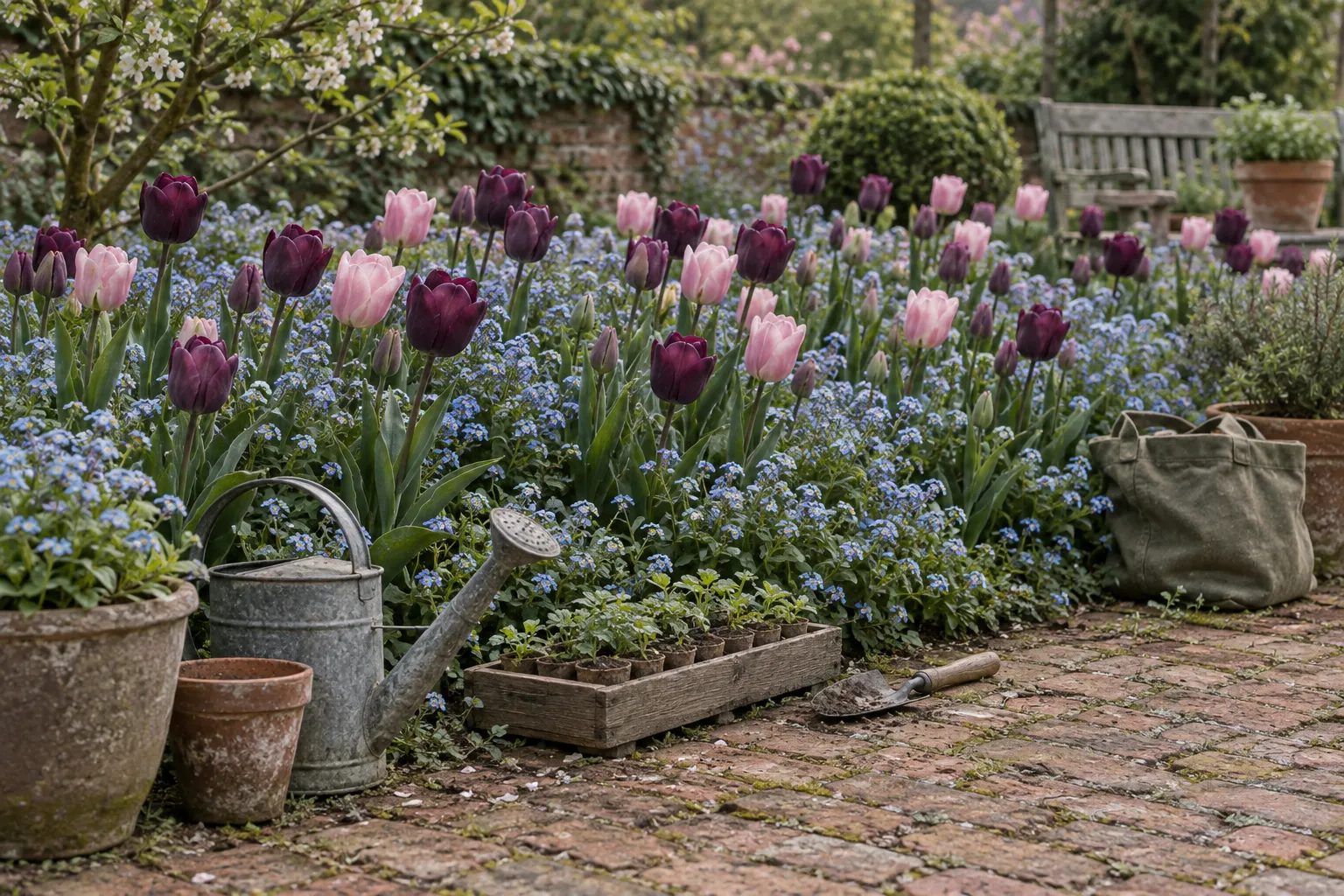
Different tulips flower from early to late spring, though most open in mid to late spring. Colours run from white-cream to near-black purple, and flower shapes from single and double to lily-flowered, fringed and parrot. A mix of timings stretches the show.
Plant something lower between them. The RHS suggests forget-me-nots, wallflowers, primroses, polyanthus and pansies, which flower at about the same time and fill the gaps between stems.
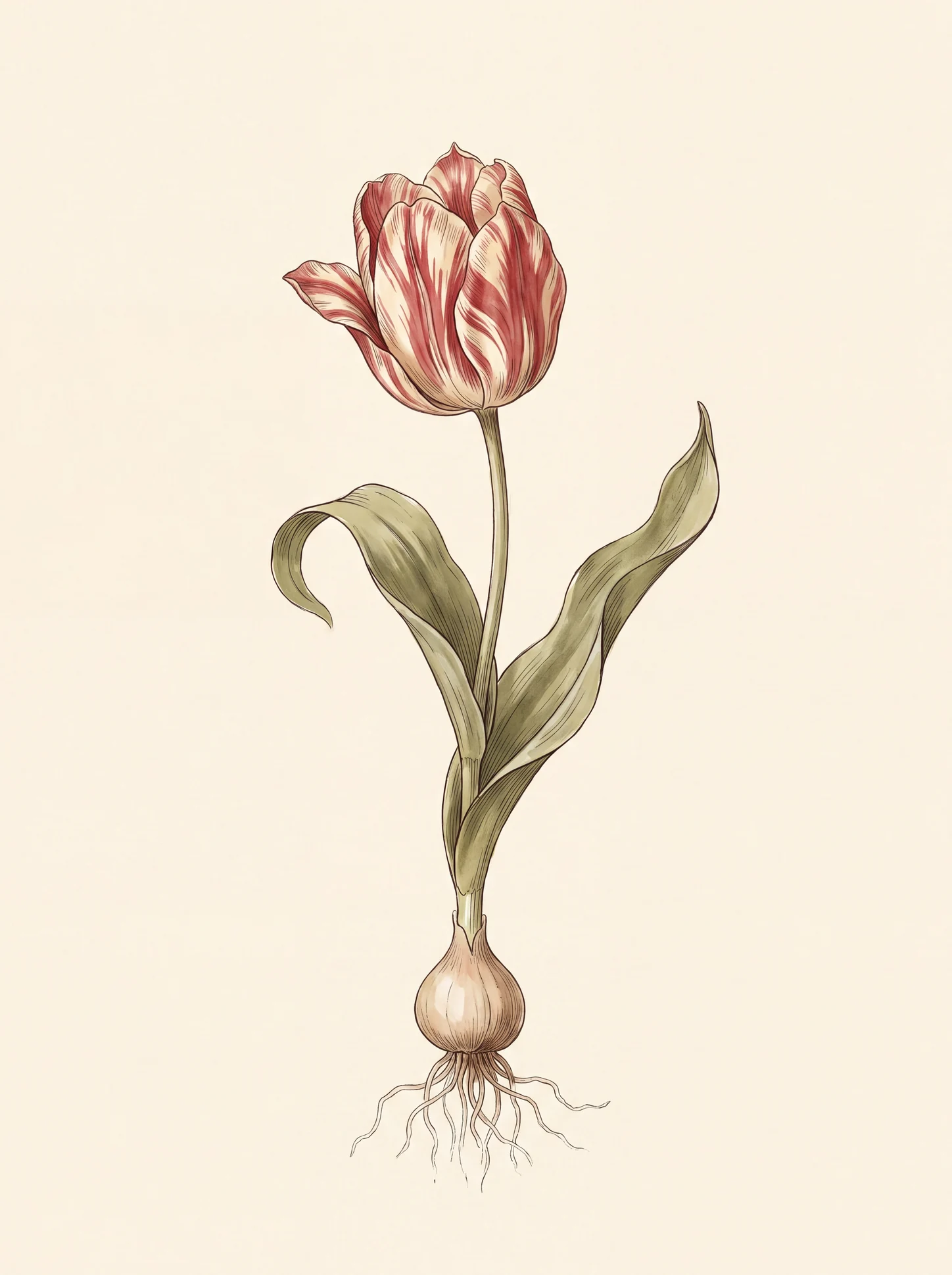
Border tulips also make good cut flowers. Grow a row to pick from, and cut when the bud shows some colour but hasn't fully opened. If you're buying for somebody who loves them, our gardening gifts for her start with a print of her own garden. There's also a botanical tulip among our botanical prints.
Photograph the display: when and how
April and May are the months to have the camera ready. The RHS warns that flowering time depends on the weather and can differ by as much as six weeks from one year to the next. Tulips in northern Britain and Scotland are also likely to flower three to six weeks later than those in the south of England. So watch the buds, not the calendar.
Stand where you'd normally see the bed from, the house or the path, and take more than one frame. Our guide to photographing your garden covers light and framing.
The bulbs may not come back next year, but a photograph will keep the bed. Upload it, and choose between a plain print and an art style.
Sources
Garden art prints to go with it
Questions people ask
Can you leave tulip bulbs in the ground all year in the UK?
You can, but border tulips often fail to flower in their second year when left in. The RHS says a few kinds, such as Darwin hybrids and Kaufmanniana tulips, reflower with greater certainty. Well-drained soil in full sun helps any of them last longer.
Why didn't my tulips bloom?
The usual causes are second-year decline, wet soil that doesn't dry out in summer and tulip fire. Planting too shallow gives small bulbs that don't flower. The RHS says to feed with tomato fertiliser while the plants are in growth, to build up the bulb for next year.
Can you plant tulips in November?
Yes. November is the month the RHS names for planting tulips. Its growing guide gives September to November, and its seasonal colour page says they grow well planted between September and December.
Do tulips grow better in pots or in the ground?
Either works. In the ground they need soil that isn't waterlogged. In pots they need a gritty mix and a spot where the compost doesn't sit sodden before the shoots appear.