How to make a Christmas wreath
You need a willow, straw or wire ring, a bag of moss, plenty of holly cut into 12.5 to 15cm pieces, reel wire and stub wires. The RHS rates it an easy job, and a holly and ivy wreath on a moss ring lasts four or five weeks outside.
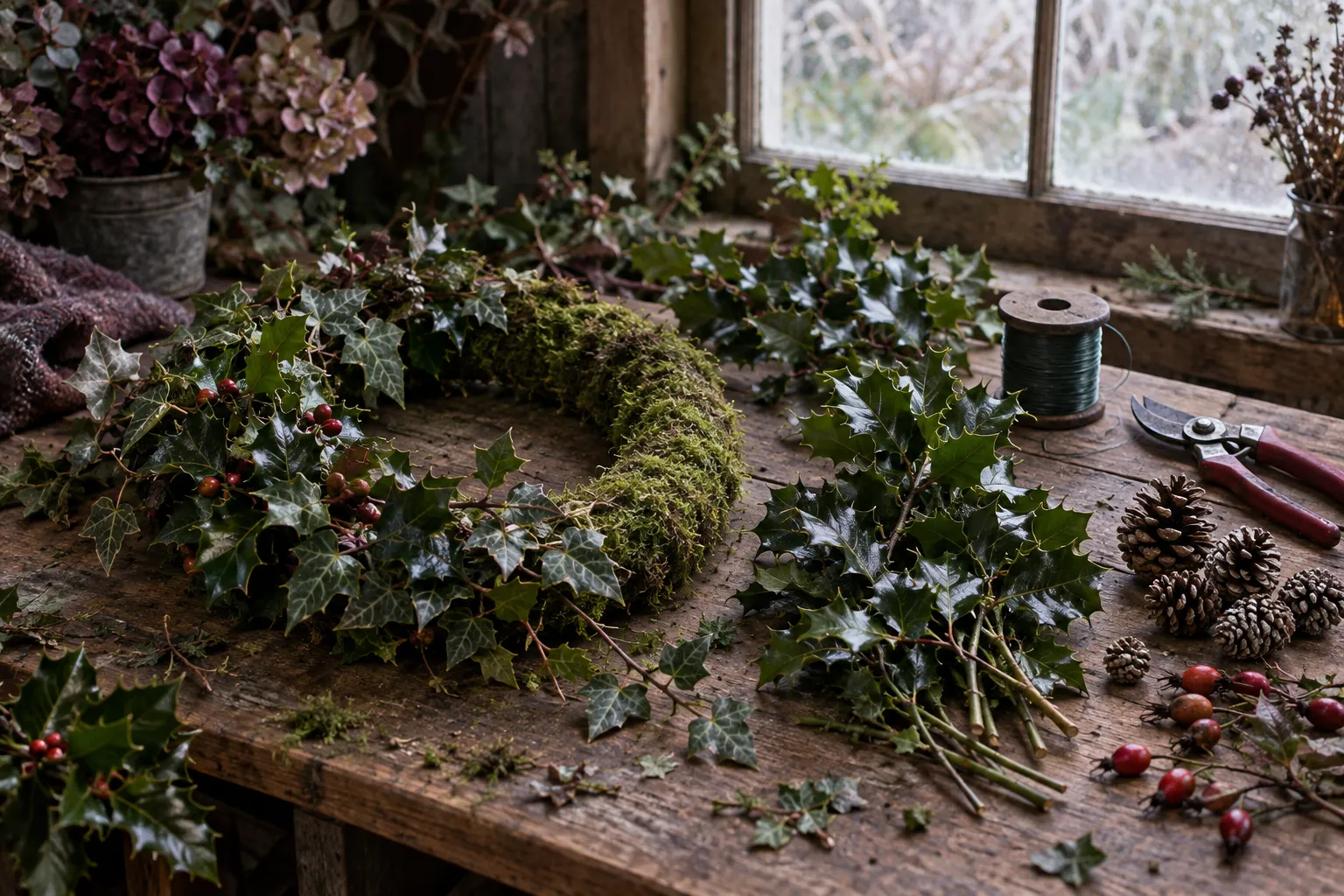
What you need
The RHS's wreath guide rates this as an easy job, to do in the weeks before Christmas. For the classic holly wreath you need:
- one willow, straw or wire ring (you can weave your own willow ring)
- a bag of sustainably farmed sphagnum moss, or, better, moss raked from your own lawn
- plenty of holly, cut into sections 12.5 to 15cm long
- a reel of 0.56mm annealed wire and a pack of 22.5cm florist's stub wires
- secateurs, and a bow if you like
Moss raked from the lawn is the better choice, since even sustainably farmed sphagnum has considerable air miles. Skip floral foam, which is environmentally harmful. A ready-made padded wreath base is fine if you'd rather not make your own. If you'd rather give than make, see our Christmas gifts for gardeners.
Choosing the greenery
Traditional holly and ivy, with berries if you have them, work well, and so do variegated forms. Spruce and pine work too, and you can experiment with box, Magnolia grandiflora, osmanthus, Viburnum tinus and bay. For a rustic wreath, use twisted stems of hazel, birch, dogwood, willow, honeysuckle or vines. Decorate with rose hips or the fluffy seedheads of old man's beard, which is Clematis vitalba. In Kate Greenaway's Victorian dictionary holly means "Foresight" and ivy "Fidelity. Marriage.", which is worth a line on the card: see flower meanings.
Making it, step by step
- Tease out the moss and lay a fist-sized bundle on top of the ring.
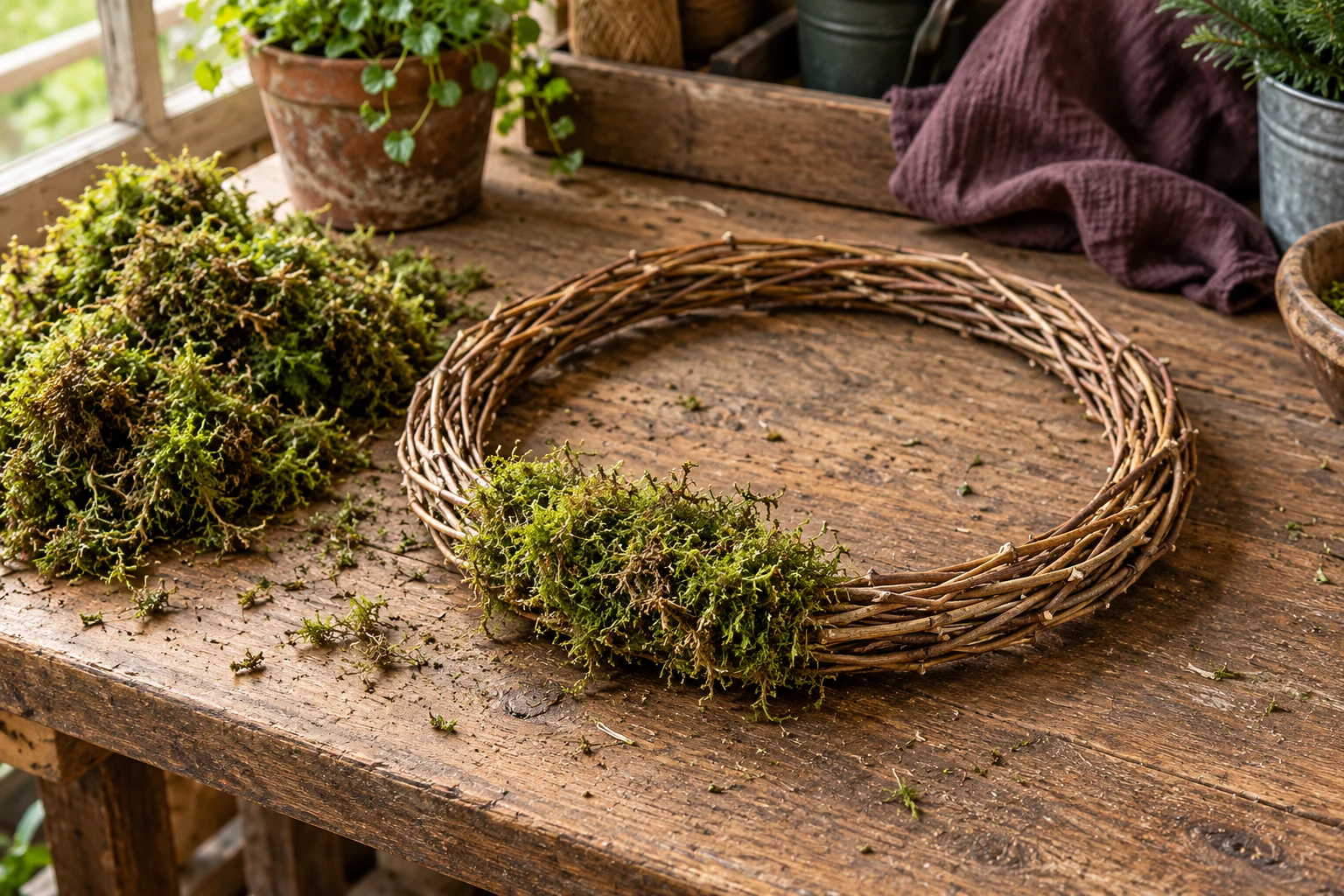
Start with a fist-sized bundle of moss on the ring. - Fasten one end of the wire reel to the ring and wrap the wire around the moss in a circle. Keep it taut and carry on round, adding bundles of moss until the ring is completely covered.
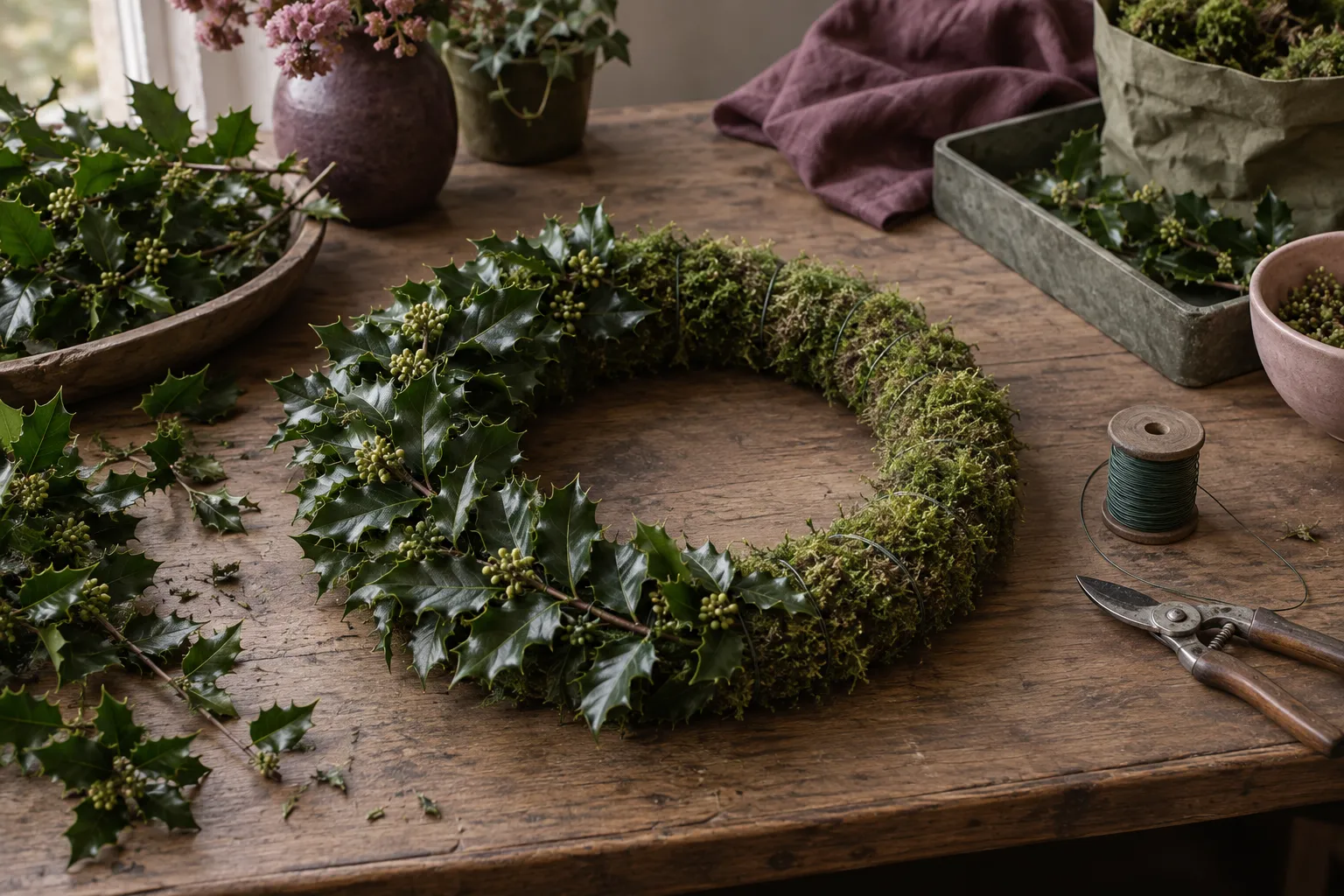
Wire holds the moss around the ring; keep adding bundles until the base is covered. - Lay the prepared greenery on the moss, one piece at a time and all in the same direction. Secure each with a single wrap of wire. Overlap the holly so no moss shows, and continue until the whole ring is covered.
Lay the greenery in one direction, overlapping each piece to hide the moss. - Tie off the wire with a few extra wraps. Draw a longer piece of wire up to make a loop for hanging, and finish with a bow.
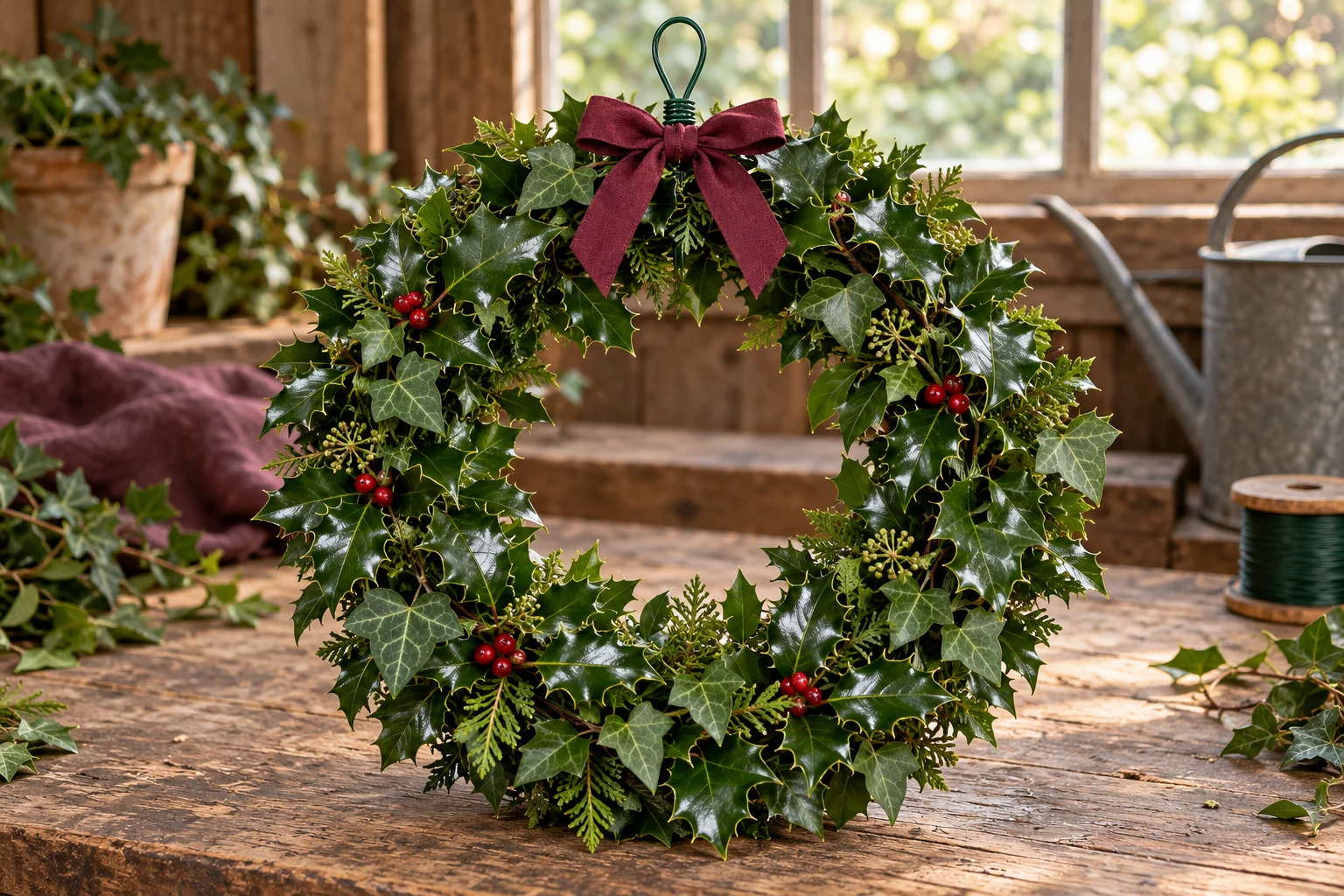
Tie off the wire, make a hanging loop and add a bow.
You might add bunches of berries from holly, cotoneaster or ivy, or rose hips, for colour.
Three alternatives
Pine with cones. Wire short sections of pine onto a ready-made twig or moss ring, with a loop for hanging. Wrap stub wire round the base of an open cone, twist the ends together and push the wire through the ring. Cones look good in clusters of three.
Winter stems. Willow and dogwood grown for their winter stems need no base. Collect 12 to 15 young, flexible stems at least 1.5m long. Bend one into a circle 30 to 40cm across, twisting in the overlaps. Add the others one at a time, starting each slightly further along, and finish with a wire loop.
Old man's beard. The seedheads make natural tinsel. Push short sections into a twig ring and handle them gently, as they break up easily. This wreath is best kept indoors.
Where the greenery comes from
Your own garden is the simplest answer. If you're looking further afield, the law and the landowner both matter.
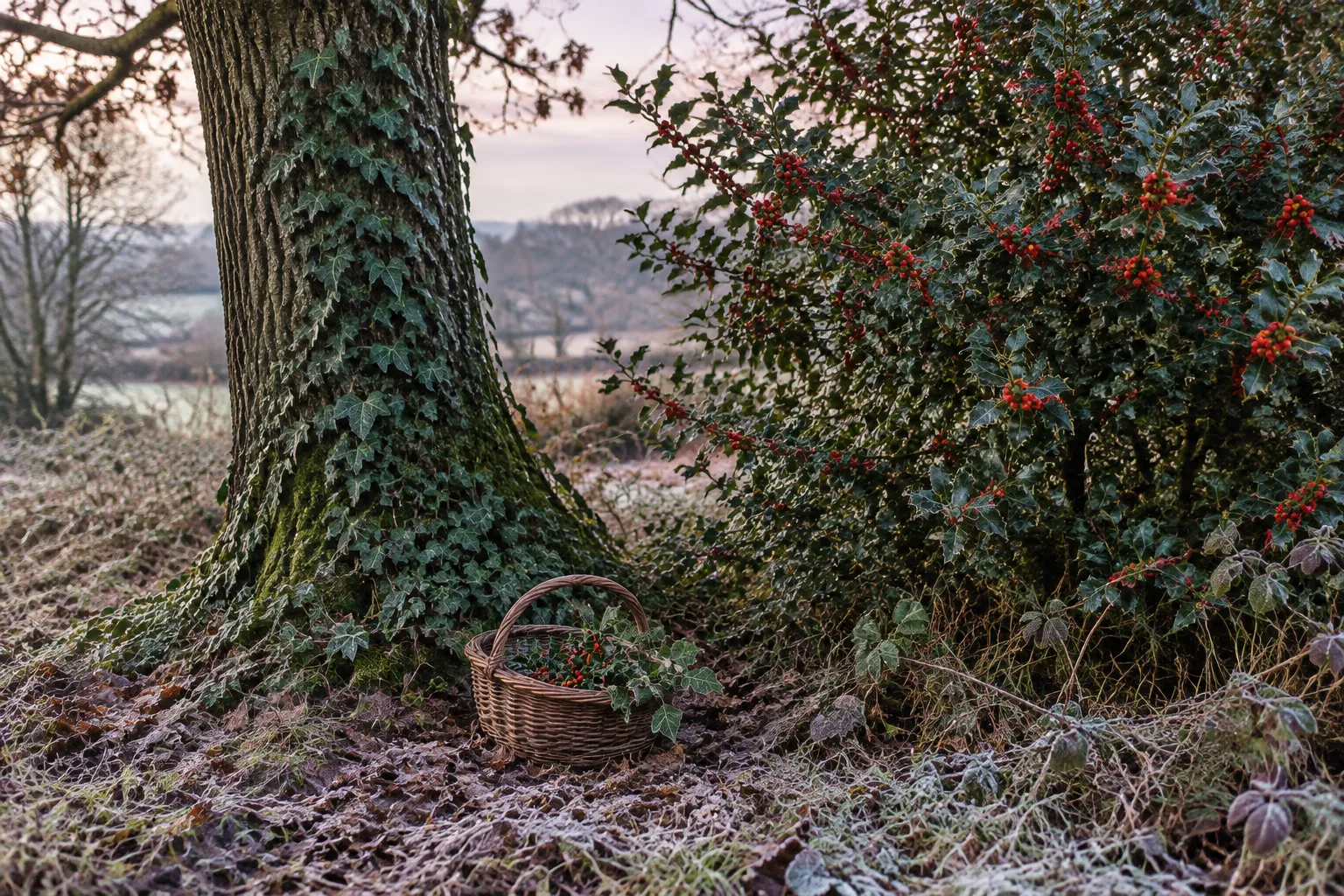
The Woodland Trust's foraging guidelines say to take no more than you need, and to pick with care and avoid damaging plant roots. On its own sites foraging is for personal use only, and on some it prefers that you don't forage, so check the signs. It also asks foragers to be sure of what they're picking and to take only from plentiful populations. It asks them to leave plenty behind for wildlife and never to collect rare species.
It adds that all wild plants are protected under the Wildlife and Countryside Act 1981. It's illegal to dig up or remove a plant from the land it's growing on without the landowner's or occupier's permission. Some species are specially protected from picking, uprooting, damage and sale.
The Act itself, in England and Wales, deals with this in section 13. It's an offence for a person who isn't an authorised person to "intentionally uproot any wild plant" not on Schedule 8, the protected list. Scotland has its own version of the section. So cut sprigs rather than digging anything up, ask before you take, and leave the rest.
How long it lasts
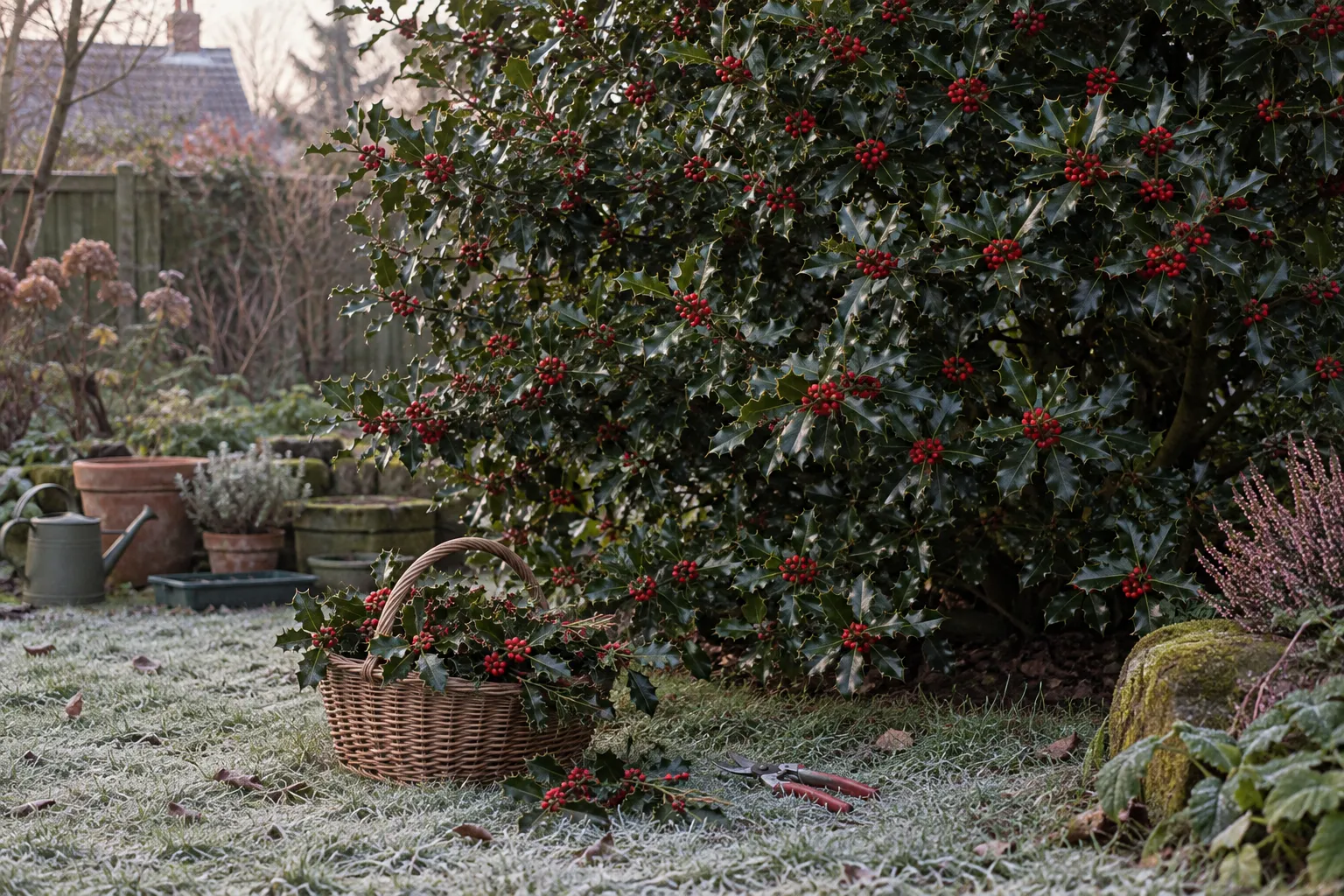
A wreath hung outdoors lasts four or five weeks, so preparations can begin in late November. An indoor wreath looks fresh for one or two weeks, depending on how warm the room is. Outside, hang it up and keep the moss moist, misting it with rainwater as needed. An evergreen wreath dries out and the foliage withers if the moss is allowed to dry. The old man's beard kind does better indoors.
When the season ends, take off all the wire, ribbon and plastic parts such as tinsel before composting. They can usually be reused next year.
A wreath on the wall
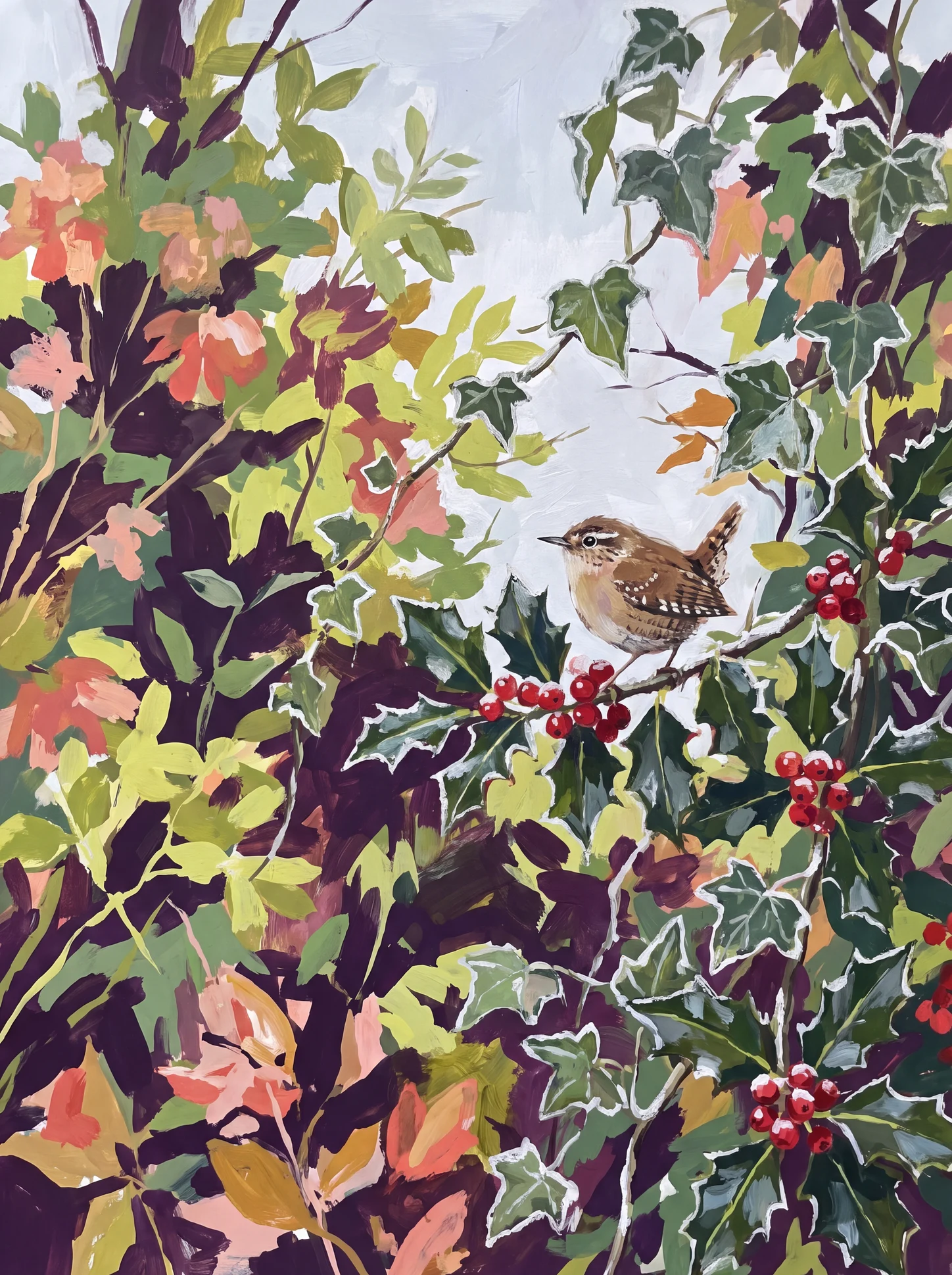
Holly and the Wren shows a small wren among holly leaves and red berries, printed to order. There's a guide to poinsettia care if a houseplant is on the list as well.
If you've made one this year, photograph it on the door, or the garden it came from, and upload it to see it as art.
Sources
Garden art prints to go with it

Questions people ask
What do you make a Christmas wreath out of?
A willow, straw or wire ring, moss to pad it, and greenery cut into 12.5 to 15cm sections: holly and ivy, spruce or pine, or bay and Viburnum tinus. Fix each piece with annealed wire, all facing the same way.
How long does a fresh holly wreath last?
A holly and ivy wreath on a moss ring lasts four or five weeks outside.
Can you make a wreath without a base?
Yes. Willow and dogwood stems at least 1.5m long can be bent and twisted into a ring 30 to 40cm across, with no base at all.