Pick your nearest weather station and see when to sow and plant about twenty common crops and flowers, as real dates for that place. Print it as a year calendar for the shed wall.
Written by Craig Fearn, Gardenkept. Last updated .
Your planting dates
Pick the weather station nearest to you, or the one most like your garden: coast, city, valley or hill. The dates below change to suit it.
Planting dates for Wellesbourne
Average last spring frost: 26 April. Average first autumn frost: 3 November.
An average last frost means about half of years have a later one. For tender plants (beans, courgettes, squash, tomatoes, sweetcorn, dahlias) we have already added two weeks; in a cold spring wait a week or two more, or keep fleece handy. See how late the frost has come at your station on the UK frost dates page.
Rows marked RHS months use the months the RHS gives, which are the same everywhere. The RHS says to go a little later in colder places and earlier in milder ones, so in a cold or high garden start near the end of those windows.
Sow indoors or under cover
Sow outside
Plant or plant out
Lift
Vegetables
Potatoes, first earlies
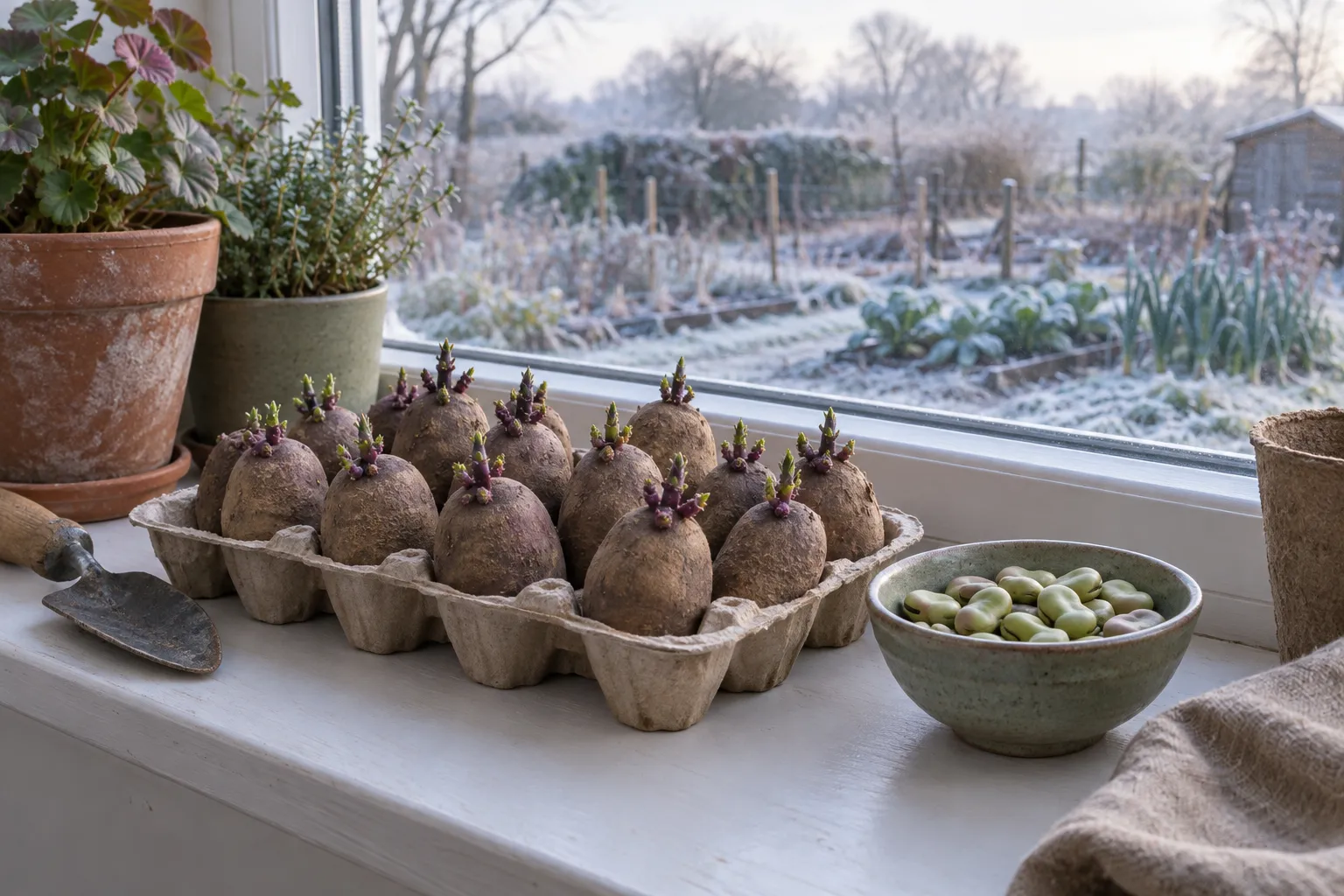
Shoots that come up before the last frost can be caught by it. Until about 26 April, cover them on frosty nights with fleece, straw or a ridge of soil.
JFMAMJJASOND
Chit (sprout) indoors21 January to 10 MarchRHS months
RHS: start chitting in late January in milder areas and up to early March in colder spots; it takes four to six weeks.
Plant21 March to 31 MarchRHS months
RHS: plant around late March, a little later in colder places and earlier in milder ones.
Shoots that come up before the last frost can be caught by it. Until about 26 April, cover them on frosty nights with fleece, straw or a ridge of soil.
JFMAMJJASOND
Chit (sprout) indoors21 January to 10 MarchRHS months
RHS: start chitting in late January in milder areas and up to early March in colder spots; it takes four to six weeks.
Plant1 April to 20 AprilRHS months
RHS: plant in early to mid-April, a little later in colder places and earlier in milder ones.
Shoots that come up before the last frost can be caught by it. Until about 26 April, cover them on frosty nights with fleece, straw or a ridge of soil.
JFMAMJJASOND
Plant11 April to 10 MayRHS months
RHS: plant in mid-April to early May, a little later in colder places and earlier in milder ones. Chitting is optional for maincrops.
3 to 5 weeks before planting out. RHS: start indoors from mid-April to May, plant out in late May or early June; we count back from your plant-out date.
Plant out21 May to 17 June
RHS: plant out once all risk of frost has passed, usually late May or early June. We use your average last frost plus two weeks, and not before 21 May.
Sow outside11 May to 7 June
RHS: sow once all risk of frost has passed and the soil is 12°C, usually mid-May in the south and early June in the north. We use your average last frost plus two weeks, and not before 11 May.
3 to 4 weeks before planting out. RHS: sow indoors from late April for an early crop, plant out after the last frost, usually late May or early June.
Plant out21 May to 17 June
RHS: wait until after the last frost, usually late May or early June. We use your average last frost plus two weeks, and not before 21 May.
Sow outside21 May to 20 July
RHS: sow outdoors once all risk of frost has passed and the soil is warming, usually late May or early June; repeat sowings of dwarf beans until mid-summer. We start at your average last frost plus two weeks (not before 21 May) and stop on 20 July.
3 to 7 weeks before planting out. RHS: start indoors in April or early May, plant out in early summer once the soil has warmed.
Plant out21 May to 17 June
RHS: tender; plant out after the last frost, in early summer once the soil has warmed. We use your average last frost plus two weeks, and not before 21 May.
Sow outside21 May to 17 June
RHS: sow outdoors in late May or early June, once the soil warms up. We use your average last frost plus two weeks, and not before 21 May.
Pick winter squash and pumpkins before any frost is likely: the average first frost here is about 3 November, so bring them in before then. Frosted fruit will not store.
JFMAMJJASOND
Sow indoors16 April to 30 April
3 to 5 weeks before planting out. RHS: sow from mid to late April, keep indoors until late May or early June.
Plant out21 May to 17 June
RHS: plant out after the last frost; keep young plants indoors until late May or early June. We use your average last frost plus two weeks, and not before 21 May.
Sow outside21 May to 17 June
RHS: sow outdoors in late May or early June, after the last frost. We use your average last frost plus two weeks, and not before 21 May.
Sow indoors (greenhouse crop)21 February to 20 MarchRHS months
RHS: sow from late February to mid-March for plants that will grow in a greenhouse. Seeds need about 18°C.
Sow indoors (outdoor crop)23 March to 13 April
7 to 10 weeks before planting out. RHS: sow from late March to early April for plants that will grow outside, plant out in early summer.
Plant out1 June to 28 June
RHS: plant out in early summer, once temperatures are reliably above 16°C. Tomatoes are tender, so we also wait for your average last frost plus two weeks; not before 1 June.
3 to 7 weeks before planting out. RHS: sow indoors in mid to late spring, plant out by late May or early June at 8 to 15cm tall.
Plant out21 May to 17 June
RHS: plant out after all risk of frost has passed, by late May or early June. We use your average last frost plus two weeks, and not before 21 May.
Sow outside21 May to 17 June
RHS: seed needs soil above 10°C, so wait until late spring or early summer and warm the soil first. We use your average last frost plus two weeks, and not before 21 May.
Sow summer cabbages1 February to 30 AprilRHS months
RHS: February to April, with early sowings under cloches or fleece.
Sow autumn cabbages1 April to 30 JuneRHS months
RHS: mid-spring to early summer.
Sow winter cabbages1 May to 30 JuneRHS months
RHS: late spring or early summer.
Sow spring cabbages1 July to 31 JulyRHS months
RHS: July, to stand over winter.
Sown in modules or a seedbed, cabbages are ready to move to their final spot after about five weeks, at 10 to 15cm tall (RHS). The same goes for most brassicas, but check the packet: this row is cabbages only.
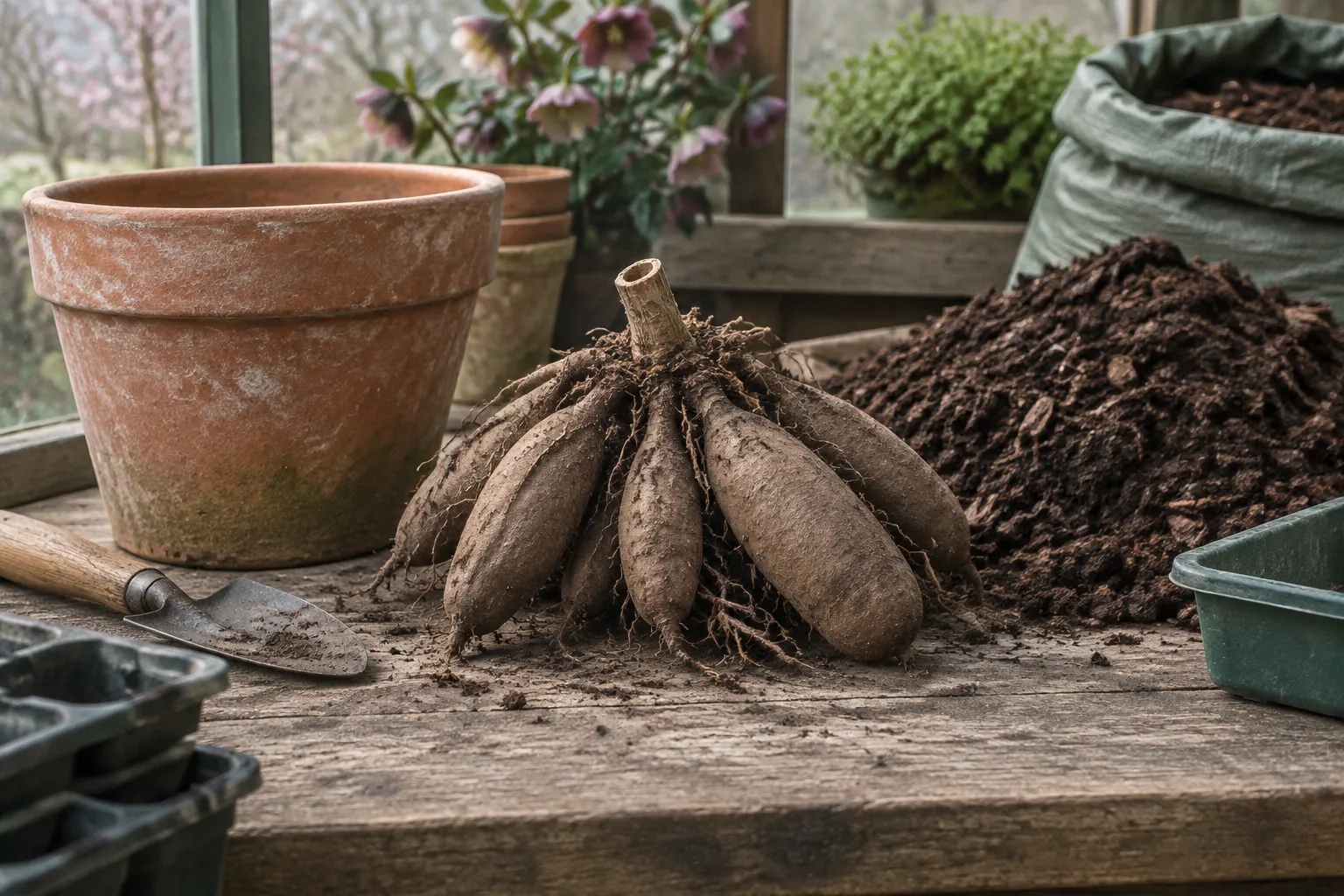
RHS: start stored tubers in pots indoors or in a greenhouse in spring. We show March and April, so they have time to grow before planting out.
Plant out (started in pots)21 May to 17 June
RHS: plant out once there is no danger of frost, usually late May, or early to mid-June in colder regions. We use your average last frost plus two weeks, and not before 21 May.
Plant dormant tubers outside11 April to 30 AprilRHS months
RHS: dormant tubers can go straight into the ground in mid to late April; the soil will not freeze and shoots come up after the frosts.
Lift and store tubers3 November to 30 November
RHS: once the first frosts have blackened the leaves, lift the tubers (or mulch them where winters are mild), and if the frosts are late still lift by late November. We start at your average first frost and stop on 30 November.
Choose the weather station nearest to you, or the one most like your garden. A garden on the coast is milder than one inland, and a valley or hilltop is colder than a town. The dates change straight away, and the link in your address bar keeps your station, so you can save it or send it to your allotment neighbours.
Each crop has a strip across the twelve months, with a bar for each job: sowing indoors or under cover, sowing outside, planting or planting out, and lifting. The key above the strips shows which bar is which, and the dates are written beside each one. Press Print the year calendar for an A4 sheet of every crop for your station.
How to read it
An average last frost is the middle of the spread, not the all-clear: about half of years have a later one. For tender plants such as runner beans, courgettes, tomatoes and dahlias we have already added two weeks to your station's average. In a cold spring, wait a week or two more, or keep fleece ready. The UK frost dates page shows the latest last frost each station has had.
Some rows are marked RHS months. For those crops the RHS gives months, not a link to frost, so we use its months as they are and they are the same everywhere. Potatoes, garlic, onions, peas, carrots and the spring bulbs are like this. The RHS says to go a little later in colder places and earlier in milder ones, so in a cold garden start near the end of the window.
How it is worked out
We read each crop's growing guide on the RHS website and turned what it says into dates. Where the RHS ties a step to frost, such as planting runner beans out once all risk of frost has passed, we start at your station's average last spring frost plus two weeks. We also keep the RHS's usual earliest date as a floor, so a mild station with a February frost average is not told to plant courgettes out in March. Indoor sowing for those crops is counted back from the planting-out date by the gap the RHS gives between sowing and planting.
A tender window runs for four weeks from its start; you can still plant after that, with a shorter season. Where the RHS says early, mid or late in a month, we read that as the 1st to the 10th, the 11th to the 20th and the 21st to the end. Dahlias are lifted from your average first autumn frost, and by the end of November at the latest, as the RHS advises. The frost averages come from 30 years of Met Office daily temperature records at each station (MIDAS Open, used under the Open Government Licence). Each crop shows the RHS page it came from. Seed packets can differ, so where your packet says something else, follow the packet for that variety.
The RHS says first earlies around late March, second earlies in early to mid-April and maincrops from mid-April to early May, a little later in colder places and earlier in milder ones. Early varieties can be chitted (set to sprout) for four to six weeks before planting. Shoots that come up before the last frost need covering on frosty nights.
When can I plant runner beans out?
Once all risk of frost has passed, which the RHS says is usually late May or early June. The tool takes your station's average last frost, adds two weeks, and does not go earlier than 21 May. Sow them indoors three to five weeks before that.
Is it safe to plant out on the average last frost date?
Not for tender plants. About half of years have a later frost than the average, so wait a week or two after it, or have fleece ready. The tool already adds two weeks for tender crops.
Why are some dates the same wherever I pick?
For crops such as garlic, onions and potatoes the RHS gives months rather than a link to frost, so we use those months as they are. They are marked RHS months. In a colder garden, start near the end of the window.