How to grow dahlias, and overwinter them
Dahlias grow from tubers, and the frost kills them. Start them indoors in spring, plant out after the last frost, and decide before November whether to lift or leave them.
What a dahlia needs
Dahlias come from Central America and Mexico, and they've never forgotten it. The RHS calls them tender perennials. They live for years underground as tubers, but the top growth dies in winter and frost will kill the plant outright. They like a warm, sheltered, sunny spot, soil that's fertile and free-draining but moist, and plenty of room.
The choice is huge. Flowers run from about 5cm across to 30cm. Bedding dahlias stay under 60cm and suit pots and the front of a border. Most reach around 1.2m, and a few pass 2m. If you want to help pollinators, single flowers are the ones to choose. Around 120 cultivars hold the RHS Award of Garden Merit, a mark of reliable performance in its trials.
When to plant dahlias
Keep them indoors until temperatures are consistently above 5°C. Stored tubers do best started in containers in spring, indoors or in a greenhouse, then planted out once there's no danger of frost. That's usually late May, or early to mid-June in colder regions. Our frost dates page shows when your area usually gets its last one.
No room indoors? You can plant tubers straight into the ground in mid to late April. Frost is still likely then, but the soil won't freeze, so the tubers sit safe and start rooting. Shoots come up in early June, after the worst of the frost. The plants are a little behind those started inside.
Plants bought in pots go out after the last frost, and ones bought in summer go in straight away.
Planting tubers and starting them in pots
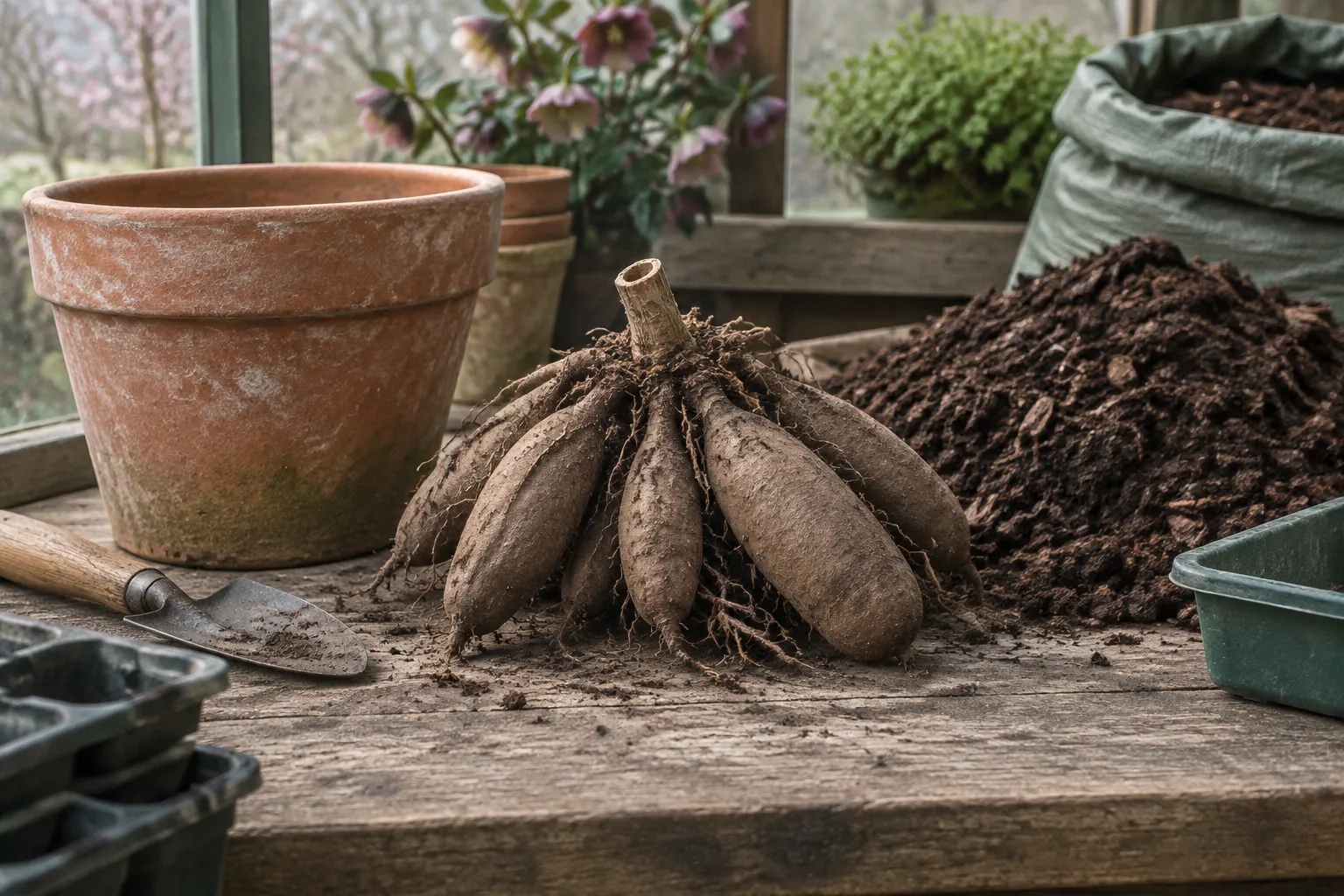
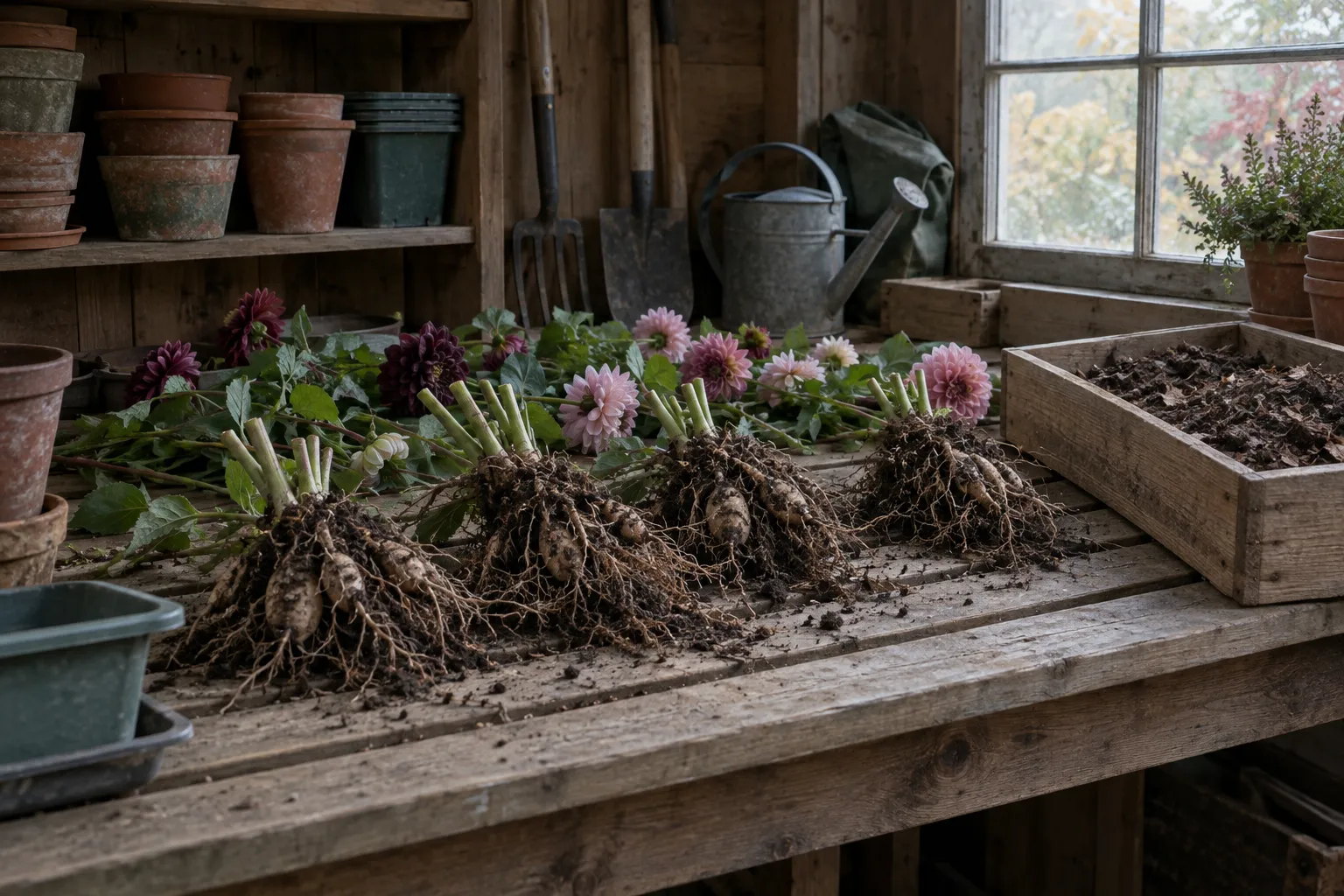
A dormant tuber looks like a cluster of sausages joined at the top by the stub of an old stem. That top goes uppermost, just below the surface of the compost, and shoots appear from there. Keep them frost-free, in good light and only slightly moist. Tubers can be slow, and overwatering rots them. Water lightly until leafy shoots show.
When you plant out, give each dahlia at least 60cm, and more for the big ones. Dig a deep hole for the long tubers, set the top just below soil level, water well and mulch. Slugs and snails love the new shoots, so protect them early.
For pots, choose a container about 50cm wide and fill it with peat-free multipurpose compost. That takes one standard dahlia, or up to three small bedding ones.
Staking, feeding and deadheading
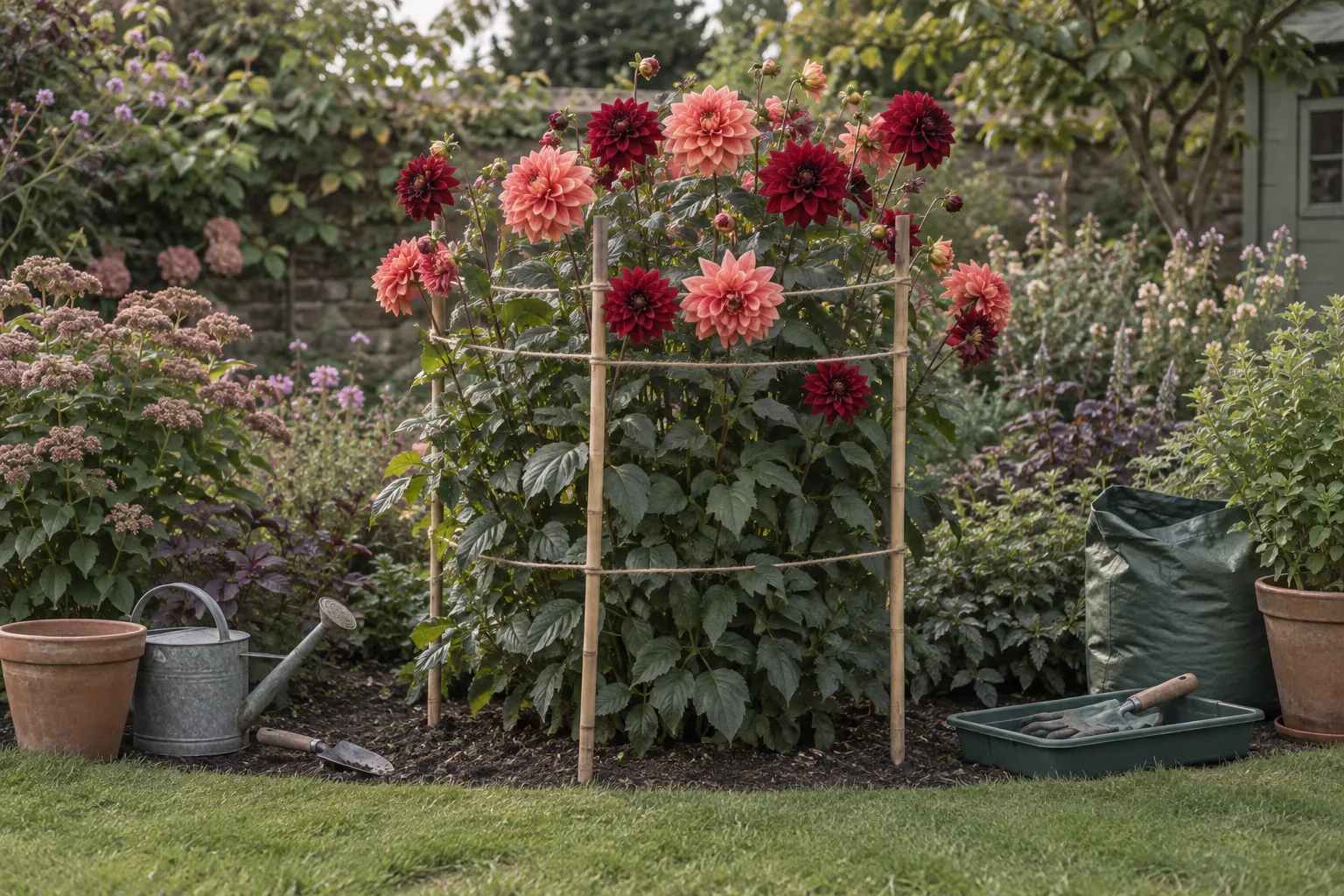
A dahlia in full flower is top heavy, and rain makes it worse. Dwarf types need nothing. Most do well with strong bamboo canes, singly or four in a square with twine looped round the outside. Giants need a stout post for each stem.
Ground-grown plants mulched with compost generally need no extra feed. Dahlias in containers are different. Give them a potassium-rich liquid feed, such as tomato feed, every fortnight from early July to early September. Too much nitrogen gives you leaves and few flowers.
Deadhead every week if you can. Remove each faded flower, cutting back to a leaf joint lower down the stem. Once the petals have dropped, it's hard to tell a bud from a faded flower. Buds are usually rounded, and spent flowers are pointed. When the main stem reaches about 40cm, pinch out the tip just above a pair of leaves and the plant branches into a bushier shape.
Overwintering: lift or leave?
November brings a decision. Dahlias need protection from frost, and there are two ways to give it. Wait until the first frosts have damaged the foliage, then either leave the tubers in the ground or dig them up. If the frosts are late, still lift them by late November.
Leaving them in. This is by far the easiest route, and the RHS is plain that it's a risk. It suits milder regions and light, free-draining soil. Cut down the stems and cover the tops of the tubers with 15cm of compost, chopped stems or bark chippings. A harsh or very wet winter can still cost you plants. Heavy soil is colder and soggier in winter, so lifting is the advice for gardens like that.
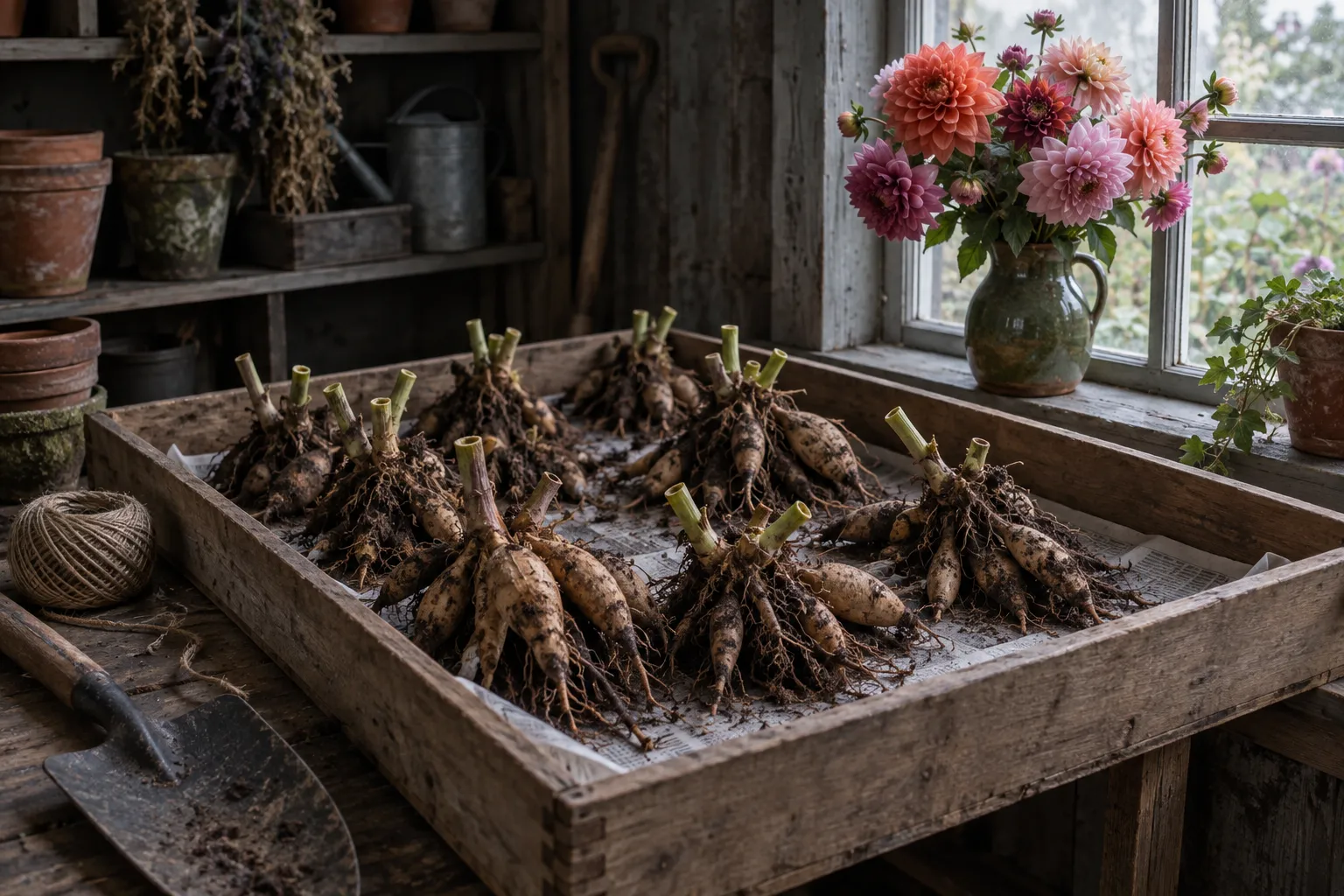
Lifting them. This is the safest option. In the RHS method you:
- dig up the tubers carefully and shake off as much soil as possible, keeping only dry, healthy, undamaged ones
- cut the stems back to 5 to 15cm, and leave the clump whole, because splitting it now gives rot a way in
- turn the tubers upside down for a few weeks, so the moisture drains out of the hollow stems
- pack them in shallow crates or open boxes, covered in dry compost, sand, straw or newspaper
- store them somewhere dark, cool and frost-free, such as a shed or garage, and check them regularly for rot
Plants raised from seed will have made tubers by the end of the season too. Because seed-raised plants vary in colour and quality, keep only the best. For other tender plants stored the same way, see the RHS guide to lifting and mulching. The month's other jobs are in our what to plant in November guide.
Dahlias for cutting
Dahlias are popular as cut flowers. If you're growing them for the vase, nip out the smaller buds behind the larger central one. That gives bigger, better blooms. You don't need to bother for a border display, where the weekly deadheading above is enough.
Keep the flowers
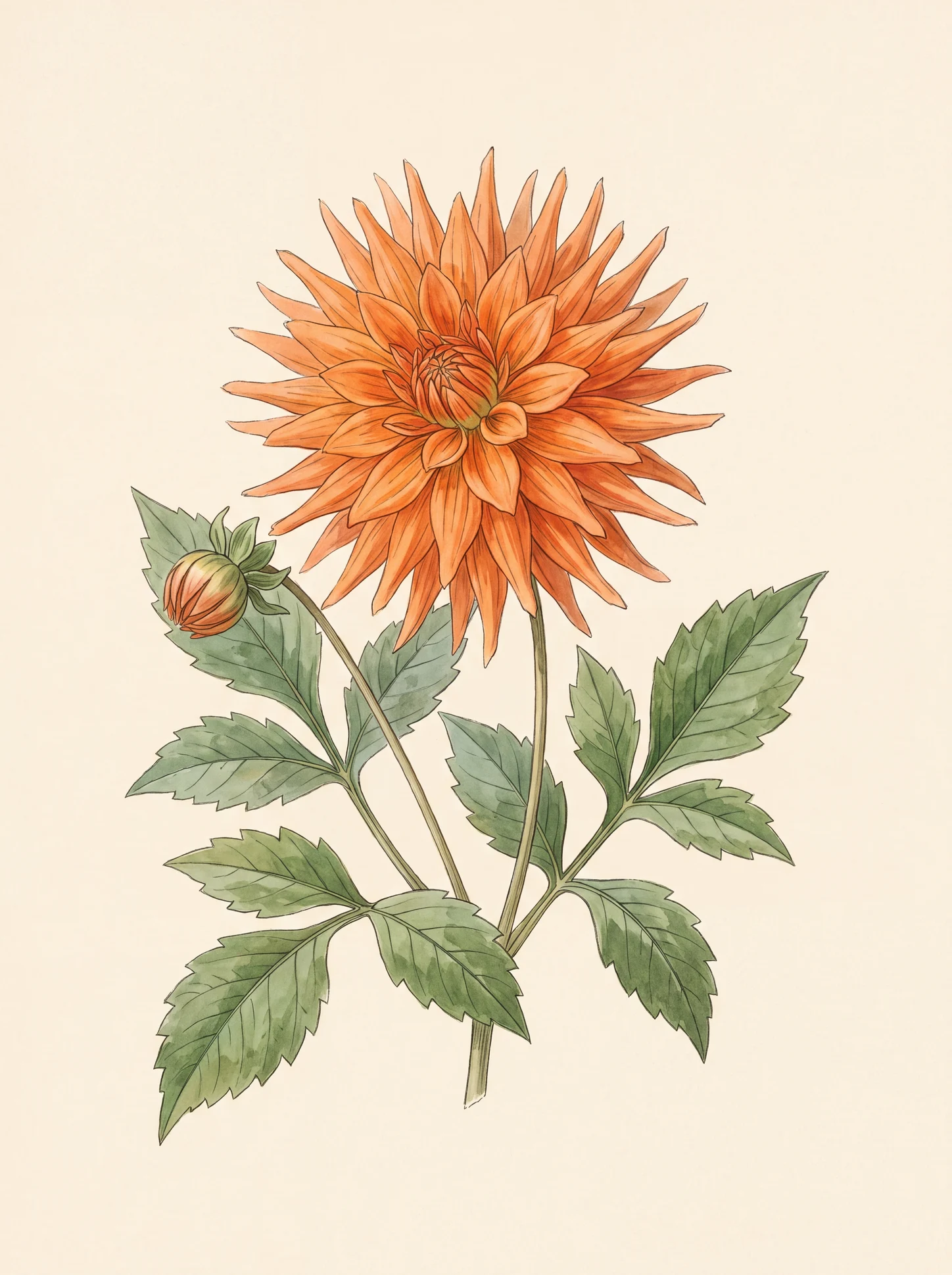
Dahlias are at their most valuable in late summer and autumn, blooming right through to the first frosts. Photograph yours at their fullest, and print the garden you grew. There's also a botanical-style dahlia if you'd like one on the wall before next summer, and more cottage-garden flowers in our flower prints. A print of a friend's dahlia bed, from their own photo, is one of our personalised gifts for gardeners.
Sources
Garden art prints to go with it
Questions people ask
Are dahlias easy to plant?
Yes. Set the tuber with its top just below the surface and keep it frost-free until the weather settles. The RHS says to plant out once there is no danger of frost, usually late May, or early to mid-June in colder regions.
When should I start waking up dahlia tubers?
The RHS says to start stored tubers in containers in spring, indoors or in a greenhouse. It says to keep them indoors until temperatures are consistently above 5°C. If you have no room, plant tubers straight into the ground in mid to late April.
How do I stake dahlias?
Dwarf bedding types need no staking. Most dahlias manage with strong bamboo canes, one at a time or four in a square with twine round the outside. Giants with very large flowers need a stout post per stem.
Is tomato feed good for dahlias?
For dahlias in pots, yes. The RHS recommends a potassium-rich feed such as tomato feed every fortnight from early July to early September. Too much nitrogen gives leaves instead of flowers.
Will my dahlias survive winter?
In milder regions or on light, free-draining soil they can, under a thick mulch. The RHS calls leaving them in the ground the easiest option and a risk: a harsh or very wet winter can cause losses.
Can I leave dahlia tubers in the ground over winter in the UK?
You can. Cut down the stems and cover the tops of the tubers with about 15cm of mulch such as compost, chopped stems or bark chippings.
How far down do you cut back dahlias?
If you are lifting them, the RHS says to cut the stems back to 5 to 15cm. If they are staying in the ground, cut the stems down and mulch over the crowns.
What do I do with dahlias in October?
Wait for frost. The RHS says to lift or protect them once the first frosts have damaged the foliage. If frosts are late, still dig the tubers up by the end of November.