Let the flowers do the talking.
You do not need a gallery wall to make garden art work. One well-chosen picture, with room around it, can be enough.
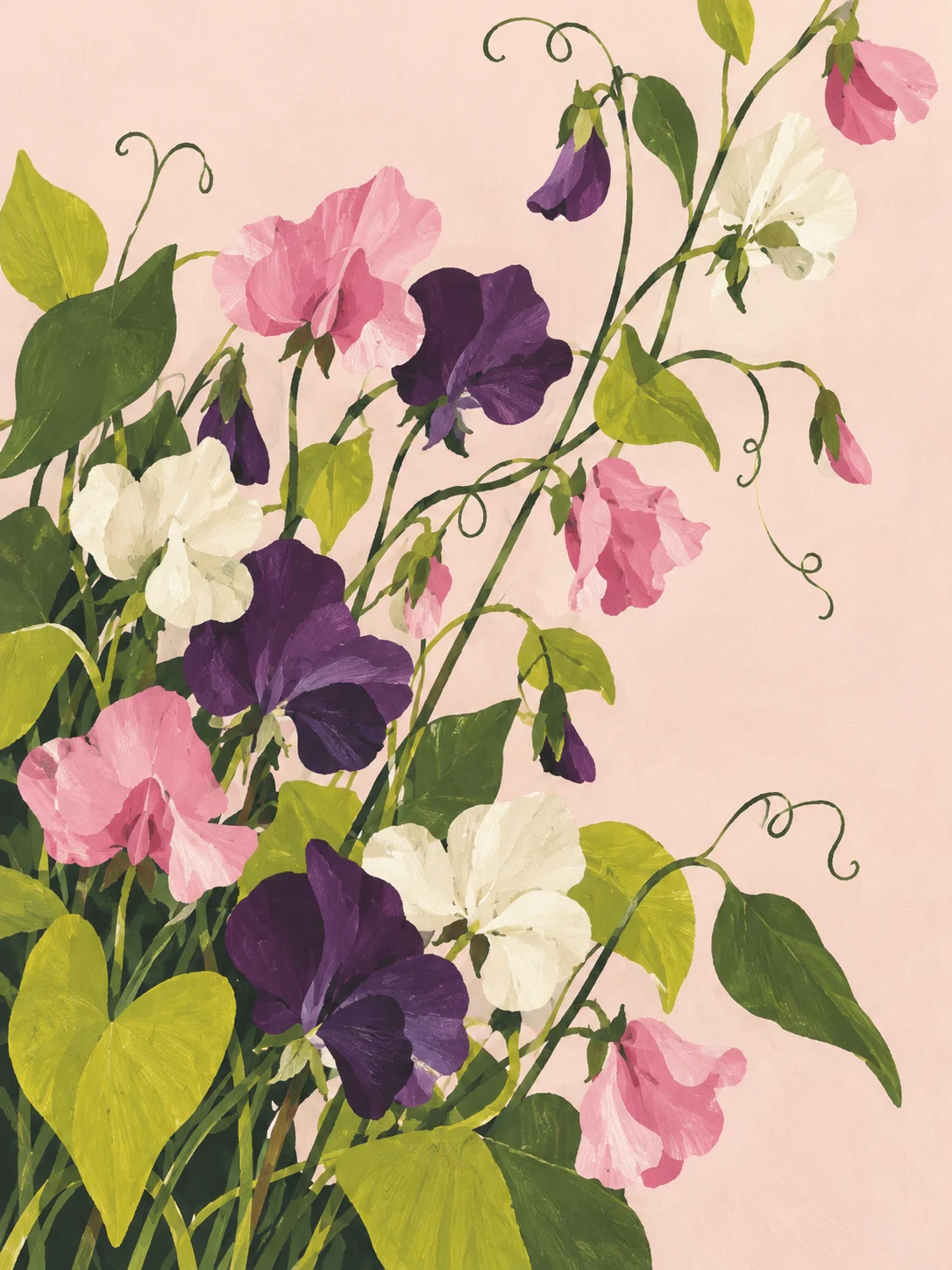
Choose a relationship with the room
Look at the colours already in the space. A flower artwork can repeat one of them or introduce a deliberate contrast. You don't need every leaf to match the sofa. Notice whether the image feels calm or energetic from across the room, rather than judging it only as a thumbnail.
One More Dahlia has dense warm colour and strong shapes. Sweet Peas, Still Climbing leaves more open space. Those differences affect how the artwork feels on a wall even when the prints are the same size.
Try the position before making holes
Use a paper template matching the outside size of the proposed framed piece. Check it from the doorway, the sofa and any usual walking route. Open nearby doors and cupboard fronts. Make sure the picture won't be repeatedly knocked or hidden.
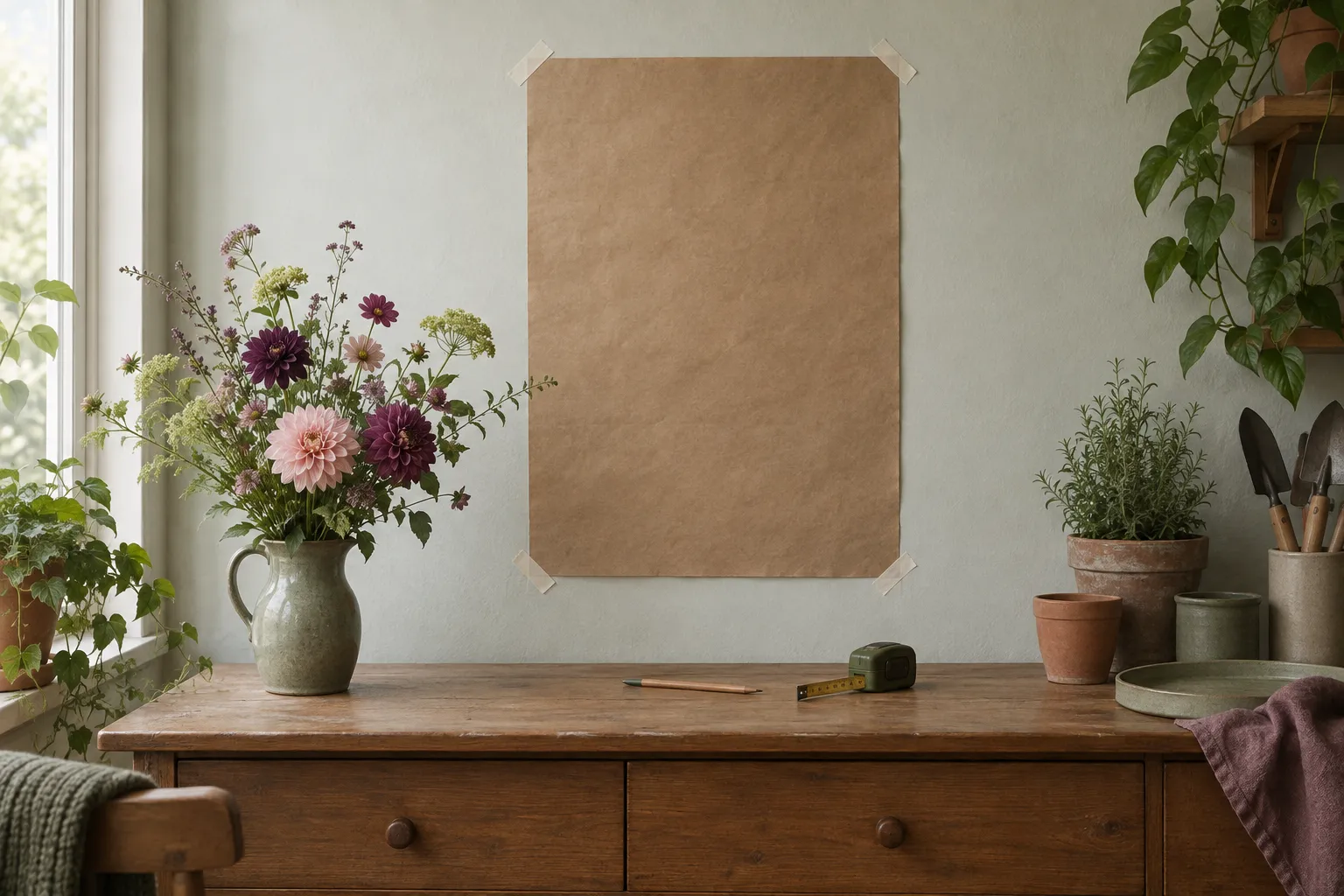
For hanging hardware, follow the frame manufacturer's instructions and use fixings suitable for your wall and the object's weight. Don't guess the strength of a hook or rely on a decorative nail. If you're unsure about the wall or hidden services, get appropriate help before drilling.
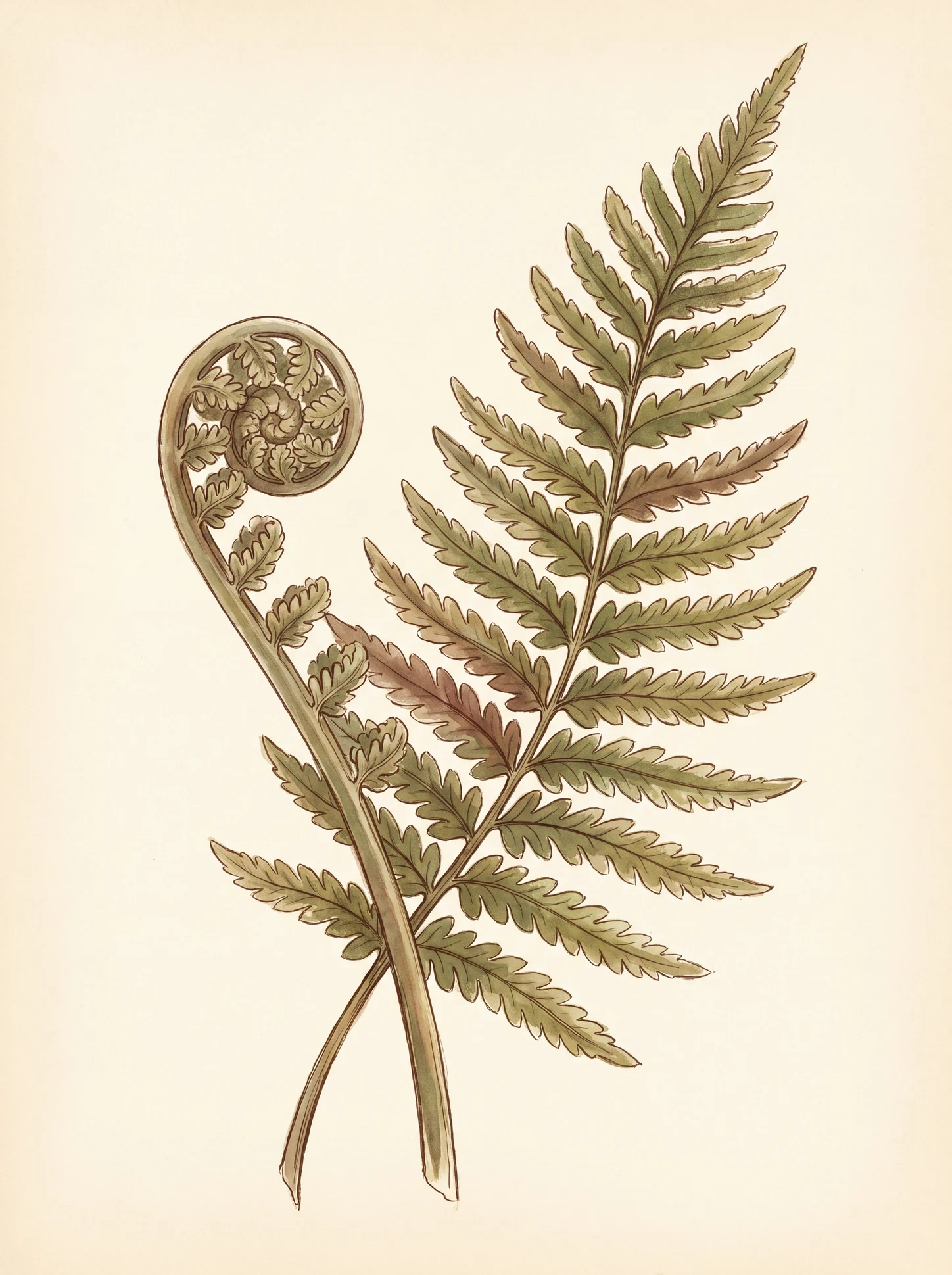
Give a pair one shared idea
Two pictures can share a colour, subject or visual rhythm without being identical. Compare the flower shapes, the amount of open background and the density of the foliage. Put paper templates on the wall to test the gap. A pair above furniture should read as one composition from the room's normal viewing position.
If you are mixing an artwork with your own garden photograph, choose the relationship intentionally. The photograph can carry the memory while the artwork provides a colour echo. You don't need to apply an art style to the photograph to make them belong together.
What the artwork is for
The flower prints here are original compositions, made for how they look: strong shapes and the feeling of a border in full flower. They are not botanical identification references. If you need the exact dahlia you grew, your own sharp photograph is the better place to start.
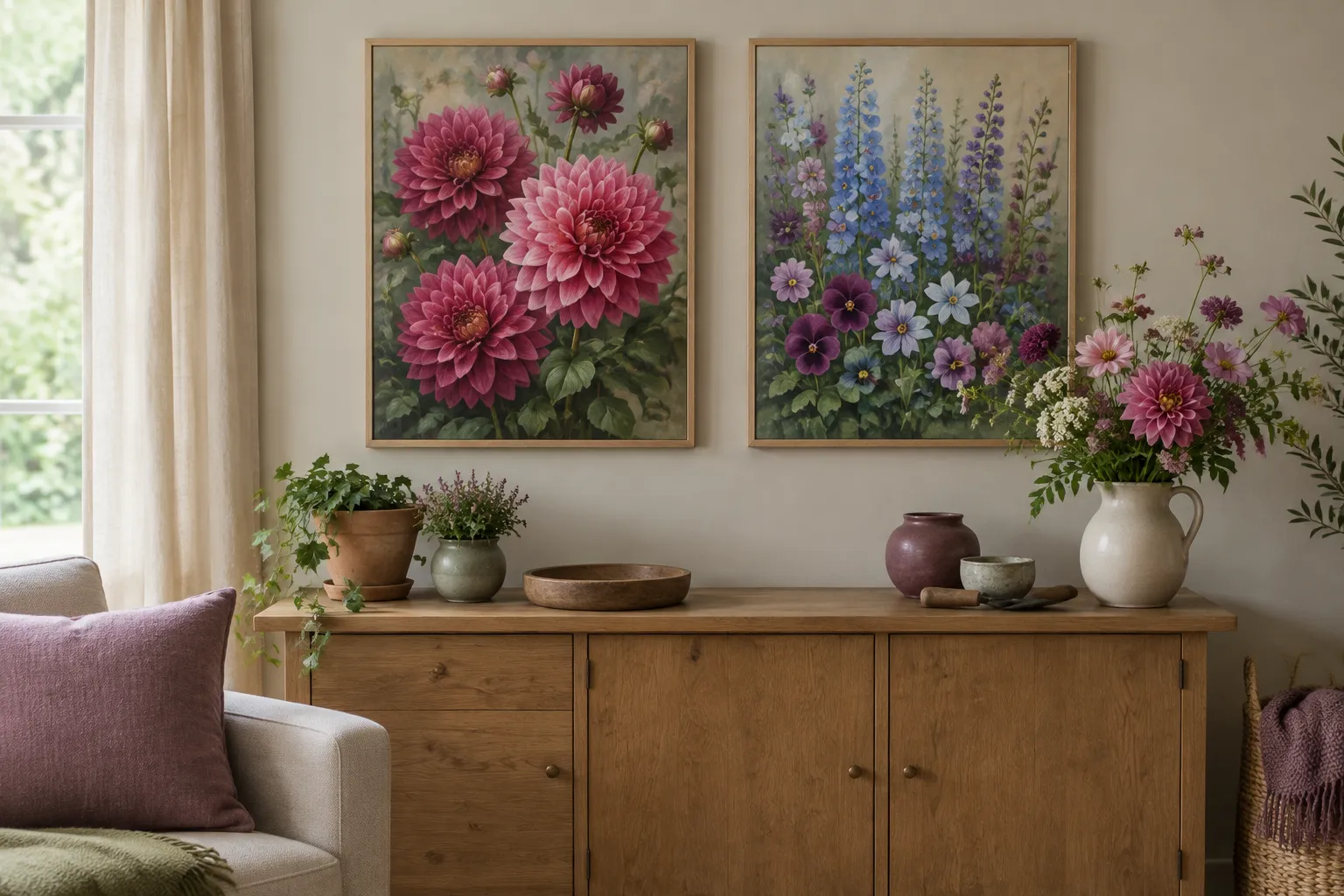
A flower picture can carry colour through a room long after the real border has died back. It does not have to match every cushion. Hold it up against the main colours in the room, and look at it in the light of the wall where it will hang, morning and evening. If you choose a pair, matching the frames gives them a shared structure without making the pictures identical.
Check light and moisture
Choose an indoor location away from persistent steam, splashes and prolonged direct sunlight. A bright conservatory can be more demanding than a shaded hallway. Garden subject matter does not make a print suitable for outdoor use.
Buy the image first, then the extras it needs
An unframed print allows you to choose a frame separately. A framed paper print and a framed canvas are different products, so read the selected option before paying. Check the outside dimensions if the fit is tight.
Explore the botanical prints for cream-ground studies that hang well as a set, the flower prints for colour-led pieces, or greenhouse artwork for more structured scenes. The size guide explains what to check before ordering.