Keep the plot you made your own.
A plot can hold years of small changes. Choose a photograph that tells your part of its story, from the first cleared bed to the last basket of the season.
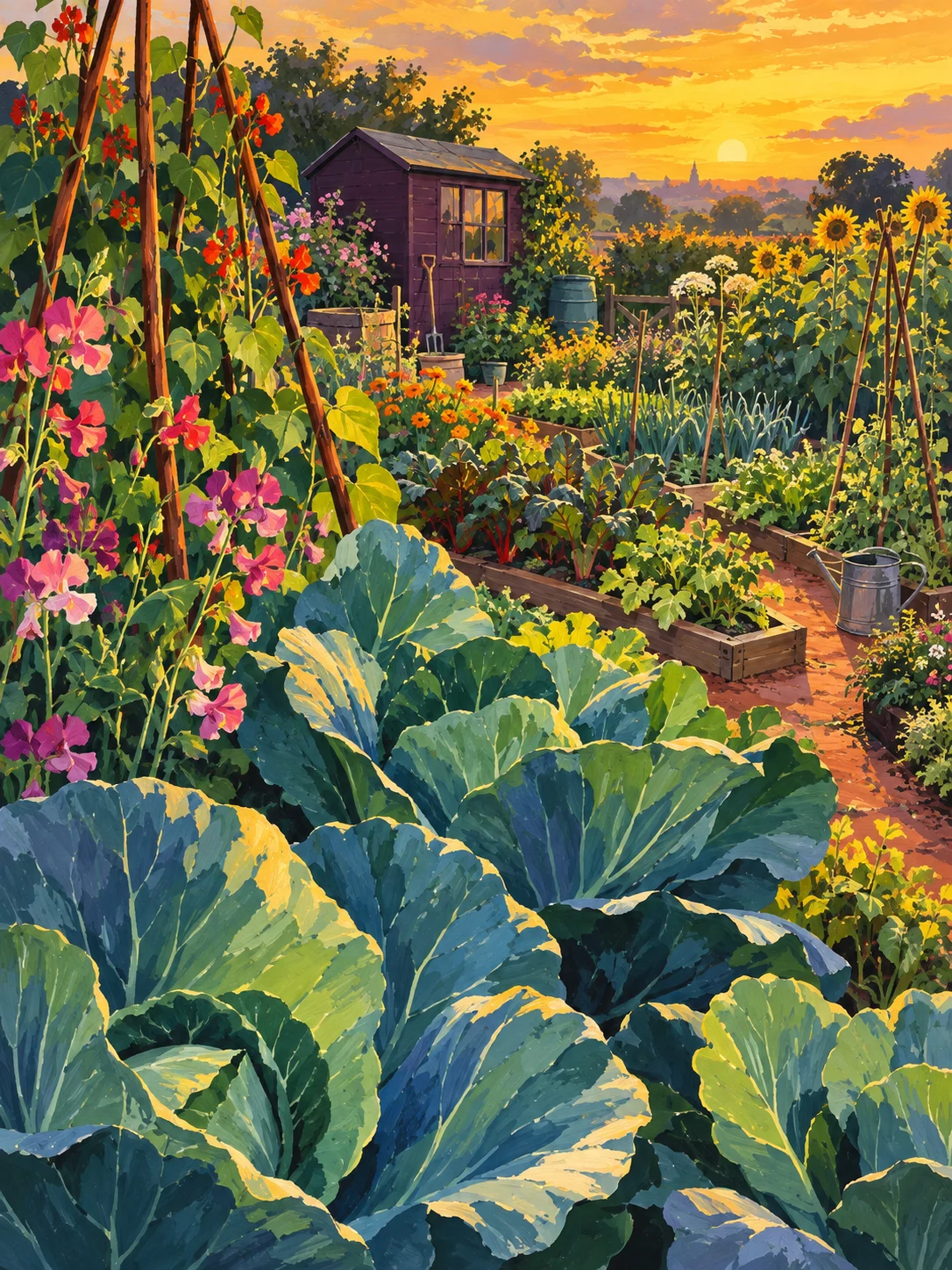
Decide which moment you're keeping
The first day on a new allotment and the middle of a productive summer are different milestones. One shows possibility; the other shows work that has taken root. Choose the moment that means something to you rather than searching for the tidiest photograph.
A path, a repaired shed or a row of bean supports can make the picture recognisable. If those features are part of the memory, leave them in the composition. A tightly cropped vegetable close-up may be beautiful but lose the sense of your particular plot.
Photograph from the path
Stay on areas where you're allowed to stand, and avoid entering a neighbour's plot to get a better angle. Wait until other people are out of the frame unless you have their permission. Check for addresses, padlock details and other information you wouldn't want to display publicly.
Try a photograph from your usual entrance. That viewpoint often captures how you actually arrive at the place. Take one version with more space around the borders than you think you need, so a later crop has room to work.
The ordinary details are the point
An allotment picture is full of plain, practical things: canes, paths, a watering can, a shed that has seen better paint. On their own they are nothing. Together they describe a place somebody goes back to and works on. The route between the beds can matter more than the prettiest plant, and so can the shed door. Keep what you would miss.
There is room for two kinds of picture. A close study of the cabbages or the beans, or a wider view of the whole plot. Choose by what you want the print to remember. For somebody who has just taken on a plot, a picture can mark a beginning. For a long-standing grower it echoes a routine they have kept for years.
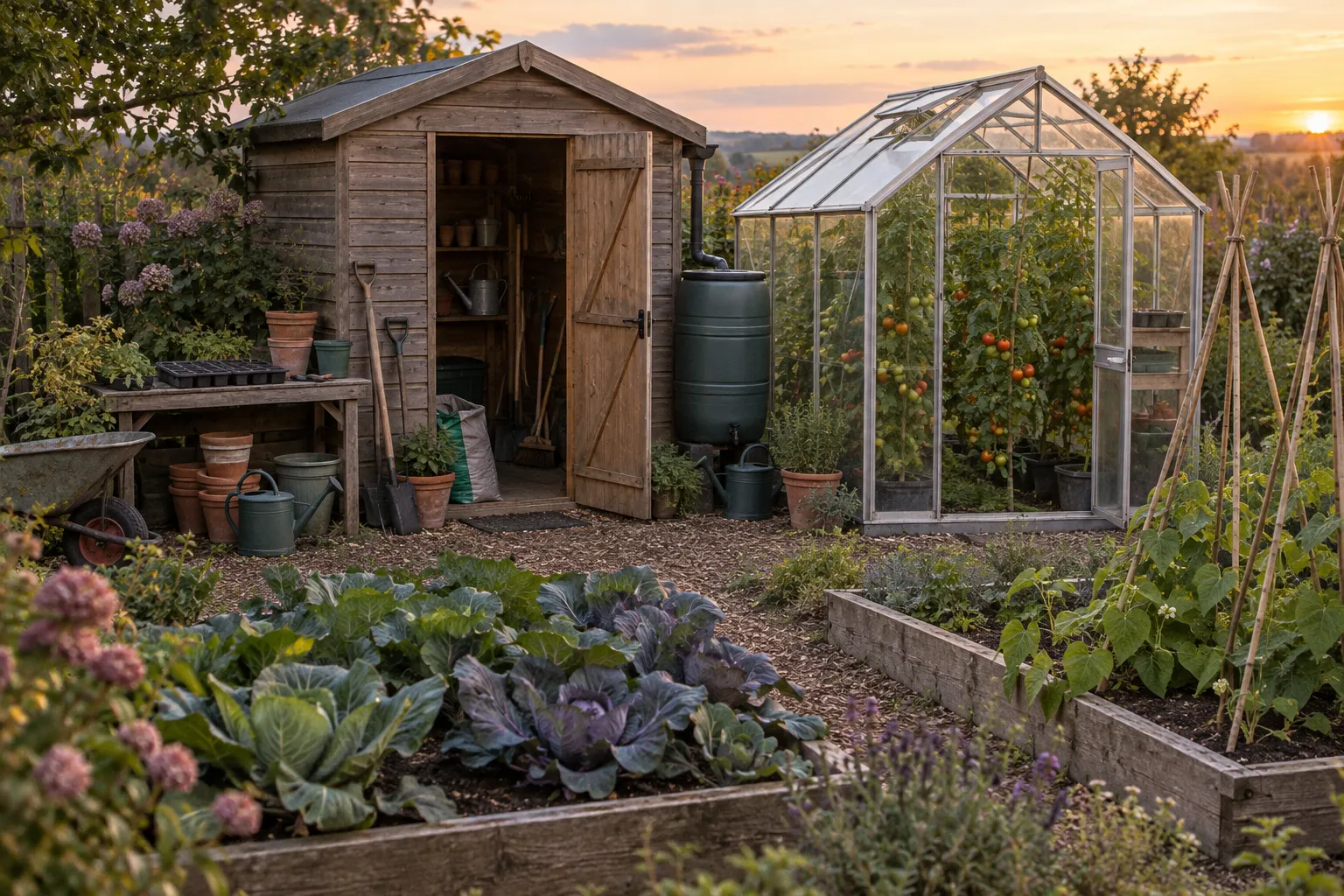
Choose atmosphere or detail
A direct photograph is a strong choice for preserving the real arrangement of beds. An art-style portrait can emphasise colour and the feeling of the place. Check the result carefully: the shed, fences, paths and supports shouldn't turn into unfamiliar objects.
Our artwork The Last Hour on the Plot offers another route when you want the feeling of allotment life without supplying a photograph. It isn't a portrait of a named allotment.
Think about where it will live
An indoor print near the back door or in a kitchen can be a daily reminder of the plot. Choose a dry position away from cooking steam, splashes and strong direct sunlight. The inside of an unheated shed is not automatically a suitable home for wall art.
Use paper to mark out the size you are considering, then stand back. If the photograph includes lots of fine detail, check that the available print size lets you see the part that matters. Read the size and framing guide before deciding.
A thoughtful present for another plot holder
Ask for an original photograph instead of saving a copy from a group chat. Make sure the photographer permits printing. If you are not sure about the image or the recipient's tastes, a piece from the allotment collection avoids pretending you know exactly which view they would choose.